



 17.57°C Kathmandu

Fri, Oct 16, 2026
National
Development spending of provincial governments poor
Political uncertainty, budget cuts and election preparations stall projects across the country.
bookmark
Ghanashyam Gautam, Ranjana BC & Pratap Bista
Published at : March 12, 2026
Updated at : March 13, 2026 07:46
Kathmandu
The citizen government formed after the Gen Z-led movement successfully conducted general elections on March 5. The Rastriya Swatantra Party secured a clear majority, paving the way for a stable federal government. However, provincial structures remain mired in the uncertainty triggered by the Gen Z protests, budget cuts and election preparations.
Activities of provincial governments have remained largely stagnant, causing a significant decline in development expenditure. Furthermore, the federal government’s 20 percent budget cut has hampered the implementation of smaller provincial projects.
The Lumbini Province government allocated Rs38.91 billion for the current fiscal year. However, by mid-February, it had spent only 22.42 percent of its budget, excluding grants to local units. Total expenditure, including Rs1.24 billion in local grants, stands at 23.65 percent, totalling approximately Rs9.20 billion, seven months into the fiscal year.
Capital expenditure, crucial for development, remains particularly low. Of the Rs23.47 billion allocated for capital spending, only 20.97 percent was utilised in the first seven months. In contrast, during the same period in the last fiscal year, the government had spent 24.47 percent of its budget.
Dinesh Panthi, spokesperson and Minister for Land, Agriculture and Cooperatives, attributed the shortfall to political unrest.
“The Gen Z protests erupted just as annual plans were being finalised,” Panthi said. “With the completion of elections and formation of a new federal government, the projects will now gain momentum.”
The Lumbini government’s records show that the Ministry of Youth and Sports has spent a negligible 0.04 percent of its Rs220.7 million capital budget.
The Ministry of Health has utilised 68.18 percent of its budget, largely due to a Rs700 million payment for the construction of Lumbini Provincial Hospital in Butwal. The provincial government had allocated Rs1.7 billion to the ministry.
In contrast, the Ministry of Physical Infrastructure Development, which holds the largest budget, has spent only 22.61 percent so far. Bhumishwar Dhakal, minister for Physical Infrastructure Development, said capital expenditure stands at 22.39 percent. Of the Rs9.61 billion capital budget, Rs2.15 billion has been utilised; he expects this to exceed 30 percent once payments up to mid-March are processed for projects currently in the tendering stage.
Similarly, the Ministry of Urban Development has spent only Rs1.04 billion, or 19.50 percent of its Rs5.38 billion capital budget, while the Ministry of Internal Affairs and Law has spent just 0.11 percent of its Rs166 million capital allocation.
Expenditure at the Office of the Chief Minister and Council of Ministers also remains low. Out of Rs29.7 million for capital and Rs472.1 million for recurrent costs, it has spent only 9.51 percent and 18.60 percent, respectively.
A policy shift by Chief Minister Chet Narayan Acharya, aimed at austerity and good governance, has reportedly left nearly 800 small-scale projects in limbo. The policy mandates that projects exceeding Rs500,000 must go through a formal tender process rather than being awarded through direct quotations.
An official at the Ministry of Urban Development and Water Supply warned that this has stalled over 400 projects in their department alone. “While projects and budgets are selected, they are often abandoned in the name of good governance, especially when the government changes,” the official said, adding that the shift to competitive tendering often reduces budgets to a point where work quality cannot be maintained.
Deepak Gyawali, head of the Provincial Treasury Controller Ofice, confirmed that total government payments reached only 23.65 percent by mid-February, slightly lower than the same period last year. He noted that while expenditure should ideally reach 33 percent by the six-month mark, it remains around 24 percent even after seven months.
“Political uncertainty, staff shortages and policy hurdles have contributed to this,” Gyawali explained, though he expects figures to rise during the peak payment months of February and March.
Budget implementation in Sudurpashchim Province for the fiscal year 2025/26 also appears weak. With eight months of the fiscal year passed, the province has managed to spend only around 16 percent of its total budget. According to data from the Provincial Treasury and Accounts Controller Office, progress in development construction expenditure (capital expenditure) is particularly dismal.
The province’s total budget this year stands at Rs33.43 billion. However, by mid-March only Rs5.49 billion has been spent, including recurrent costs—representing just 16.22 percent of the total budget.
Capital expenditure, which is directly linked to development and infrastructure, remains especially poor. Out of the budget allocated for development projects, only Rs1.92 billion has been spent so far, accounting for just 9.73 percent of the total capital budget.
Officials attribute the low spending to prolonged tendering processes, administrative sluggishness and delays in project selection.
Baldev Kapadi, information officer at the Procincial Treasury Comptroller Office, said staff shortages, the Gen Z movement last September and the recent elections contributed to the low capital expenditure. He added that many projects are inherently difficult to implement, which is also reflected in the spending figures.
In contrast, expenditure on recurrent activities such as administration, salaries, allowances and office operations has been higher than capital spending. So far, Rs3.56 billion has been spent on recurrent costs, representing 26.21 percent of the allocation.
With two-thirds of the fiscal year already over and only 16 percent of the budget spent, the government faces the challenge of spending the remaining 84 percent in the final four months. This situation may encourage year-end rush spending, which often compromises the quality of development.
In the previous fiscal year, Sudurpashchim spent 70 percent of its total budget. Out of the Rs31.53 billion allocated for recurrent and capital expenditure, only Rs22.28 billion was spent.
In fiscal year 2024/25, recurrent expenditure stood at 76.8 percent, while capital expenditure reached 66.50 percent. Specifically, Rs12.47 billion was spent out of the Rs18.75 billion capital budget and Rs9.80 billion out of the Rs12.77 billion recurrent budget, leaving Rs9.25 billion of the budget unspent.
The Bagmati Province government has achieved only 17.5 percent financial progress in the first seven months of the current fiscal year 2025/26.
According to the Ministry of Economic Affairs and Planning, only 17.79 percent of the total allocated budget of Rs67.47 billion has been spent during this period. The ministry reported that total expenditure reached Rs12.03 billion by mid-February.
Indra Raj Sanjyal, an official at the ministry, said that of the Rs41.43 billion allocated for capital expenditure, only Rs5.22 billion has been utilised. Meanwhile, recurrent expenditure stands at 26.1 percent, with Rs6.77 billion spent out of Rs26.04 billion.
By mid-February, the Ministry of Labour, Employment and Transport recorded the highest expenditure relative to its size. Out of a total allocation of Rs720.5 million, it spent 26.38 percent of its capital budget and 37.78 percent of its recurrent budget, totalling Rs251.8 million over seven months.
The Ministry of Health, which received Rs3.54 billion this year, has spent Rs1.11 billion. This includes Rs1.06 billion in recurrent expenditure and only Rs53.2 million in capital expenditure.
The Ministry of Economic Affairs and Planning, with a budget of Rs207.8 million, spent 29.36 percent or Rs61 million, comprising Rs52.5 million in recurrent costs and Rs8.5 million in capital expenditure.
Overall provincial capital spending remains low at just 12.62 percent.
The Ministry of Forests and Environment spent 22.34 percent, or Rs820.8 million, of its Rs3.67 billion budget, including Rs350.7 million in capital and Rs470 million in recurrent expenditure. The Ministry of Industry, Commerce, Land and Administration spent Rs130.3 million out of its Rs648.5 million total budget.
The Ministry of Physical Infrastructure Development, which holds the largest budget of Rs21.16 billion, has recorded an implementation rate of only 18.55 percent, spending Rs3.92 billion—of which Rs3.76 billion was capital expenditure and Rs159.4 million recurrent.
Other ministerial spending includes the Ministry of Internal Affairs and Law at 32.69 percent, the Office of the Chief Minister and Council of Ministers at 22.31 percent and the Ministry of Social Development at 17.35 percent.
The Ministry of Agriculture and Livestock Development spent 15.81 percent, the Ministry of Cooperatives and Poverty Alleviation 14.47 percent, and the Ministry of Water Supply, Energy and Irrigation 12.78 percent. The Ministry of Youth and Sports recorded 8.78 percent spending, while the Ministry of Culture and Tourism posted the lowest progress at 4.24 percent.
Among other state bodies, the Province Public Service Commission recorded the highest expenditure at 40.9 percent, followed by the Provincial Assembly Secretariat at 33.84 percent and the Office of the Chief Attorney at 33.19 percent. The Provincial Policy and Planning Commission recorded the lowest budget implementation at just 2.86 percent.
Ghanashyam Gautam
Ghanashyam Gautam is the Butwal correspondent for Kantipur Media Group.
Pratap Bista
Pratap Bista is the Bagmati Province Bureau Chief for Kantipur Publications.


Most Read from National

Flood sweeps away houses, bridges in Gorkha

Torrent of black mud and rocks engulfs settlements along Budhigandaki

From blankets to handmade dolls, two foreign women bring comfort to flood survivors
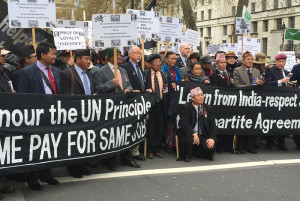
British Gurkha veterans issue ultimatum to Nepal government over long-standing grievances

Budhi Gandaki flood washes away three bridges in Gorkha
Editor's Picks

Constitutional Bench caught in seniority, ‘pick and choose’ dispute

A Dom boy’s long road to becoming a doctor
From blankets to handmade dolls, two foreign women bring comfort to flood survivors

News Analysis: When institutional defence exposes institutional fault lines

It’s a bird … it’s a plane … it’s the Indian ambassador’s farewell tweets
E-PAPER | October 16, 2026

×