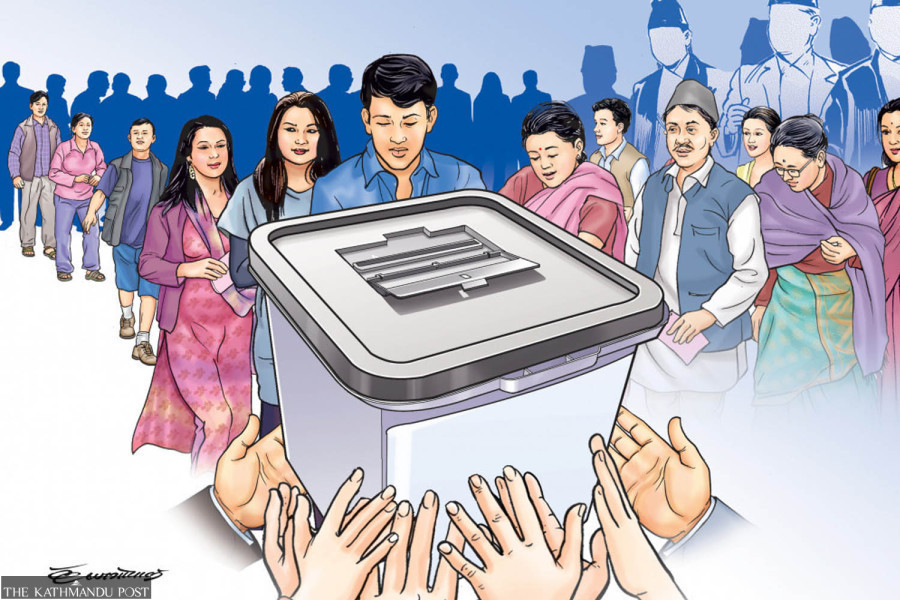
Amid informal requests from political parties and a prominent Gen Z leader to postpone the March 5 parliamentary elections over logistical and preparation concerns, the government has reaffirmed that the polls will go ahead as scheduled.
Political parties have publicly accused the government of failing to create a conducive environment for the snap polls, which are being held after the Gen Z movement toppled the UML-Congress coalition government and led to the dissolution of parliament in September.
Meanwhile, leaders of various political parties have informally urged Prime Minister Sushila Karki to consider revising the election date, suggesting it may not be possible to hold the election as scheduled, sources at the Prime Minister’s Office said.
“Though there hasn’t been any official demand from major political parties, during meetings with Prime Minister Karki and President Ram Chandara Paudel some leaders of major political parties have tried to gauge the possibility of postponing the election,” said a source.
Nepali Congress General Secretary Bishwa Prakash Sharma has proposed that the House of Representatives election scheduled for March 5 could either be postponed to April or conducted in phases.
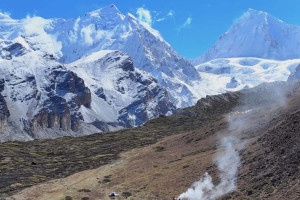
Through social media, Sharma said that if the election is postponed to April, it would be a natural adjustment. He argued that postponing the polls would be appropriate for three reasons: to foster a sense of ownership among Gen Z; to develop a conducive electoral environment; and to make participation easier for people in the Himalayan region.
Sharma emphasised that while sufficient time is required for the effective implementation of the agreement signed between Gen Z groups and the government, the election date set for March 5 should not become an obstacle.
After months of discussions, the government and Gen Z leaders signed an accord on December 10 to give legitimacy to the September youth uprising.
“We are all committed to the announced date of election. However, the core issue is resolution and the constitution,” Sharma wrote on social media. “Therefore, if the election needs to be slightly postponed to April in order to give Gen Z groups a sense of ownership [of the elections], create a credible electoral environment, and ensure accessibility in the Himalayan region as well, such a delay should be accepted as natural.”
Sharma also offered advice for a phase-wise election.
While political parties argue that holding the elections on the scheduled date may be difficult, Sudan Gurung, a leading figure in the Gen Z movement, has warned that elections will not proceed unless the movement’s demands are not met. In an interview with the Post a few days ago, Gurung said that if the elections were held on March 5, they would not have sufficient time for preparation.
“Established, traditional political parties already have organisational structures in place, which allows them to prepare for elections even within a short time. New political parties, however, do not have sufficient time to make the necessary preparations,” Gurung told the Post.
Gurung also said that the Gen Z movement had not demanded that the election scheduled for 2027 be brought forward to 2026, and that elections cannot be held unless the government meets the movement’s demands.
However, government spokesperson and Minister for Information and Communication Jagadish Kharel insisted that elections will be held on schedule. He said the polls will neither be conducted in phases nor postponed for any reason.
“This government was formed with a mandate to hold the elections on March 5, and it will not deviate from that date,” Kharel told the Post.
“Today (Tuesday), we held discussions with the Election Commission and other stakeholders regarding the election. These discussions also reaffirmed that we are capable of conducting the election on the scheduled date. Therefore, the government will not make any changes to the election timeline,” Kharel reiterated.
Meanwhile, the Cabinet meeting held on Monday also formed a high-level political dialogue committee to hold talks with political parties and stakeholders to create a conducive environment for the elections.
The committee, which has Law Minister Anil Sinha as coordinator, includes Communication Minister Kharel and Ajaya Bhadra Khanal, the chief advisor of the prime minister.
The committee’s main objective is to hold talks and dialogue and create a conducive political environment and ensure the smooth conduct of the elections.




 24.79°C Kathmandu