Camera traps installed to monitor animals’ movement
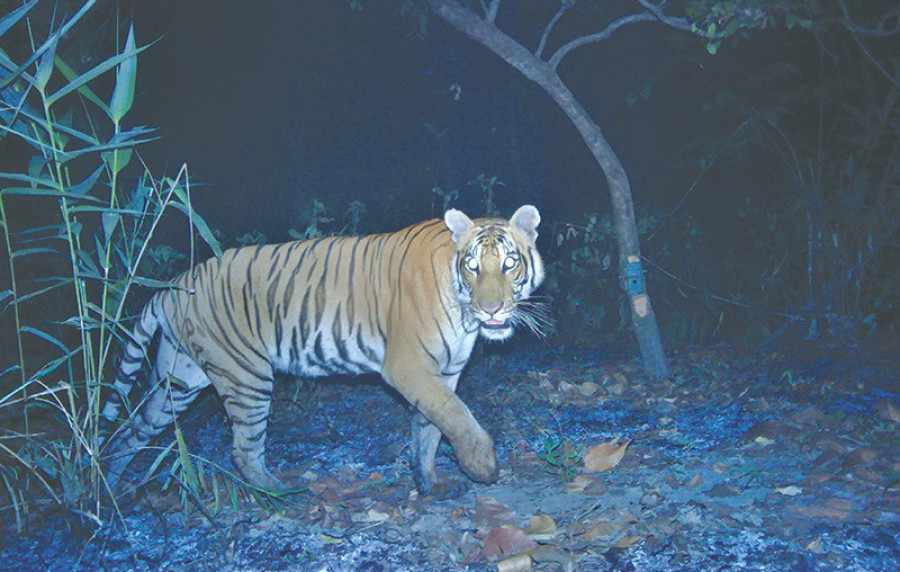
The Chitwan National Park (CNP) and Tarai Arc Landscape (TAL) programme of the World Wildlife Fund have jointly installed camera traps in Sumeshwor—a trans-border bio-corridor between the CNP and the Valmiki Tigers Reserve of India—to monitor the movement of wild animals in the area.v
The Chitwan National Park (CNP) and Tarai Arc Landscape (TAL) programme of the World Wildlife Fund have jointly installed camera traps in Sumeshwor—a trans-border bio-corridor between the CNP and the Valmiki Tigers Reserve of India—to monitor the movement of wild animals in the area.
According to Ramesh Prasad Yadav, assistant conservation officer at the park, around 124 camera traps have been installed at 62 sites in Sumeshwor since November 17.
“Sumeshwor area is a major bio-corridor linking the CNP and Valmiki Tigers Reserve. Several wild animals move from one protected area to another. Such camera trappings would be helpful to track the movement of these animals,” said Yadav, adding that the traps would further help the conservationists to study the wild beasts and their habitats.
According to Yadav, a new animal species, locally called Siru, was spotted in the area for the first time with the help of camera traps. The traps also recorded the movement of two tigers in Mumeshwor area in the last week while six tigers were found crossing the Nepal-India border in the last year.
Conservationists believe that tiger population in the CNP has decreased because of their movement from one reserve to another. Camera traps would be helpful to monitor the tiger’s cross border movement, they say.
The CNP and the TAL Programme have been installing camera traps in the area for the past three years. The traps are installed for a certain period and removed again after the study is completed.
The latest tiger census report made public in September showed the tiger’s population in the CNP had decreased to 93 from an estimated number of 120 during the 2013 census. However, the latest census recorded 235 tigers in Nepal, nearly double of what it was in 2009.




 19.45°C Kathmandu