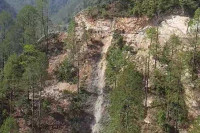
Around 5,600 landslides occurred in the country until June end, including the new landslips triggered by the Great Earthquake on April 25 and subsequent aftershocks.
Around 5,600 landslides occurred in the country until June end, including the new landslips triggered by the Great Earthquake on April 25 and subsequent aftershocks.
As part of the Earthquake Without Frontiers (EWF) Project, a group of earth scientists with a long track record in integrated earthquake science along with social scientists, an updated inventory from the earthquakes was prepared. The map that was last updated on June 30 found that major or disruptive landslides is limited to a zone that runs East to West, approximately parallel to the transition between the Lesser and High Himalayas including Gorkha, Dhading, Nuwakot, Rasuwa, Sindhupalchok, Dolakha, Ramechhap and Kavre.
The area of landslides triggered by the 7.6 magnitude Dolakha earthquake on May 15 overlaps with the eastern end of the area affected by landslides in the Gorkha earthquake on April 25.
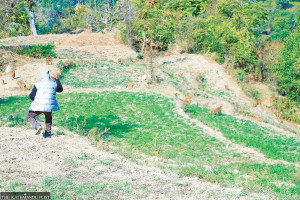
Locations that suffered from high intensity landslides following the Dolakha quake also suffered from widespread landslips in the Gorkha quake. They must thus be viewed as places at high risk of failure during the monsoon season, according to the report.
The report further found that there have been numerous reports of cracked grounds in the affected areas. It recommends establishing simple monitoring of the existing cracks and establish if cracks are widening or if movement of the slope has ceased. It added that the concerned authorities should treat the areas that exhibit continued or accelerating movement with extreme caution.
1,749 households relocated
Sudip Kaini (Gorkha)
Families at high risk of landslides in several VDCs in Gorkha, the epicentre of the Great Earthquake of April 25, have been relocated to safer locations.
With an initiation of the District Disaster Relief Committee, 1,749 households from 10 VDCs in the district have been relocated. Local Development Officer Premraj Giri said they have moved the risky settlements of Kerauja, Lapu, Khanigaun, Gumda and Sirdibash including other areas to safer zones. The settlements were deemed risky following an inspection of the government team.
Around 917 families are, however, yet to be relocated from the risky areas. Locals of Barpak, Simjung, Kharibot, Ghyachhok and Kerabari have also started to relocate. The committee has estimated a total cost of around Rs 47.8 million to construct temporary infrastructures in the relocating areas.
But some locals are not optimistic on the idea of moving. “It is difficult for us to stay there for three months, only to move again” said Ranchit BK of Muchhok.
Likewise, 150 families of Kashigaun and Manbu, 119 families of Dhorat, Chhapgaun, Paple, Aanga, Salleri, Debal and 202 families of Saurpani, Ranchok, Simbu and Kebara have been recommended for relocation in the next phase.




 20.12°C Kathmandu