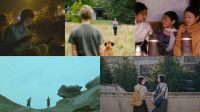
Beyond the box office: The 10 Pakistani films that quietly won 2025
Beneath the glossy-but-tired commercial surface of Pakistan's film industry, something promising is happening.These are films that refuse to contort themselves into box-office formulas; films that are finding validation not in opening-week numbers but in festival screenings, critical conversations, and standing ovations. Dawn
2025 was another year of partially failed successes for Pakistani cinema — a teetering industry caught between a revival that never quite arrives and a collapse that never fully happens.
Take Love Guru and Deemak, for example. Sure, they earned a few good paydays, but as a viewer, I can’t help wondering how long we will keep circling the same drain of hackneyed plots, subpar production, limp humour and shallow horror stuffed with jump scares that never land. How long will we sit through the same formula — an item number here, a recycled love angle or saas–bahu conflict there — delivered by the same roster of actors we already see on TV every day? Even the most loyal supporters of Pakistani cinema feel discouraged when this is what we’re asked to invest our time, money and hope into.
And yet, beneath this glossy-but-tired commercial surface, something far more promising is happening.
Our independent film industry — quiet, stubborn and wildly committed — is producing work that actually deserves a chance. These are films that refuse to contort themselves into box-office formulas; films that are finding validation not in opening-week numbers but in festival screenings, critical conversations and standing ovations. Filmmakers bringing fresh and more relatable stories with them help of skilled crews, strong performances and razor-sharp vision — all on budgets a fraction of those of commercial films, but with impact that often lingers far longer.
So, with a new year of films around the corner, here’s a list of 10 independent Pakistani films worth adding to your watchlist — a wider pool for Pakistani cinema lovers who are craving something real, something bold, something better. Keep an eye out for them if they screen in your city because this is where the real Pakistani cinema is quietly taking shape.
Beyond the Wetlands by Arsalan Majid
These are films that refuse to contort themselves into box-office formulas; films that are finding validation not in opening-week numbers but in festival screenings, critical conversations, and standing ovations
Run time: 94 minutes
Festival selections: Gandhara Independent Film Festival 2024 — Audience Choice Award Winner
Written and directed by Arsalan Majid, Beyond the Wetlands is a film about two researchers from Karachi who arrive in the Hushay Valley, near K2, for a research project on global warming. When one of the researchers vanishes into the cold and treacherous valley, a search and rescue mission is organised to find them.
What makes it special?
Majid’s film is the first feature film in the world to be shot in -30 degrees Celsius, in the K2 mountain region in its entirety. Apart from two characters, all members of the cast were local, real-life mountaineers who summit peaks like K2 yearly.
The best part? You can watch this film on YouTube for free!
Permanent Guest by Sana Jafri
Run time: 14 minutes and 36 seconds
Festival selections: Toronto International Film Festival (TIFF)
Mosaic International South Asian Film Festival (MISAFF)
Starring Joyland‘s Rasti Farooq, this short film is set in Lahore where 26-year-old Fatin and her mother Yasmeen are preparing for a neighborhood wedding. Their plans are disrupted by the unexpected arrival of Shabeer, Fatin’s 70-year-old uncle. Fatin is uncomfortable with Shabeer’s visit, but her parents expect her to care for him, including driving him to his doctors’ appointments. Tensions rise during their interactions, and Fatin struggles to balance her duty to her family with the weight of an unspoken history.
Jafri’s latest short, in a restrained approach, explores intergenerational silence within South Asian families, particularly around childhood sexual abuse, and the way women are expected to uphold family harmony at the cost of their own safety and voice.
What makes it special?
The fact that it is a fully crowdfunded short film, with the majority of its support coming from Pakistan and the Pakistani diaspora — reflecting a strong collective investment in telling this story.
Keep an eye out for the film’s screening during the start of 2026 at any upcoming film festivals in your town! According to the director, the film will have some screenings in Karachi and Lahore as part of its continued festival journey.
Moklani by Jawad Sharif
Run time: 72 minutes
Festival selections: Jackson Wild Media Awards — Pakistan Feature Film Winner
Moklani (Farewell) is a nature documentary that follows the indigenous Mohana community as they navigate life on the floating boathouses of Manchar Lake in southern Pakistan, a place they have called home for generations.
Once nourished by clean water and abundant fish, the lake is now poisoned by pollution and the slow violence of climate change. As the lake shrinks, so does a culture that has lived in harmony with nature for centuries.
Through the lens of Akbar, a boatman and father who has lived his entire life on the water, and Hakim Zadi, a woman of quiet strength and fierce resilience, the audience will not only get to the ecological destruction of Manchar Lake but also the profound spiritual dislocation it brings.
What makes it special?
The film produced by Sharif — with the support of the National Geographic Society and Climate Kahani — became the first ever Pakistani Feature Film Winner at the 2025 Jackson Wild Media Awards, celebrated worldwide as the “Nature Oscars”.
It will be released to mass audiences in 2026.
Ghost School by Semab Gul
Run time: 88 minutes
Festival selections: Mosaic International South Asian Film Festival — Best Actress
Toronto International Film Festival (TIFF)
International Film Festival of South Asia Canada
Red Sea Film Festival
Ghost School is a story of 10‑year‑old Rabia who defies rural superstition and bureaucratic neglect to uncover why her school abruptly closed. Untangling eerie rumours, corrupt local power, and silence, she undertakes a solitary, courageous search for truth and justice.
What makes it special?
The film is told from a child’s perspective, yet tells a very bold and compelling story revolving around the phenomenon of ghost schools in Pakistan.
“My themes dictate my characters,” said Gul at TIFF 2025. “Ghost School is a character-driven film.”
In 2021, Gul’s film Mulaqaat (English title: Sandstorm) made it to the Venice Film Festival. The film was screened at the Red Sea Film Festival this month and is scheduled to be brought to Pakistani cinemas in 2026.
Jujji by Habib Shahzad
Run time: 75 minutes
Festival selections: Gandhara Film Festival (2024) — Best Film Award
Punjab Police (2024) — Best Feature Film Award
Divvy Film Festival (2024)
Based on a true story, Jujji is a neo-noir crime thriller centred around two police officers — one idealistic, the other cynical — pursuing a brutal serial killer. As they close in on the elusive Jujji, the killer, the film follows their inner conflicts rise to the surface, exposing inner demons and challenging their notions of justice and morality.
By prioritising the emotional exhaustion of its protagonist over procedural mystery, this film transforms a standard serial-killer hunt into a profound meditation on trauma, duty, and redemption.
What makes it special?
Even though this film was launched in November 2024, it gained momentum in 2025. Towards the end of 2025, Jujji was acquired by an LA-based studio, Buffalo 8, paving the way for a release on Amazon Prime — becoming one of the very few independent Pakistani films on the platform. The film was released on Prime in the UK and the USA on November 21, and is set to release worldwide on digital in January 2026.
Time After Time by Tabish Habib
Run time: 18 minutes
Festival selections: Gandhara Film Festival — Best Film and Best Director Award
Chicago South Asian Film Festival
Mosaic International South Asian Film Festival
Simugh International Film and Arts Festival
London Lift-Off Film Festival
Time After Time (Waqt ke Saath Saath) is a short film about a protective father who loses his daughter while playing in their garden and unwittingly goes on a journey through time to find her.
The film, starring the lead duo from Joyland, Ali Junejo and Rasti Farooq, uses the fantastical device of time travel as a metaphor for a parent’s emotional journey. The disorienting experience of watching one’s child grow up too fast, of feeling left behind as time marches on, became the heart of this narrative.
What makes it special?
Set in Lahore, a city rich with personal and cultural memory, the film leans into magical realism to visually explore the inner lives of South Asian parents. It’s an ode to good fathers — the kind who try, who care deeply, who carry both love and guilt in equal measure. Through shifting timelines and emotional landscapes, the film reflects on memory, legacy, and the fear of fading physically, emotionally, and in the minds of those we love most.
Even though the film is not publicly available to watch, it will be screened at various film festivals and cinema screens across Pakistan soon. Keep a lookout for it!
Pro-tip: Follow the director on Instagram to get local screening information.
How to kill your hunger? by Mehroz Amin
Run time: 12 mins
Film selections: Kanazawa Film Festival — Best Actor
Dhaka International Film Festival (to be screened in January)
The short film is the story of a struggling middle-aged man, living off leftover food and despair. He revisits a fancy restaurant from his childhood, hoping to relive happier times, but the night spirals into a haunting ordeal that mirrors his inescapable descent into poverty.
What makes it special?
Deeply inspired by the French Revolution — a time when the hunger of the masses for justice, equality, and dignity ignited profound change — this film not only focuses on physical hunger, but also dives deeper into more insidious forms of hunger that drive human beings.
Unfortunately, the film is not available on public platforms yet, as it is still in the midst of its festival run.
Fankaar by Ahsan Minhas
Run time: 15 mins
Festival selections: Gandhara Independent Film Festival — Best Editing
Dada Saheb Phalke Film Festival — Best Actor
International South Asian Film Festival Canada
Chicago South Asian Film Festival
DC South Asian Film Festival, Vancouver Asian Film Festival
International Film Festival of South Asia Toronto
Fankaar is a short psychological drama exploring the inner turmoil of a John Doe trapped in a surreal reality — confronted by cryptic messages in a nightmarish room. The film challenges viewers to question identity, societal expectations, and complex emotional landscapes.
What makes it special?
According to the director, the film is an attempt to push the audience to ponder over what it means to be an artist in this time and age in Pakistan. It also makes you think about the way you’re perceived as a Pakistani artist abroad.
“It makes people think about their own artistry,” Minhas explained.
Soon, local and foreign viewers will be able to watch the film via an online streaming platform, which will be disclosed later.
Ismail by Ayesha Farooq
Run time: 12 minutes
Festival selections: Cannes Film Festival (2025) – Best Composer of the Future (for original score by Elena Matienko), Best Asian Film, Best Actor
World Culture Film Festival, Karachi (2025)
Muslim Film Festival, Australia (2025)
Global Youth Film Festival, Bangladesh (2025)
Dubai City Film Festival (2025)
This short film follows the moving journey of a young boy from an underprivileged background whose life is transformed when he discovers coding. After losing his life in a tragic accident, his story becomes a powerful reminder of how curiosity, opportunity, and resilience can redefine a child’s future. Through intimate visuals and emotional depth, the film asks: what makes someone choose to become extraordinary?
What makes it special?
Ismail stands out for its deeply human approach to a tech-driven narrative, portraying coding not as a skill, but as a lifeline. Rooted in real events, the film blends emotional storytelling with social impact, inspiring audiences to look at forgotten children with new eyes.
The film is currently available for special screenings through Datanox, an Australian technology solutions provider, and The Asix Films, a Dubai-based film and video-production studio. Public streaming release dates will be announced soon as well.
House of Rain by Abrahim Iqbal Khan
Run time: 15 mins
Festival selection: International Film Festival South Asia Toronto
DC South Asian Film Festival
Jaipur International Film Festival
Bahia Independent Film Festival
Stockholm City Film Festival
Anatolia International Film Festival
Set during Lahore’s monsoon season, this short film explores the connection between love and loss as two sisters uncover a collection of old, drenched photographs and begin to play an absurd game of imitation, reenacting scenes from their late mother’s life. This activity is presented as a metaphor for grief — an emotion that invades and lingers, but, when confronted, can also reveal unexpected joy through memory.
What makes it special?
Filmed in the director’s childhood home, the story was inspired by the annual flooding experienced during Lahore’s monsoon season. The floodwater invades the house like an unwelcome guest, and even in the midst of that chaos, there are moments of joy when everyone comes together to force the water out.
The film was made with the support of friends and family, using deconstructed, water-damaged props from the home.
Keep an eye out for local film festivals and independent events to catch this film at!
If 2025 proved anything, it’s that Pakistani cinema is not dying — it’s simply being sustained elsewhere. Away from multiplexes, marketing budgets and recycled formulas, filmmakers are still choosing risk over comfort, honesty over spectacle, and urgency over profit.
These films may not arrive with billboards or packed opening weekends, but they carry something far more valuable: intention. They remind us that cinema can still ask difficult questions, tell neglected stories, and reflect lives that feel recognisably our own.
As another year of releases approaches, perhaps the question isn’t whether Pakistani cinema will survive, but whether audiences, institutions and distributors are ready to meet it where it already is. Because if the future of our cinema is taking shape quietly, these films are proof that it is very much alive.




 21.42°C Kathmandu