India’s rising power demand offers Nepal a market—but not forever
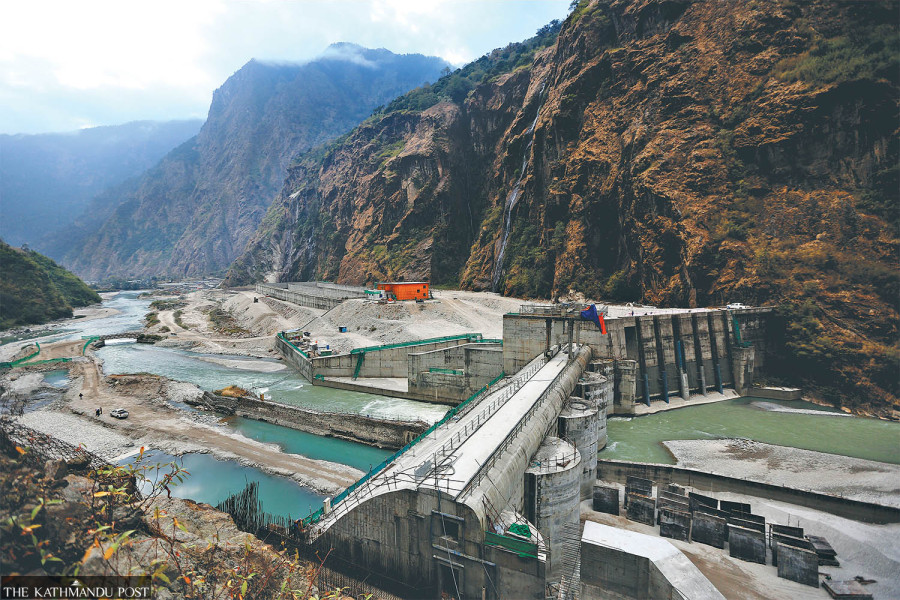
India’s electricity demand is projected to more than double over the next decade, but its rapid expansion of solar, wind, storage and nuclear power means Nepal cannot assume it will remain a captive market for its hydropower. The growing demand for electricity in India has encouraged Nepal’s government and private sector to invest billions of rupees in hydropower, with India and Bangladesh seen as the country’s principal potential export markets. File Photo
India’s electricity demand is projected to more than double over the next decade as the country pursues its ambition of becoming a developed nation and a leading global economic power by 2047.
The Central Electricity Authority’s National Generation Adequacy Plan (2026-27 to 2035-36), which maps India’s power sector transition over the next 10 years, projects peak electricity demand to reach 458.7 GW by 2035-36. To meet that demand, India’s total installed capacity is expected to more than double from 520.5 GW to 1,121 GW.
On August 15, marking India’s 80th Independence Day, Prime Minister Narendra Modi announced that his government was moving ahead with a target of 100 GW of nuclear power capacity by 2047, describing nuclear energy as an important component of the country’s energy security.
These developments point to a potentially huge market for Nepali electricity in India. But energy experts warn that Nepal cannot take the Indian market for granted.
India is not only expanding its own generation capacity to meet rising demand, but is also rapidly investing in solar, wind, hydropower, battery storage, pumped-storage projects and nuclear energy. Its push towards a diversified energy mix could eventually make Indian buyers more selective about the electricity they purchase from Nepal.
The nuclear power expansion, in particular, could become another factor that Nepal needs to consider while planning its hydropower strategy.
“Now we need to focus on agreements of five, 15 and 25 years with India or Bangladesh for individual projects,” said Kulman Ghising, former energy minister. “For that, the government must move seriously to ensure the market for electricity, from developing hydropower projects to expanding cross-border transmission lines and exporting power.”
India’s latest energy projections suggest that it will increasingly need electricity that is available when required, reliable and competitively priced—not just surplus power generated by Nepal during the monsoon.
That makes long-term power purchase agreements (PPAs) increasingly important, stakeholders say.
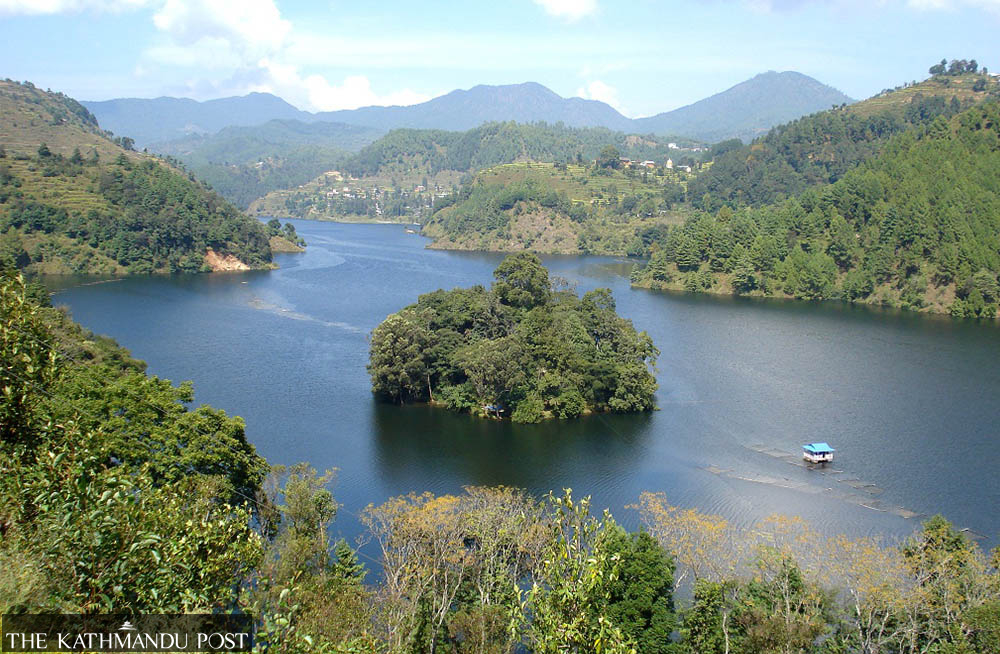
Nepal’s theoretical hydropower potential is estimated at 83,000 MW, while its technically and economically feasible potential is around 43,000 MW. File Photo
Some also worry about the geopolitical risks of depending heavily on a single market. Nepal-India relations have at times deteriorated sharply, with India imposing major economic blockades or trade restrictions on Nepal in 1969, 1988-89 and 2015-16 amid geopolitical tensions and disagreements over Nepal’s domestic or foreign policies.
If bilateral relations sour in the future, India’s expanding domestic generation capacity could give it greater flexibility in deciding whether and when to purchase electricity from Nepal, say experts.
As India expands its solar, wind, hydropower and energy-storage capacity, it will increasingly be able to assess Nepal’s electricity on the basis of price, reliability and availability.
That is why experts say Nepal needs to lock in markets through long-term agreements while also diversifying beyond India.
Some have suggested developing South Asia’s energy market along the lines of regional transit frameworks such as the Bangladesh, Bhutan, India and Nepal Motor Vehicles Agreement, which seeks to facilitate cross-border movement among the four countries and beyond.
The growing demand for electricity in India has nevertheless encouraged Nepal’s government and private sector to invest billions of rupees in hydropower, with India and Bangladesh seen as the country’s principal potential export markets.
“Hydropower will continue to have a market because it is clean energy, but Nepal must focus on production as well as different types of agreements,” said Radhesh Pant, former chief executive officer of the Investment Board Nepal.
“Hydropower is clean electricity. We need to make the market competitive,” he said. “Electricity trading agreements should be designed so that both sides benefit.”
A study by the Independent Power Producers’ Association, Nepal (IPPAN), the private sector body representing the energy industry, shows that Rs1.31 trillion has already been invested in 923 hydropower projects at various stages, from operational projects to those that have obtained survey and construction licences.
Of that, Rs1.24 trillion has been invested in 347 operational and under-construction projects with a combined capacity of 7,251 MW. Another Rs66.62 billion has been invested in 576 projects with a combined capacity of 27,535 MW that are at preliminary stages, including survey, study and design.
A separate report on Nepal-India electricity trade estimated that Nepal could earn up to Rs310 billion annually in 2030 and as much as Rs1.069 trillion annually in 2045 if it can harness its hydropower potential and sell electricity to India.
The report, titled ‘Economic Benefits from Nepal-India Electricity Trade’, projected that Nepal would need to export 13 GW of electricity to India by 2030 and double that capacity by 2045 to achieve those earnings.
Harnessing electricity on that scale would require investments of up to Rs2.596 trillion between 2012 and 2030 and another Rs2.216 trillion between 2031 and 2045, according to the report produced by Integrated Research and Action for Development, India.
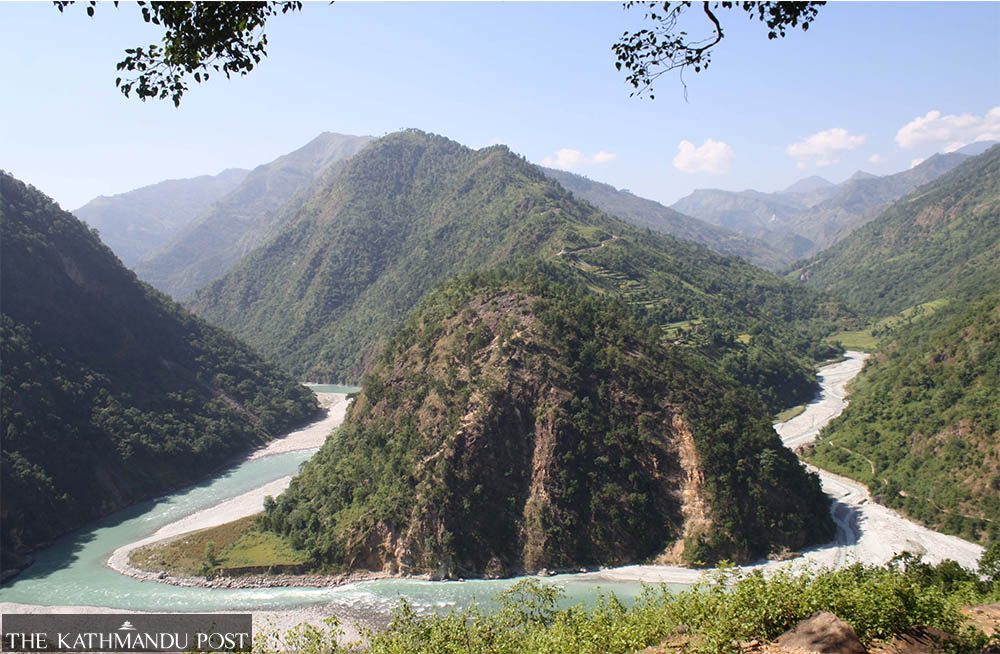
Energy experts say India’s rapid expansion of solar and other renewable sources could put pressure on the market for Nepali hydropower in the future. File Photo
But there is a catch.
India is emphasising large installed capacity and a diversified energy mix to maintain system reliability. Solar power is expected to account for a significant share of its future electricity mix, while non-fossil fuel-based generation capacity is projected to reach around 70 percent.
Energy experts say India’s rapid expansion of solar and other renewable sources could put pressure on the market for Nepali hydropower in the future.
“The world will not wait for hydropower electricity. So we need to move quickly now,” said Ashish Garg, former vice-president of IPPAN. “We cannot sit back simply because we have licences for 30 or 35 years. Nepal is sleeping while the rest of the world has moved far ahead.”
Nepal’s power purchase agreement process is currently stalled. Around 281 hydropower projects with a combined capacity of approximately 16,500 MW have applied for PPAsand are waiting for approval.
According to Garg, the government needs to resume the stalled PPA process, remove obstacles related to survey licences and accelerate projects that are already under construction.
India’s solar power capacity has expanded rapidly, reaching around 211 GW. In the past year alone, the country added around 75 GW of solar generation capacity.
But solar power has an inherent limitation: it cannot generate electricity at night, while its output is also lower in the morning and evening.
India is therefore investing not only in solar power but also in battery energy storage systems, pumped-storage projects and nuclear energy.
Nepal’s hydropower sector nevertheless has an opportunity because hydropower can help balance electricity systems when solar and wind generation declines.
“India is rapidly moving towards renewable energy. Nevertheless, India is ready to buy hydropower. So we need to secure the Indian market now,” Garg said. “There should be no politics in electricity. We need to lock in the market through long-term power sales agreements.”
Nepal’s theoretical hydropower potential is estimated at 83,000 MW, while its technically and economically feasible potential is around 43,000 MW. The country’s total installed generation capacity has reached around 4,200 MW, while peak domestic demand is only around 2,000-2,200 MW.
Nepal has recently started earning significant revenue from electricity exports to India. In the last fiscal year ended in mid-July, Nepal earned Rs29.32 billion from electricity sales to India and Bangladesh.
But electricity trade remains largely based on selling surplus power during the monsoon, when generation is high, and importing electricity from India during the dry season.
Producers are increasingly questioning the sustainability of that model. They argue that Nepal must make its electricity more competitive in the Indian market and secure firm buyers for its power.
“Although the private sector has signed a memorandum of understanding with various Indian companies for electricity sales, those efforts have not moved forward because the government has not granted permission for power trading,” said Suman Kumari Joshi, secretary of IPPAN.
“We have lobbied as much as we can. We have signed agreements with Indian companies. But Indian companies have started telling us, ‘Your government does not give you permission, so what can you sell?’” she said.
Nepal Power Exchange Company was established around eight years ago but has still not received permission to engage in power trading, she said.
With electricity demand rising in India, Nepal should not delay in taking advantage of the opportunity, according to Joshi.
“India is in a race to become the world’s third-largest economy. That is why its electricity demand is increasing. Taking 10,000, 15,000 or 20,000 MW from Nepal would not be a major burden for India’s overall energy system,” Joshi said. “India will still need more renewable energy and firm energy.”
Nepal also has a geographical advantage because it borders populous and economically active Indian states such as Bihar and Uttar Pradesh, she said.
Uttar Pradesh has a population of more than 230 million, while Bihar has more than 110 million. The size of these markets alone offers Nepal significant opportunities for electricity trade.
But Nepal’s ability to exploit its hydropower potential is constrained by inadequate transmission infrastructure.
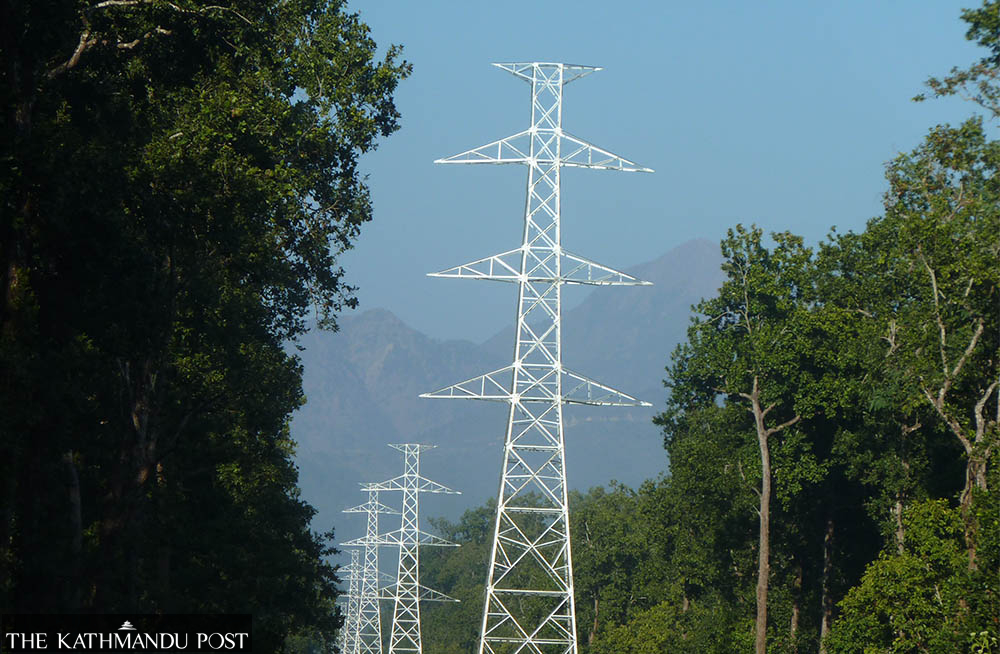
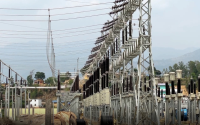
Nepal currently imports and exports up to 1,000 MW of electricity through the 400-kV Dhalkebar-Muzaffarpur transmission line, along with additional power through 132-kV lines. File Photo
Nepal has the potential to generate more than 40,000 MW of electricity, but that potential cannot be utilised without sufficient transmission lines. Around 1,000 MW of electricity is already being wasted because of inadequate transmission infrastructure.
Rather than adding new generation projects, the government should focus on completing projects already under construction and directing remaining resources towards transmission and distribution infrastructure, Joshi said.
“The stalled PPAs need to move forward. The government should accelerate hydropower projects under construction. The private sector will build new projects,” she said. “Instead of adding more and more new projects, we should complete those already under construction and spend the remaining resources on transmission and distribution lines.”
Stakeholders also say relying on India as Nepal’s only external electricity market would increase risks. Nepal should expand access to Bangladesh and explore other South Asian markets while developing the transmission infrastructure needed to reach them.
Nepal should also prioritise cross-border transmission lines for electricity exports.
“As South Asian countries become increasingly interconnected in terms of their energy systems, India will remain the region’s energy hub,” Joshi said. “Nepal should therefore pursue its energy relationship with India as a long-term strategy.”
As India prepares long-term energy plans in line with its goal of achieving net-zero carbon emissions, it is reducing its dependence on coal and other fossil fuels. This could create sustained demand for clean electricity from Nepal—but only if Nepal can offer reliable and competitively priced power.
Nepal currently imports and exports up to 1,000 MW of electricity through the 400-kV Dhalkebar-Muzaffarpur transmission line, along with additional power through 132-kV lines. The government has prioritised electricity trade with India and the expansion of cross-border transmission infrastructure.
Ghising said that although Nepal’s generation capacity is increasing, approvals for exports and expansion into new markets have not kept pace.
He also called for greater emphasis on reservoir-based projects, which can provide electricity more consistently across seasons, and urged the government to prioritise major hydropower projects such as Upper Arun, Dudhkoshi and Budhigandaki.
“The government is not focusing on electricity trading. It is getting caught up in minor issues,” he said. “At the same time, hydropower projects need to be built as quickly as possible. Cross-border transmission lines need to be completed quickly. There must be a focus on transmission infrastructure.”
For Nepal, the challenge is therefore no longer simply how much electricity it can generate. It is whether it can build the transmission network, secure long-term buyers and make its hydropower competitive before India’s rapidly changing energy mix gives it more alternatives.
India may remain Nepal’s biggest electricity market for years to come. But the window to secure that market on favourable, long-term terms may not remain open indefinitely.




 19.72°C Kathmandu