India opening power transmission infra sector to Chinese-linked firms gives Nepal a chance to make its case
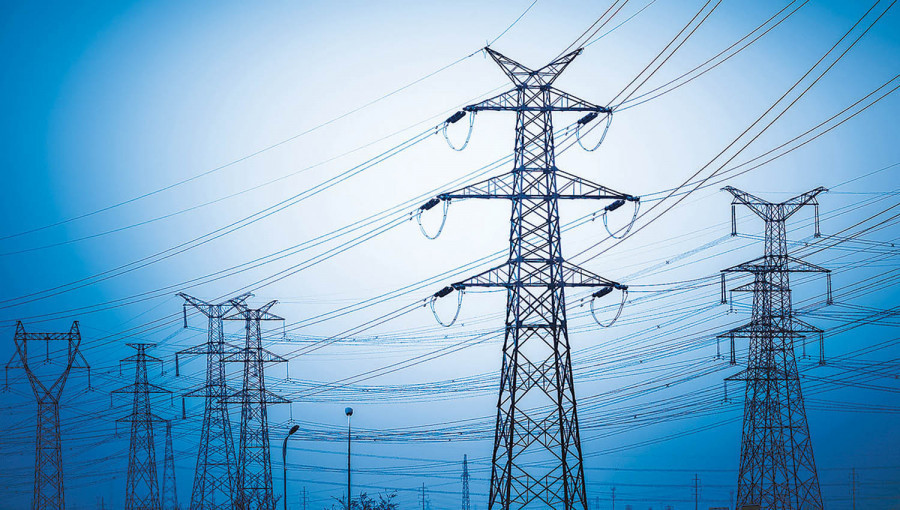
New Delhi has granted a two-year exemption to four companies with Chinese ownership or business links, allowing them to compete for Indian government contracts related to critical electricity transmission infrastructure. Shutterstock
India’s decision to allow four Chinese-linked companies to participate in bidding for strategic electricity transmission projects has prompted fresh calls in Nepal for diplomatic efforts to remove long-standing barriers affecting hydropower projects with Chinese involvement and expand cross-border electricity trade.
In June, the Department of Expenditure under the federal Ministry of Finance in India granted a two-year exemption to four companies with Chinese ownership or business links, allowing them to compete for government contracts related to critical electricity transmission infrastructure. The companies are TBEA Energy India, Nanjing Electric India, New Northeast Electric India and Taikai Electric (India).
Although these companies manufacture equipment in India, they had been affected by restrictions introduced in 2020 after New Delhi tightened procurement rules following deteriorating ties with Beijing. The measures effectively barred bidders from countries sharing a land border with India from participating in many government procurement processes without prior approval.
TBEA Energy India is a wholly owned subsidiary of China’s TBEA Group, while Nanjing Electric India is fully owned by Chinese electrical equipment manufacturer Nanjing Electric. New Northeast Electric India has technology transfer partnerships with Chinese power companies, and Taikai Electric (India) is linked to the China-based Taikai Group.
India has, however, stressed that the exemption applies only to these four companies for a limited period and should not be treated as a precedent for other firms.
The decision comes as India and China gradually rebuild diplomatic and economic engagement after years of strained relations. Nepali energy sector stakeholders believe the development provides Kathmandu with an opportunity to seek the removal of restrictions that continue to affect Nepal’s hydropower industry despite improving regional ties.
Nepal requires project-specific approval from India before electricity generated by individual hydropower schemes can be exported to the Indian market. Developers also depend on a no-objection certificate issued through the Indian Embassy in Kathmandu to import explosives essential for tunnelling and other civil works in hydropower construction.
According to power developers, India has been reluctant to approve power exports from projects involving Chinese investors, Chinese contractors or, in some cases, even Chinese equipment. The same concerns have also affected the renewal of permits for importing explosives.
Industry representatives say India has become increasingly restrictive over the past year. They claim that Indian authorities now require developers to submit documentation proving the import of electro-mechanical and hydro-mechanical equipment before renewing no-objection certificates for explosives. Some developers say authorities have gone further by asking for evidence that equipment imports have already been completed before extending the permits.
Developers argue that these conditions are impractical because heavy electrical equipment is generally imported only after major civil construction has progressed substantially.
One hydropower promoter said the shortage of explosives in India has also contributed to the delays. “Some production facilities in India have been facing problems. Nepal’s own production is also limited. Demand is increasing, but neither domestic production nor imports are sufficient,” the developer said.
The promoter added that some projects involving Chinese contractors have begun importing explosives directly from China because obtaining Indian approval has become increasingly difficult.
Mohan Dangi, president of the Independent Power Producers’ Association Nepal (IPPAN), said delays in renewing no-objection certificates have repeatedly disrupted construction schedules.
“Explosives are needed for tunnel excavation and several other construction activities. If their supply is delayed, the entire work schedule is pushed back. Civil construction can come to a halt, affecting overall project progress,” said Dangi.
“Civil works begin long before electrical equipment is imported. Equipment usually arrives one and a half to two years later, so making equipment imports a precondition to renewing permits is unreasonable. We have been lobbying, but the government also needs to take up the issue diplomatically,” said Dangi.
The issue extends beyond construction materials. India has also declined to approve electricity imports from several Nepali hydropower projects because of Chinese involvement, even when Chinese firms won contracts through international competitive bidding rather than direct government agreements.
One frequently cited example is the 456-megawatt Upper Tamakoshi Hydropower Project. Although Indian companies supplied hydro-mechanical, electro-mechanical and transmission line components, the civil construction contract was awarded to a Chinese company. Nepal has repeatedly requested India to approve electricity exports from the project during meetings of the Nepal-India Joint Working Group on Power Sector Cooperation, but approval has yet to be granted.
Under India’s designated authority guidelines, projects involving investment from countries sharing a land border with India, but lacking bilateral power sector cooperation agreements with New Delhi, face restrictions on cross-border electricity trade.
In practice, however, Nepali developers argue that India has applied the policy more broadly by withholding approval even for projects where the Chinese role is limited to construction contracts or equipment supply rather than equity investment.
Dangi said India’s latest decision to permit Chinese-linked companies to compete for public contracts weakens the justification for maintaining similar restrictions on Nepal’s hydropower sector. “Investment is one issue, but companies that have qualified through international competitive bidding should not be blocked simply because they are Chinese,” he said.
Former government secretary Anup Upadhyay also believes the policy shift provides Kathmandu with a strong diplomatic opening.
“This is the right time. The concerns that originally prompted these restrictions are gradually easing, so Nepal should actively ask why similar obstacles still remain for us,” said Upadhyay.
“Our challenge is finding markets for our electricity. Even if Nepal produces 27,000 or 28,000 megawatts in the future, that volume is insignificant within India’s vast electricity system. We need to engage India at the highest political level and create space for greater electricity trade,” he said.
Upadhyay said the issue should be raised consistently during meetings between prime ministers, ministers and senior bureaucrats, adding that any procedural complications could be addressed through high-level dialogue.
Relations between India and China deteriorated sharply after deadly clashes between troops in the Galwan Valley in eastern Ladakh in 2020. New Delhi subsequently imposed stricter scrutiny on Chinese investments, banned dozens of Chinese mobile applications, including TikTok, and tightened procurement rules affecting Chinese companies.
Over the past year, however, diplomatic contacts and high-level exchanges between India and China have increased. Bilateral trade has also remained robust, despite political tensions.
Against this backdrop, Nepali energy experts argue that India’s latest decision signals a gradual shift in policy and provides Kathmandu with an opportunity to seek a more predictable framework for hydropower cooperation. Nepal has expanded electricity exports to India in recent years and has identified cross-border power trade as a major pillar of its economic strategy.




 24.79°C Kathmandu