



 22.94°C Kathmandu

Thu, Oct 22, 2026
Money
What’s the cost of building a home? It’s getting more expensive
Builders cite rising material prices, higher transport costs and stricter building standards, while official data show electrical wires and bricks posted the sharpest price increases.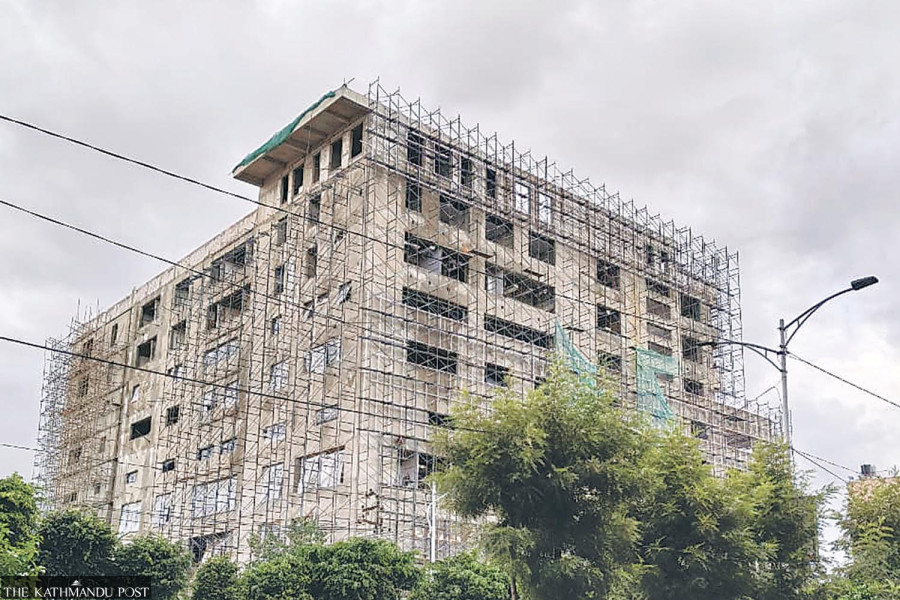
bookmark
Krishana Prasain
Published at : July 12, 2026
Updated at : July 12, 2026 07:22
Kathmandu
What does it cost to build a house in Kathmandu? Builders say the budget for constructing a two-and-a-half-storey house has increased by double digits over the past year, largely due to the impact of the US-Iran war, which triggered a rise in commodity prices after energy and transportation costs soared.
In Kathmandu, constructing a two-and-a-half-storey home on an 800-square-foot plot now costs around Rs10.7 million, according to Ganesh KC, founder of Native Builders, a company that provides home construction services.
"It was Rs9 million a year ago."
The estimate includes standard finishing with tiles, doors, windows and paint.
Overall, the cost of constructing a house has increased by 14 percent, according to builders and government data.
KC said that although the prices of construction materials have increased, labour costs remain largely unchanged.
According to him, unskilled labourers earn up to Rs1,200 per day, while skilled workers are paid around Rs2,000 per day.
KC said that building homes outside the Kathmandu valley, especially in the Tarai, is cheaper due to lower transportation costs and easier availability of riverbed materials and bricks.
The National Statistics Office, Nepal's central statistical agency, said construction material prices have jumped sharply following the US-Iran war.
Bricks are one of the main contributors. Brick prices increased by 13.41 percent year-on-year, exerting a disproportionate impact on housing and small infrastructure costs due to supply-side constraints.
Brick kilns were unable to meet demand during the peak construction season—from January to April, according to the statistical office's study.
The report, titled Input Price Index of the Construction Sector, said bricks recorded the highest year-on-year increase among all items in the construction input basket, with the index reaching its highest level in the five-year dataset.
The 13.41 percent increase in brick prices is the steepest on record.
Given bricks' weight of 10.89 percent in the material sub-index, this single item has had an outsized impact on housing and small infrastructure costs, the study said.
Environmental regulations limiting traditional kiln operations under Nepal's cleaner kiln transition programme, combined with record peak-season demand, have significantly tightened the brick market.
The brick index reached its highest level in five years, the report said.
However, brick producers dispute the findings, saying prices have remained largely unchanged over the past decade.
Krishna Prasad Awal, president of the Federation of Nepal Brick Industries, said bricks cost between Rs15 and Rs17 apiece in 2015.
The price declined to Rs13 per brick during last year's monsoon off-season.
Nepal's brick industry is highly seasonal. The off-season spans from June through October, coinciding with the monsoon and the agricultural harvest. During this period, traditional kilns halt production and workers return to their home villages.
Nepal's construction season typically peaks between October and April.
During this year's peak season, brick prices rose again to around Rs15 per piece, Awal said. "The surge in fuel prices caused by the US-Iran war has not affected brick prices."
Almost all brick factories operating in the Kathmandu Valley now use zig-zag technology, which has not increased production costs, he said.
Zig-zag technology is a more efficient and less-polluting firing method in which bricks are arranged in a staggered pattern to improve airflow and combustion.
Besides bricks, the prices of electrical wires, concrete products, galvanised iron (GI) pipes, aluminium products and electrical goods have increased sharply, particularly following the US-Iran war.
The conflict between the United States and Iran, which escalated in late February, triggered a sharp rise in fuel prices.
During the three months following the conflict, petrol prices in Nepal climbed 38.21 percent to Rs217 a litre, while diesel prices jumped 58.45 percent to Rs225 a litre.
The higher fuel costs increased transportation expenses, pushing up the prices of raw materials and finished goods and raising production costs across sectors.
According to the National Statistics Office report, electrical wires recorded the highest year-on-year price increase in the construction input index, rising 24.89 percent.
Despite their relatively modest weight in the index, the magnitude of the increase is significant.
The report attributed the rise primarily to higher global copper prices driven by demand linked to the energy transition and supply chain disruptions caused by uncertainty over US tariff policies in early 2026.
KC said that in nearly a decade of building homes, he had never seen construction costs rise as sharply as this year.
He said that building regulations and standards imposed by metropolitan cities and municipalities have also increased construction costs.
The report showed moderate increases in the prices of cement, stone, sand, gabion wire and paint.
Cement prices increased by 1.30 percent, stone by 3.17 percent, sand by 1.02 percent, gabion wire by 1.04 percent and paint by 0.01 percent during the review period.
The labour wage sub-index increased by 2.81 percent year-on-year.
The trend remains steady and reflects structural increases in Nepal's construction labour market.
The report said the labour wage sub-index is significantly less volatile than the material sub-index. It added that Nepal's construction activity entering the pre-monsoon peak season—from mid-February to mid-March—traditionally exerts upward pressure on daily wages.
"Apart from safety, building a home is a once-in-a-lifetime dream. People's desire for well-designed homes has also increased," KC said. "All these factors have increased the cost of building a house."
January to April is Nepal's peak construction season, when dry weather allows maximum construction activity.
Demand for bricks rises by 9.33 percent, cement by 5.04 percent and sand by 3.23 percent during this period as contractors rush to complete projects before the onset of monsoon, the report said.
This seasonal demand surge is the single most important domestic factor behind the broad-based increase in construction material prices during the quarter.
The report also noted that the continued slowdown in private real estate and housing construction following credit tightening in the fiscal year 2023-24 has suppressed demand for some materials, with prices of hume pipes declining by 10.01 percent, wood by 5.59 percent and tiles by 9.07 percent.
Krishana Prasain
Krishana Prasain is a business reporter for The Kathmandu Post covering markets. Before joining The Kathmandu Post in 2018, she spent 3 years in New Business Age magazine covering business.

Most Read from Money
Nepal travel agents threaten to stop selling Thailand trips over visa rules

Why does an hour long flight to Dhangadhi cost more than a flight to New Delhi?
Malaysia rejects Nepal’s demand to open recruitment to all manpower agencies

No school, but a graduation cap for women dairy farmers
Nepal arrests four medical service providers as Malaysia recruitment row deepens
Editor's Picks




E-PAPER | October 22, 2026

×