



 14.81°C Kathmandu

Sat, Oct 24, 2026
Money
Average return on microenterprises in Nepal falls below minimum urban wage, reports World Bank
More than half of Nepal’s microenterprises remain unregistered as owners struggle with low incomes, limited job opportunities and weak incentives to formalise, says a new World Bank report.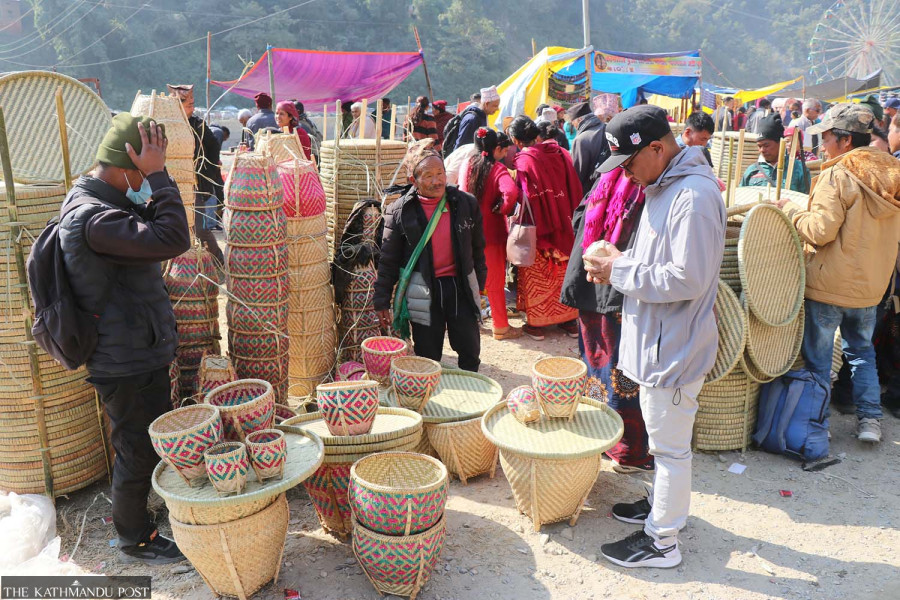
bookmark
Krishana Prasain
Published at : June 25, 2026
Updated at : June 26, 2026 06:41
Kathmandu
Most informal microenterprises in Nepal remain outside the formal economy not by choice but out of necessity, according to a recent World Bank report, which says the vast majority of such businesses operate at subsistence levels with little prospect of growth.
The report, titled “Survival or Growth? Nepal’s Microenterprise Landscape and the Case for a Differentiated Policy,” finds that informal firms are largely survival-driven enterprises established by people with limited employment opportunities and low earning potential.
According to the study, owners of informal businesses are more likely than owners of formal microenterprises to run their ventures as a means of meeting subsistence needs. Many operate them as a secondary source of income due to the poor quality of available jobs, while others turn to self-employment because they cannot access wage employment.
Informal microenterprises account for a significant share of Nepal’s urban business landscape. They absorb a large portion of the labour force, serving both as a safety net and a source of livelihood in an economy where quality wage employment remains scarce. However, most of these enterprises remain trapped at subsistence levels, with limited opportunities for productivity gains or structural transformation.
The report highlights deep structural differences between formal and informal microenterprises and concludes that only a small fraction of informal firms possess the capacity to benefit from formalisation. It recommends a segmented policy approach—providing livelihood support and social protection for the majority of informal firms while offering targeted productivity-enhancement and formalisation assistance to the small group with growth potential.
“The government’s ambitious economic growth targets cannot be achieved unless informal businesses are gradually brought into the formal economy,” said Nara Bahadur Thapa, former executive director of Nepal Rastra Bank.
According to Thapa, widespread informality not only undermines economic growth but also weakens government revenue collection and reduces the effectiveness of fiscal policy.
He said complicated registration procedures, inadequate government support programmes and limited willingness among banks and financial institutions to finance small businesses are among the major reasons informal enterprises remain outside the formal system.
The findings are based on the Informal Sector Enterprise Survey conducted by the World Bank in Biratnagar, Birgunj, Butwal, Dhankuta, Janakpur, Kathmandu, Nepalgunj and Pokhara.
The report states that informal microenterprises in Nepal are overwhelmingly necessity-driven businesses. Their owners generally have low levels of education, limited business experience and few alternatives in the labour market. Most entrepreneurs reported that they started their businesses because they were unable to find other sources of income.
Many also operate their businesses as a supplementary source of earnings because available wage jobs pay poorly. Average monthly profits from informal enterprises remain below both the minimum wage and average urban wages. As a result, business earnings largely reflect compensation for the owner’s labour rather than returns on capital investment or entrepreneurial skills.
Structurally, most informal microenterprises are small, relatively young and operated by a single individual. Only 8 percent reported employing at least one paid worker during the month preceding the survey, while the average enterprise employed just 1.5 workers, including unpaid family members.
A large proportion of these businesses are concentrated in food retailing, and many operate from the owners’ homes or temporary structures.
The report finds that only a small share of informal firms stand to gain significantly from formalisation. One category that could benefit comprises highly productive informal enterprises. However, only 2.3 percent of informal businesses in Nepal achieve productivity levels comparable to the most productive formal microenterprises.
In contrast, formalisation typically occurs at the start of business operations. The report shows that 68 percent of formal microenterprises and 85 percent of formal non-micro firms began as registered businesses.
According to the study, roughly four out of five informal firms lack the productivity and capabilities needed to benefit meaningfully from formal status. For these enterprises, formalisation could impose additional costs without generating proportional returns.
As a result, the report argues that policy should focus on improving livelihoods, stabilising incomes and reducing vulnerability among households that depend on such businesses. Measures aimed at strengthening resilience and providing social protection would likely be more effective than blanket formalisation efforts.
More than half of Nepal’s microenterprises remain informal. The report notes that of the country’s 811,056 microenterprises, 449,315—or 55 percent—are not registered with any government entity. The remaining 361,741 firms are registered with at least one government agency.
Informal microenterprises also play a crucial role in employment generation. According to the 2018 Economic Census, nearly 1.5 million Nepalis work in microenterprises, compared to 1.27 million employed in small and medium-sized enterprises.
Although profitability was cited by more than half of business owners as a key reason for starting a business, actual earnings remain low. The average monthly net profit of an informal microenterprise stands at Rs15,293, below both the average urban wage of Rs17,965 and the monthly minimum wage of Rs19,550 as of July 2025.
The report says this demonstrates that many urban informal businesses exist primarily because owners lack access to better-paying employment opportunities. Their profits are often little more than compensation for their own labour rather than genuine entrepreneurial returns.
Women and internal migrants make up a substantial share of informal business owners. Nearly half of all informal microenterprises—48 percent—are owned by women.
Female entrepreneurs are more likely to value flexibility in working hours and business location. Around 90 percent of all owners cited convenience of location and working hours as a key reason for launching an informal business, with the figure rising to 92 percent among women compared to 85.6 percent among men.
The report also finds that female business owners are less likely to be the primary earners in their households. Only 34 percent of women reported being household breadwinners, compared to 73 percent of men, suggesting that women-operated informal businesses are more often a supplementary source of household income.
Krishana Prasain
Krishana Prasain is a business reporter for The Kathmandu Post covering markets. Before joining The Kathmandu Post in 2018, she spent 3 years in New Business Age magazine covering business.





Most Read from Money

Why does an hour long flight to Dhangadhi cost more than a flight to New Delhi?

Nepal travel agents threaten to stop selling Thailand trips over visa rules
Malaysia rejects Nepal’s demand to open recruitment to all manpower agencies

No school, but a graduation cap for women dairy farmers
Nepal arrests four medical service providers as Malaysia recruitment row deepens
Editor's Picks




E-PAPER | October 24, 2026

×