



 17.81°C Kathmandu

Thu, Oct 22, 2026
Money
Regulatory sandbox guidelines aim to foster Nepal fintech innovation
Controlled testing framework will allow banks, fintechs and payment companies to trial new products before commercial launch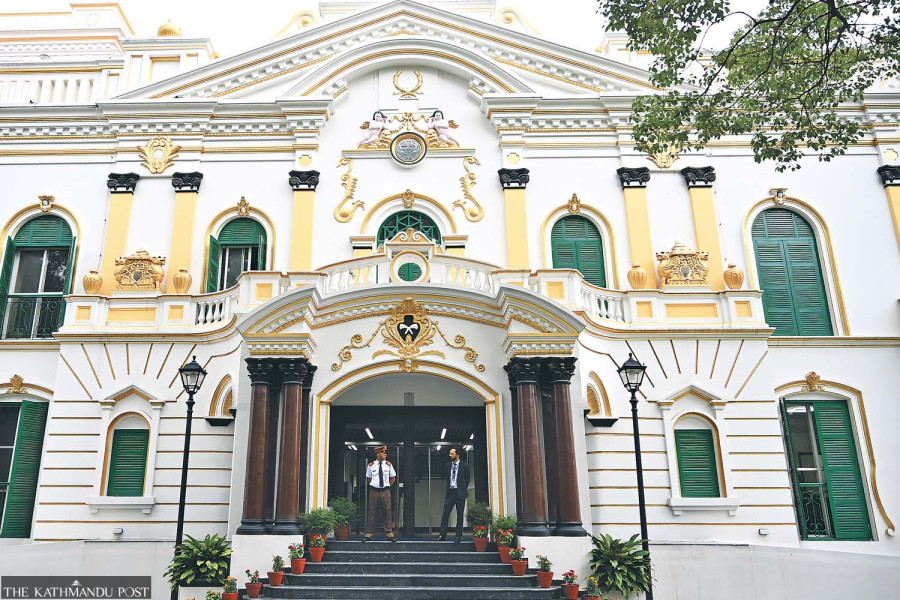
bookmark
Krishana Prasain
Published at : June 24, 2026
Updated at : June 24, 2026 06:57
Kathmandu
The Nepal Rastra Bank (NRB) has drafted Regulatory Sandbox Guidelines aimed at creating a conducive environment for the development and deployment of innovative technology-enabled products, services and solutions in the financial sector.
The proposed Regulatory Sandbox is designed primarily for fintech innovators and other financial service providers that have already developed a product, service or solution and are ready to conduct live market testing under a controlled, supervised and monitored environment.
A Regulatory Sandbox is a structured testing platform that allows participants to experiment with new products and services before commercial rollout. The framework is intended to promote evidence-based assessment of emerging financial innovations while safeguarding consumers and the broader financial system.
Sudha Shrestha, deputy spokesperson and information officer at Nepal Rastra Bank, said the guidelines will enable banks and financial institutions (BFIs), payment service providers and licensed fintech companies to test new products in a simulated environment before launching them in the market.
“This will help fintech companies assess the commercial viability of their products and identify potential technical and operational issues before full-scale deployment,” she said.
According to Shrestha, participants will not be charged any fees for testing their products within the Sandbox. The central bank is currently working on implementing the guidelines.
Industry players have welcomed the initiative, saying it will help create an enabling environment for the introduction of advanced financial technologies.
“As of now, regulations do not cover every type of fintech solution, and technology is evolving rapidly,” said Praveen Regmi, chief executive officer at IME Khalti. “The guidelines will support the development and testing of new products while allowing regulators and industry players to better understand associated risks.”
Regmi said regulatory sandboxes have become a widely used tool globally and can strengthen collaboration between innovators and regulators in the areas of risk management, transparency and consumer protection.
Under the draft guidelines, entities eligible to participate include banks and financial institutions, payment system operators, payment service providers, remittance companies and new fintech firms operating within or supporting activities that fall under NRB’s regulatory jurisdiction.
New fintech companies developing innovative financial products, services or solutions may receive temporary regulatory relief strictly for the purpose of Sandbox testing.
Participants will benefit from simplified reporting and disclosure requirements, non-discriminatory and low-cost access to payment and banking infrastructure, temporary waivers related to support centre operating hours and dispute management mechanisms, provided that consumer protection standards and minimum service requirements are maintained.
The guidelines also propose technology-neutral provisions that would allow emerging technologies to be tested. Participants may be granted flexibility in marketing and advertising, provided customers are clearly informed that the products are being tested within the Sandbox framework.
The Sandbox will operate through four phases: application, application evaluation, testing, and evaluation and graduation.
NRB said the initiative is intended to support fintech innovation by allowing products to be tested in a live environment while ensuring adequate safeguards for consumers and the financial services sector.
The application and evaluation process will generally be completed within 120 working days from the opening of the application window. Each application window will remain open for 45 working days.
Oversight of the Sandbox will be provided by a dedicated inter-departmental steering body known as the Sandbox Governing Committee. The committee will meet regularly to supervise operations, review testing outcomes, ensure consistency in supervision and make strategic decisions, including scope modifications and participant exit pathways.
The guidelines include a list of eligible products and services that may be tested under the framework. These include application programming interfaces (APIs), mobile money services, retail payment solutions, money transfer services, digital know-your-customer (KYC) systems, digital identity services, digital lending platforms, smart contracts and financial inclusion products.
Cybersecurity solutions, embedded finance services, regulatory technology products and other innovations approved by the central bank may also qualify for testing.
According to the NRB, the Regulatory Sandbox will help accelerate the introduction of innovative technology-enabled financial services, deepen financial inclusion and enable regulators to monitor emerging technologies before they are introduced at scale.
The central bank said the framework will also help identify potential systemic risks and strengthen consumer protection measures in response to technological changes in the financial sector.
The guidelines clarify that only activities falling within NRB’s regulatory oversight, or those that facilitate and support regulated financial activities, will be eligible for Sandbox testing.
Acceptance into the Regulatory Sandbox will not constitute a permanent operating licence, nor will it exempt participants from future regulatory oversight and supervision.
Krishana Prasain
Krishana Prasain is a business reporter for The Kathmandu Post covering markets. Before joining The Kathmandu Post in 2018, she spent 3 years in New Business Age magazine covering business.





Most Read from Money

Nepal travel agents threaten to stop selling Thailand trips over visa rules

Why does an hour long flight to Dhangadhi cost more than a flight to New Delhi?
Malaysia rejects Nepal’s demand to open recruitment to all manpower agencies

No school, but a graduation cap for women dairy farmers
Nepal arrests four medical service providers as Malaysia recruitment row deepens
Editor's Picks




E-PAPER | October 22, 2026

×