



 22.94°C Kathmandu

Thu, Oct 22, 2026
Money
Why Nepal’s private sector is choosing safety over growth
A convergence of regulatory scrutiny, economic stagnation and legal anxiety has pushed entrepreneurs into a defensive, wait-and-see posture.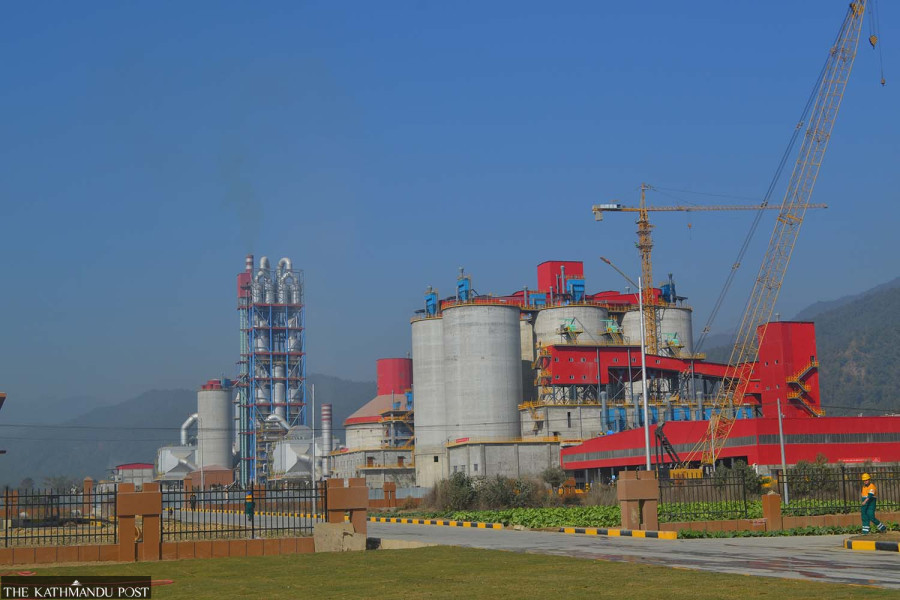
bookmark
Yagya Banjade
Published at : June 21, 2026
Updated at : June 21, 2026 07:27
Kathmandu
Profit-making is generally the fundamental objective of any private enterprise, but for many entrepreneurs in Nepal now, safeguarding themselves, their investments and their businesses has become a more pressing concern than pursuing growth.
Business leaders say a combination of sluggish economic activity, weak market demand, regulatory uncertainty, ongoing disputes involving industrial estates and dedicated power lines, as well as increased scrutiny under anti-money laundering and asset disclosure rules has pushed the private sector into a defensive position.
Although commercial banks are awash with liquidity and lending rates have fallen to historic lows, credit demand remains subdued. Economists and business leaders interpret this as a sign of deeper structural concerns affecting investor confidence.
“Private sector morale remains weak and businesses continue to operate in an atmosphere of fear and uncertainty,” said Bhawani Rana, former president of the Federation of Nepalese Chambers of Commerce and Industry (FNCCI).
Finance Minister Swarnim Wagle has repeatedly argued that the budget for the upcoming fiscal year contains numerous policies and programmes designed to support private enterprise. Rana acknowledged that the government has introduced several encouraging measures through the budget but said they have yet to translate into renewed confidence among investors.
“The finance minister says the budget has provided many wings for the private sector to take flight,” Rana said. “But those wings have not yet gained strength.”
She stressed that the private sector fully supports the government’s efforts to promote good governance. However, she argued that businesses operate within the framework established by the state and therefore systemic reforms are necessary.
“The private sector has greater responsibilities and bears greater risks,” Rana added. “There may have been weaknesses in the past, but improvements in government systems will also help improve private sector practices. Such change cannot happen overnight.”
She also questioned the effectiveness of policies aimed at attracting foreign investment without first strengthening domestic investor confidence. “Foreign investors always seek feedback from domestic investors before entering a country,” she said. “Unless local investors feel confident, foreign investment cannot be expected to grow.”
According to Rana, one of the biggest challenges is the perception that entrepreneurs are inherently profit-driven at the expense of society. “The state and society still tend to view the private sector as profiteers,” she argued. “That mindset needs to change.”
Nepal Chamber of Commerce President Kamlesh Agrawal echoed similar concerns, saying fear has spread across the business community in recent months.
He argued that implementation of anti-money laundering provisions and increasing regulatory oversight have unsettled entrepreneurs and investors. “The country needs an environment that boosts the confidence of industrialists, businesspeople and investors,” he said.
Agrawal called for the implementation of a ‘one sector, one regulator’ policy, arguing that overlapping jurisdiction among multiple agencies has created confusion and fear. “Intervention by numerous authorities in the same sector leaves entrepreneurs constantly worried,” he said.
He also criticised what he described as a culture of arresting businesspeople based on suspicion before wrongdoing has been proven. “Detentions during investigations, before economic crimes are established, negatively affect the investment climate,” Agrawal said. “The government should first listen, complete investigations and impose financial penalties where offences are proven.”
Federation of Contractors’ Associations of Nepal President Nicholas Pandey also expressed concern over what he described as a growing tendency to arrest industrialists, contractors and business owners before investigations are completed.
“The government must investigate every allegation,” he said. “If wrongdoing is established, action should be taken according to law. But arrests before investigations are concluded are problematic.” According to Pandey, the arrest of a single entrepreneur often disrupts projects involving hundreds of workers and contractors, with broader consequences for economic activity. “The impact ultimately reaches the economy itself,” he said.
According to the business leaders, the combination of weak demand, regulatory uncertainty and fear of legal repercussions has discouraged expansion plans even among firms that remain financially healthy. They insist they support transparency and accountability.
Birendra Raj Pandey, president of the Confederation of Nepalese Industries (CNI), said the budget had addressed many concerns raised by the private sector but cautioned that outcomes would depend on implementation. “The budget includes many positive policies for the private sector,” he said. “The real test is how they are implemented.”
Pandey said both domestic and external factors were contributing to uncertainty. He also cited instability in West Asia and its impact on global markets as an additional concern affecting business sentiment.
Slump in stock market
The anxiety gripping industrialists and investors has become increasingly visible in the stock market.
Since the government unveiled the budget for fiscal year 2026-27, the Nepal Stock Exchange (Nepse) has largely moved downward. Of the 15 trading days following the budget announcement, the benchmark index declined on 10 days, rose on four and remained nearly unchanged on one.
The index, which stood at around 2,755 points before the budget presentation, had fallen to approximately 2,700 points by Thursday. Trading turnover has also declined steadily during the same period.
Market observers note that not only trading values but also the number of transactions and traded shares have decreased, indicating weak investor participation.
This trend has surprised some analysts because the government resolved a long-standing dispute over capital gains tax through the budget by declaring the existing capital gains tax regime to be final.
Despite the clarification, investor enthusiasm has not been restored. Experts attribute the subdued market to weak confidence and broader concerns about regulatory developments.
Banks awash with cash, credit demand weak
Nepal Rastra Bank has been continuously withdrawing excess liquidity from the banking system for nearly three years to prevent interest rates from falling further.
The central bank conducts liquidity absorption operations twice a week, yet commercial banks continue to hold more than Rs1 trillion in excess loanable funds on average each month.
Despite historically low lending rates, demand for loans remains weak. Analysts say this reflects reluctance among businesses and investors to undertake new projects.
At the same time, non-performing loans have continued to rise, putting pressure on banks’ capital adequacy ratios. Several commercial banks are reportedly approaching limits on their ability to expand lending despite abundant liquidity because primary capital growth has lagged behind.
The mismatch between abundant funds and weak borrowing demand has become one of the clearest indicators of the challenges facing the economy.
Regulatory bodies without leadership
The government appointed Gopal Bhatta as chairperson of the Securities Board of Nepal only after the position remained vacant for nearly two months. However, the Nepal Insurance Authority and the Nepal Stock Exchange continue to operate without permanent leadership.
Experts argue that the absence of leadership has weakened regulation, supervision and market oversight. A stockbroker who requested anonymity said investors remain cautious and are adopting a wait-and-see approach. “Investor confidence is weak,” he said. “Trading activity remains limited. At the same time, market manipulation concerns continue to exist.”
Former president of Stock Brokers Association of Nepal Bharat Ranabhat said investor confidence has failed to improve despite several market-friendly policy measures. He linked part of the weakness to the ongoing asset declaration process.
“Many private sector representatives and civil servants who were active investors are currently focused on submitting asset declarations,” he said. “There is also concern about potential legal complications, which has discouraged fresh investment.”
Fear surrounds asset declaration forms
The government recently extended the deadline for submitting asset declarations by one month. Nevertheless, many investors remain concerned about possible legal scrutiny arising from the process.
According to market observers, uncertainty surrounding asset declarations has contributed to lower participation in the stock market. Ranabhat believes substantial market gains are unlikely while these concerns persist.
Rent dispute resurfaces in industrials area
Another major issue affecting business confidence is the renewed dispute over industrial area rents.
The Industrial Zone Management Limited has begun disconnecting water and electricity services to industries that have failed to clear outstanding dues related to land, buildings, utilities and other charges.
The move follows a notice issued on June 8 requiring industries to settle dues within seven days.
The dispute stems from court rulings regarding revised industrial zone rents.
A high court decision certified in April 2024 had directed industries to pay increased rents dating back to 2018. Industrial enterprises challenged the ruling in the Supreme Court.
In March 2025, the Supreme Court partially overturned the earlier decision and ruled that revised rents could only be applied from July 2022, rather than retrospectively from 2018.
Both Industrial Zone Management Limited and industry representatives later sought review of the verdict. Last week, a Supreme Court bench comprising Justices Binod Sharma, Sunil Kumar Pokharel and Nityananda Pandey declined to allow the review petitions to proceed. Supreme Court spokesperson Arjun Prasad Koirala said the earlier ruling therefore remains in force.
Ejaz Alam, president of the Federation of Nepal Industrial Zone Industries, said industries have consistently argued that revised rents should only apply from 2022. “We have not paid, and will not pay, the increased rent for the period between 2018 and 2022. However, we have already urged industries to settle dues based on the revised rates applicable from 2022,” he said.
Industrial Zone Management Limited officials maintain that many industries have still not cleared even the post-2022 dues and insist service disconnections will continue unless payments are made.
Umbrella organisations of private sector oppose the move
The FNCCI and the CNI have strongly criticised the disconnection of electricity supplies to industries operating inside industrial areas. They urged authorities not to disconnect power until all legal questions surrounding the dispute are fully settled.
It also requested additional time for industries to pay outstanding rents, noting complaints that the seven-day deadline was too short.
FNCCI said it was concerned by reports that nearly 700 industries across 10 industrial areas were facing administrative pressure, electricity disconnections and other forms of coercion.
FNCCI President Anjan Shrestha urged the government, the Ministry of Industry, Commerce and Supplies, and Industrial Zone Management Limited to halt measures that disrupt production.
“At a sensitive time, cutting electricity supplies and forcing industries towards closure cannot be justified from any perspective,” he said. “Such actions weaken domestic investor confidence and discourage both domestic and foreign investment.”
Industry registrations fall
During the first six months of the current fiscal year, a total of 461 small, medium and large industries were registered across the country. That represents a decline of 120 industries compared with the 581 registrations recorded during the same period last year.
Business leaders link the decline to Nepal’s continuing struggle to create a truly investment-friendly environment. They point to persistent problems involving land acquisition, forests, labour issues and bureaucratic delays.
According to a recent Nepal Rastra Bank study on economic activity, the number of newly registered industries fell during the review period despite repeated commitments to industrial promotion.
The contribution of manufacturing industries to the economy has also steadily declined over the past three decades, falling from around 10 percent to below 6 percent of gross domestic product, one of the lowest shares in South Asia.
“Many industries have been operating at less than half of their capacity for years,” said FNCCI President Shrestha. “Problems facing the industrial sector remain unresolved. Market demand has not recovered. Frequent arrests of businesspeople have also created fear.”
He acknowledged that the budget appeared to address some concerns but said effective implementation would determine whether confidence returns.
Finance Minister Wagle has repeatedly pledged to accelerate economic reforms and create a more business-friendly environment through cooperation with the private sector.
Speaking at a public event last week, he said the government remained committed to resolving policy and administrative bottlenecks that have hindered enterprise. He said reforms would focus on improving the tax system, expanding digital governance and prioritising investment-friendly policies.
Yet for many entrepreneurs, those assurances have not fully dispelled anxiety.
Yagya Banjade
Banjade covers government finance, banking, capital markets, and the economy for Kantipur Daily.



Most Read from Money

Nepal travel agents threaten to stop selling Thailand trips over visa rules

Why does an hour long flight to Dhangadhi cost more than a flight to New Delhi?
Malaysia rejects Nepal’s demand to open recruitment to all manpower agencies

No school, but a graduation cap for women dairy farmers
Nepal arrests four medical service providers as Malaysia recruitment row deepens
Editor's Picks




E-PAPER | October 22, 2026

×