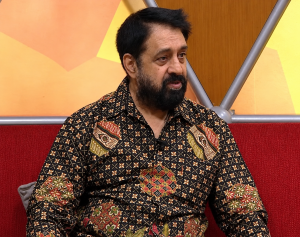
Intersectional feminist Anjali Sah on Nepal’s pervasive rape culture and police apathy
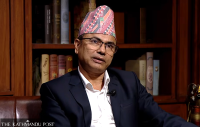
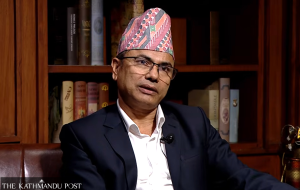
In an interview with The Post, Sah argues that this systemic failure is part of a broader, deep-seated institutional and cultural crisis across the country. Anjali Sah, intersectional feminist Hemanta Shrestha/TKP
In a harrowing reflection of Nepali society, a three-year-old girl was recently subjected to brutal sexual exploitation and brutal murder after police callously dismissed her family’s missing-person report for 24 hours. This systemic failure, compounded by deep-seated societal prejudices and delayed state intervention, has reignited nationwide outrage over child safety, accountability and the protection of vulnerable communities.
The Post’s Biken K Dawadi sat down with intersectional feminist activist Anjali Sah to unpack the structural failures underpinning this tragedy and similar high-profile cases across the country. She critically examines widespread police negligence, the superficial handling of officer suspensions, and the class and identity-based double standards ingrained in public outrage and law enforcement. Sah also addresses the impracticality and dangers of capital punishment within a compromised justice system, the performative activism surrounding marginalised victims versus celebrity defendants, the ethics of media trials, and the coercive political dynamics that silence grieving families behind closed doors.
When the victim’s family reported her missing, police initially dismissed it. How do you view this lack of urgency?
A three-year-old disappearing is an absolute emergency, but they brushed it aside, treating it as a routine occurrence rather than a high-priority situation. This initial 24-hour delay was utterly devastating. This was later raised in parliament, raising questions on how such a delay could have been allowed. The tragedy is that this crime was committed by a neighbour right in the victim’s immediate neighbourhood. Had the police mobilised within just one hour of the initial report, the victim might still be alive today. Instead, because of their refusal to treat the report with urgency, her parents were forced to wait, and she was subsequently sexually exploited and brutally murdered.
It is important to demarcate this case as sexual exploitation, not rape. Under court practices, ‘rape’ implies non-consensual sex, assuming a capability for consent that a three-year-old lacks. A child is an infant. This was pure sexual exploitation and brutal murder. The police’s failure to recognise the emergency represents a systemic failure where criminal investigation is treated as a joke.
Is this dismissive attitude a broader issue across Nepal, or is it unique to Madhesh?
This is a systemic problem that you see everywhere in Nepal, not just in Madhesh, but even in Kathmandu. The general public and the law enforcement apparatus share a deeply naive, stereotyped mindset when it comes to missing children. If a young child goes missing, people in our society instantly assume they are just hiding nearby, playing around, eating ice cream, or visiting a relative’s house. If a teenager goes missing, the police dismissively tell the family to wait, suggesting they have probably just run off with a partner. They simply do not see these situations as immediately serious.
Furthermore, police completely lack child-sensitive training. Without specialised guidelines, they do not handle reports with urgency. When my uncle’s son went missing in Kathmandu, the police told us to wait, suggesting he was probably with a girlfriend. This cultural lack of seriousness is exactly what played out in the recent case. The police simply do not understand that in child disappearances, every minute is a matter of life and death.
Following the public backlash, the Police Headquarters recalled DSP Sandeep Chhetri and Inspector Prakash Thapa. Is this a genuine measure of accountability?
Absolutely not. Recalling officers is a superficial technique to soothe public outrage. The government is terrified that if public anger boils over, it could lead to a complete regime change, much like the recent Gen Z-led protests. They immediately recalled local officers to quiet the streets, avoiding true accountability.
Under the Police Act, there are clear guidelines for proper departmental action, including suspensions, demotions and inquiries. Yet, we rarely see them enforced. Instead of facing prosecution or demotion, controversial officers often have a history of being promoted. For instance, the Kathmandu SSP during the Gen Z protests was promoted and is now a DIG. When the system rewards negligent behaviour with promotions, it sends a message that local lives do not matter. Recalling them is just a temporary PR stunt, not systemic accountability.
Why is there such a stark contrast in how the police handle child-sensitive issues compared to other offences?
It is highly questionable. If someone is smuggling drugs across the border, the police do not wait for a public outcry to act. Regardless of society’s outrage, they will immediately coordinate, arrest the suspects, and throw them in jail. If police officers are found to be complicit in drug smuggling, the department takes immediate, strict action against them. Yet, when it comes to child-sensitive and gender-sensitive crimes, that same level of gravity, urgency, and institutional seriousness is absent from the police department.
We have to ask why drug trafficking is treated as a high-priority national security threat, while the sexual exploitation and murder of a three-year-old child is treated like a routine administrative matter. The police’s entire administrative mindset is reactive rather than proactive. They only move when the public outrage becomes so loud and brutal that it can no longer be ignored. This double standard is a direct reflection of a system that does not value child protection or gender sensitivity as core duties of the state.
One of the primary suspects is reportedly a minor. If he is convicted, is sending him to juvenile detention centres enough?
We need a stronger legal approach, but we must also look beyond simple, reactive punishment. When horrific crimes occur, the public naturally demands matching violence. I respect that raw anger. Just today, my rideshare driver, noticing my lawyer’s coat, asked me what the punishment for this crime is. When I told him it is life imprisonment, he was furious and asked why the state should feed such a criminal for the rest of their life. That anger is understandable when an infant is brutally killed. My own niece is exactly three, and when I talk about the victim, I constantly think of her. But killing the offender would not bring her back; violence cannot cure violence.
Under Nepal’s legal framework, children under ten face no punishment, those aged ten to twelve face up to six months, twelve to fourteen face half the adult sentence, and sixteen to eighteen face two-thirds. The law also outlines disantar (diversion), keeping minors out of court for rehabilitation. While this makes sense for juvenile delinquency, it feels entirely inadequate for heinous crimes like the sexual exploitation and murder of an infant.
But we must also ask: How does a sixteen-year-old develop such horrific criminal intent in the first place? This is where we must look at the pervasive rape culture actively fueled by unmonitored social media and mobile access. When children have unrestricted access to any website on their mobile phones, and when our entertainment industry continually objectifies women, it shapes their minds. A minor’s criminal intent does not appear in a vacuum. It is cultivated by the toxic social fabric we allow to exist. Focusing on punishment alone without dismantling this culture is an incomplete solution.
There is a persistent demand for the death penalty in these cases. Is such a provision practical?
The demand for the death penalty is common on the streets, but it directly contradicts our constitutional framework. Nepal completely banned the death penalty in the 1990 Constitution. Furthermore, Nepal is a signatory to the Second Optional Protocol to the ICCPR, which legally binds us to abolish capital punishment. We are a nation committed to Amnesty International principles and the fundamental right to live with dignity.
People protest demanding execution because they are unaware of what our actual laws are. Because governments have failed to build public awareness and enforce existing laws, people feel the only way to get justice is through retaliatory violence. But in our social reality, the criminal justice and investigation system is deeply biased.
If we had the death penalty, who do you think would be executed? If you look at our prison system today, it is disproportionately filled with individuals from marginalised communities and the low-income class. If a wealthy, elite Brahmin person is accused of stealing Rs500,000, the social reality is that they can easily pay a Dalit person Rs100,000 to take the blame and go to jail for them. In a corrupt system with a deeply flawed investigation process, introducing the death penalty would simply mean executing the most vulnerable and voiceless members of society, while the wealthy and connected continue to buy their way out of trouble. True justice is about ensuring the right culprit is caught through a transparent investigation, not about satisfying public bloodlust.
Does this disparity extend to social media platforms where people select which victims to champion and which ones to ignore?
The double standards and selective activism on social media are quite apparent. We see a performative form of empathy where people only care about a case if it fits a certain trendy, socially acceptable narrative. Recently, two Nepali students died at KIIT University in India. For the first victim, there was massive public outrage. But for the second victim, there was almost complete silence. Why? Perhaps because the second victim carried a Madheshi identity.
When we went to protest for her at Maitighar, the police administration actively mocked us, sneering and asking, “Is this all the Madheshis you could gather?” Even within mainstream feminist circles, when we speak up for victims like Rinku Sada, we are dismissed and told, “Oh, you people are always crying, always bringing up your own issues.”
During Sada’s case, which was a horrific murder, the local police did not even want to register the FIR. It was only after exhausting protests and legal pressure that they finally accepted the registration and initiated an investigation. This selective outrage is extremely dangerous because it divides public influence. When our collective voice is fragmented by identity biases, the government and the police can easily escape accountability, knowing they can just wait for the trend to pass.
Why do we see such a difference in public reaction when the accused is a famous figure or a celebrity?
It is the ultimate double standard. When an accused person is an unknown individual with no money or social status, the public has no hesitation in demanding immediate execution. But the moment the accused is a film star, a famous cricketer, or a prominent mountaineer, the entire narrative changes. Suddenly, you see massive social media campaigns with hashtags like ‘We are with you’ defending them. People actively defend these individuals, suggesting they are being framed.
Our society has a goldfish memory. People do not want to hold their idols accountable; they just want to look cool and engage in performative activism.
This divides citizen journalism, which is highly influential today. Instead of focusing on the culprit and demanding systematic judicial reform, the media trials become entirely victim-centric. They exploit the victim’s story, sensationalise trauma, and completely violate their privacy. In the case in question, platforms are constantly posting her face and name online, completely ignoring her right to privacy. In celebrity cases, the victim is put on trial, while in cases involving poor, marginalised victims, they are treated as objects to generate social media views. Real justice is not an instant noodle, but our society is obsessed with quick justice and instant satisfaction.
But Nepal’s judicial system is notoriously slow. How can we implement genuine ‘fast-track’ courts for these cases?
We absolutely need a specialised mechanism. Just as we have family benches, juvenile benches, constitutional benches, and even a green bench for environmental cases, we should establish a dedicated bench specifically for these heinous crimes to ensure fast-track trials are actually implemented. However, fast-tracking must not mean rushing at the expense of evidence. We must remember Nirmala Panta’s case, where tampered evidence has prevented justice to this day. Our legal system is strictly evidence-based, so collecting proper evidence takes time, and there can be no compromises there. But we can drastically speed up the trial process, the scheduling, and the selection of judges by establishing a dedicated bench.
Speaking of Nirmala, why do state institutions continue to fail victims across different governments?
We have rare examples where the system actually worked, where excellent police work, NGO support, and protected identity prevented evidence tampering and successfully delivered justice. But those are few and far between. While governments change, the societal mindset, police personnel, lack of training, and lack of resources remain the same. The police administration lacks a proactive mindset and constantly complains about resources.
During the Inisha BK case, we met the Home Minister to demand clear guidelines to protect victim privacy and fast-track investigations. Our legal codes are robust on paper, but without unified guidelines and proper execution, the public remains unaware of the laws, which is why they protest, demanding the death penalty.
What about the tendency to blame victims and their parents rather than demanding state accountability?
That plays a massive role in silencing families. We have seen cases where fathers themselves abuse their children, so what supervision are we talking about? This blame comes from an urban-centric mindset. In a village, the entire community raises a child. A three-year-old should be free to play outside, explore, and touch the soil. It is society’s job to be safe for them. In case in question, the perpetrator was a neighbour, so how do you supervise against that? Circulating traumatic videos of children expressing fear and questioning the parents is just exploitative rage-baiting, not genuine child protection.
The victim’s father was protesting vocally until he had a high-level meeting with five government ministers, after which he seemed quieted. How do you analyse this?
It was a deeply problematic political settlement. The parents originally demanded that the authorities come to their ground, but the government ignored this. Instead, they alienated a traumatised family from their community and brought them to Kathmandu. The power dynamic in that room was completely skewed. Sitting five ministers around a low-income family places immense psychological pressure on them. Even if the Home Minister sat on the floor, he was still speaking from a position of power. Furthermore, the parents only speak broken Nepali. Grieving parents cannot express their raw anger and pain in a second language the way they can in their native tongue. They were stripped of their home and language to negotiate on the state’s terms.
Some of those ministers released silent, audio-less videos of this meeting. What is your take on that?
It is pure visual PR to project empathy while avoiding transparent, auditable accountability. They even filmed and shared videos of the family eating, completely disregarding their cultural mourning customs. By the time they released an audio clip of the father in a hotel room, he was so worn down. It is like ‘breadcrumbing’—giving a tiny crumb of attention to suppress public rage. The negotiation was deeply flawed, with no independent representation for the family. Neutral bodies like the Women’s Commission or the Human Rights Commission were excluded. The state projects a progressive, caring image for the cameras while treating vulnerable families as subordinates behind closed doors.




 14.69°C Kathmandu