eSewa’s new CEO Niraj Sharma on staying ahead in a crowded fintech market
Customer engagement, easier and safer payments, cybersecurity and financial literacy will be central to his plans for Nepal’s largest digital wallet.File Photo
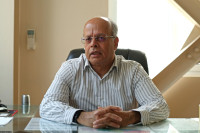
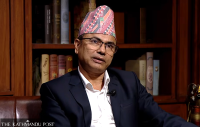
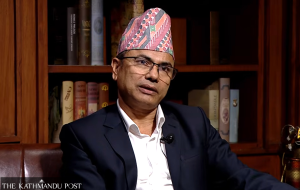
Niraj Sharma has been appointed chief executive officer of digital payment service provider eSewa. He succeeds Jagdish Khadka after the end of his four-year term as the top executive of the company. The formal announcement of his appointment took place on Monday.
eSewa’s parent entity, F1Soft Group, is led by key figures Biswas Dhakal, Sambhav Sirohiya and Subash Sharma. Sirohiya—former Managing Director of Kantipur Media Group—is also a Board of Directors member at Fonepay, an F1Soft subsidiary.
The newly appointed eSewa CEO has more than 25 years of experience in banking and digital payments. He spent around 18 years at Nabil Bank, where he held various leadership positions.
Kantipur’s Sajana Baral interviewed Sharma to discuss the company’s strategy to stay ahead in Nepal’s fintech market; fraud, cybersecurity and financial security; and fintech’s growth and its relationship with banks and the central bank. Excerpts.
You are moving from banking to a digital wallet. What will be your priority as you take on your new role at eSewa?
eSewa is already Nepal’s largest fintech platform and digital wallet. Reaching the number one position is one thing, but maintaining it is an even bigger challenge. We need to acquire new customers while retaining existing ones. That means increasing customer engagement and giving them more reasons to continue using eSewa.
We need to keep adding products and services based on customers’ needs while strengthening our position in the market. That will be my priority. I will also focus on regulatory compliance and motivating colleagues.
eSewa had been preparing to issue an IPO and has reportedly moved ahead with the process. When will the shares be offered to the public?
I have not yet joined the company. I learned from news reports that the IPO process had started, but I do not have any official information at this point. I have not been updated on many of these matters.
So I cannot say anything about it at present. But if the process is already underway, I will try to move it forward as quickly as possible.
There are dozens of competitors in the fintech sector. What will be your main strategy for staying ahead of the competition?
We are number one, so we already have a large customer base. We need to retain those customers, and that means we cannot compromise on service quality, whether it comes to uptime or transaction delivery.
The eSewa wallet needs to be easy to use, and we will continue expanding access to our services. Whenever people need to make a payment, eSewa should be the first name that comes to mind.
Our strategy will be to make payments easier and safer and strengthen our services so that we remain ahead of the competition. Digital fraud is also a growing problem, and we will have to take all these issues into account as we continue to improve our services.
What plans do you have to improve the user experience and service quality?
First, I need to join the company and assess things for myself. I have been working in banking and am now moving to eSewa. Once I join, I need to work with the team to understand the problems and challenges they face, as well as the complaints raised by customers.
Only after conducting a thorough study and analysis will I be able to say what concrete steps we should take.
How can eSewa strengthen cybersecurity and make its systems more resilient to digital risks?
Not just eSewa, but other fintech companies, banks and mobile wallets in Nepal have invested in security and cybersecurity and have strengthened their systems with skilled personnel.
But no matter how strong the lock on a door is, a thief will keep trying to find a way to break in. Digital fraud is like a cat-and-mouse game between fraudsters and those trying to stop them. Implementing a particular technology does not mean a system will remain 100 percent secure forever.
If we identify any weakness in security or our systems, we need to address it immediately, upgrade the software and continue making the system more secure. We will monitor this closely and keep working on it continuously.
Complaints about digital scams and online financial fraud are among the most common cases reported to the Cyber Bureau. What will you do to promote digital financial literacy?
Yes, people are knowingly or unknowingly opening mule accounts, which are then used for fraud. The main solution is awareness. We need to invest in financial literacy and help users understand the risks.
We need financial literacy programmes, training and roadshows in different parts of the country. In particular, we should use data to identify provinces and areas that are more vulnerable and conduct more programmes there. I consider this one of my main responsibilities.
What are the main challenges facing Nepal’s fintech sector?
The biggest challenge is intense competition, and we will have to compete effectively. Second, financial literacy among customers is relatively low, which can leave people vulnerable to scams and fraud, resulting in money being taken from their wallets.
Third, cyber threats are increasing, so we need to continue investing in security.
How do you see the fintech sector growing in Nepal and across South Asia in the coming years?
The future of fintech is very promising, particularly because there is a large volume of small-value retail payments.
From a fraud and security perspective, if someone falls victim to fraud through a mobile banking app, their entire bank account could potentially be emptied. With a wallet, however, users can load smaller amounts as needed, which limits the amount at risk and reduces direct exposure of their bank account.
Many people have already recognised this. They keep their monthly salary in their bank account and load smaller amounts into a wallet for everyday purchases such as vegetables, clothes and groceries.
This also allows them to track where and how much they have spent while keeping their bank accounts secure. Banks and fintech companies are complementary to each other, so the fintech sector is likely to continue growing.
Fintech is also playing an increasingly important role globally. But fintech companies cannot operate on their own; they need to work in partnership with banks because their customers ultimately have bank accounts.
In Nepal and elsewhere, fintech companies are gaining a larger share of retail payments, both in terms of transaction volume and the number of transactions. Central banks around the world are developing their own central bank digital currencies (CBDCs). Nepal Rastra Bank is also preparing to introduce such a currency.
Will such a currency affect fintech companies or complement their services?
Nepal Rastra Bank has not yet decided exactly how it will implement a CBDC. When the idea of introducing a CBDC for retail payments was first discussed, there were concerns about possible duplication.
But the central bank is now considering using a CBDC for wholesale transactions. We are a wallet focused on retail payments, so I do not think it will have much of an impact on us.




 14.58°C Kathmandu