SMS alerts helped avert loss of life in Budhi Gandaki floods, says disaster management chief
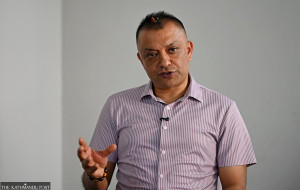
Dharmaraj Uprety says early warnings prompted residents to move to higher ground, while the flood swept away bridges and damaged settlements and hydropower infrastructure. Post Photo
A flash flood in the Budhi Gandaki river swept away bridges and damaged settlements and hydropower infrastructure in Gorkha district early Sunday, but timely SMS alerts helped residents move to higher ground, with no casualties reported so far, according to Dharmaraj Uprety, chief executive of the National Disaster Risk Reduction and Management Authority.
Uprety told Kantipur that authorities received official information about the flood at around 6.20am and sent SMS alerts to downstream areas 20 minutes later, giving residents time to reach safer ground. Rescue teams have been mobilised, while officials are assessing the damage and investigating the cause of the flood.
The following is an edited excerpt of the interview.
What do we know about the flood so far?
Early Sunday morning, we received information that a flood was moving through areas including Sirdibas, Jagat, Yaru, Tatopani, Machhikhola, Soti, Arukhet and Arughat, along the northern Himalayan region. Based on the initial information, we issued warnings.
By the time the flood reached Arughat, the water level had risen significantly. The danger level there was around five metres, but the water level reached 8.3 metres. The flood also swept away the bridge at Arughat.
Downstream settlements have been buried in mud and debris. However, we have not received any reports of casualties so far. It appears that people moved to safer places on higher ground after receiving timely warnings.
The flood resembles the events in the Bhotekoshi and Trishuli rivers, carrying large volumes of sediment and mud. The pattern suggests that the river may have been blocked and then released, possibly more than once.
There are two preliminary theories about the cause. When we spoke to local residents by telephone in the morning, they reported hearing a loud noise at around 3 am or 4 am. One possibility is that an avalanche occurred in the upper reaches, triggering the flood. Another is that a landslide blocked the Budhi Gandaki river and the water surged downstream after the blockage gave way in the morning.
When we first received information about the flood, its source was far upstream. It would have taken at least three to four hours for the flood to reach downstream areas, giving us time to prepare and issue warnings. This allowed us to mobilise the police and the army promptly.
We received official information about the flood at around 6.20 am and continued issuing updates. At around 6.40 am, SMS alerts were sent to downstream areas. We also asked the flood forecasting authorities to issue SMS alerts. The warnings were then relayed to the public.
How extensive is the damage, and did the early warnings help?
The flood has swept away major bridges and inundated settlements. The deposits left behind are so thick that the ground appears to have been covered with cement. The flood also swept away the river’s water-level monitoring equipment, leaving us without instrument readings to assess the water level against the danger threshold.
Riverbank settlements appear to be extremely vulnerable. The area has suffered a disaster similar to those seen in Bhotekoshi and Rasuwa. Many houses are feared to have been swept away. Despite the extensive damage, we have not received reports of casualties, largely because we were able to disseminate warnings quickly.
The SMS alerts issued by the flood forecasting authorities have made a difference. Many people trusted the warnings and moved to higher ground when told to do so, helping them save their lives. Early warning has played an important role in reducing the human toll.
However, the damage to hydropower infrastructure, houses, livestock sheds and bridges points to substantial physical losses.
Floods in the Bhotekoshi and Trishuli rivers had already swept away a bridge on one side of the affected area. With the bridge on the Gorkha side now also gone, Dhading district faces a disruption in connectivity. This could affect its supply chain.
An army helicopter was deployed early Sunday to help address the immediate problems. Search and rescue operations are under way. We have also sent the director generals of the Department of Roads and the agency responsible for suspension bridges, along with a drone team, to the affected area.
The drone team is investigating the flood’s source and how it developed. Based on its findings, the Department of Roads and the suspension bridge agency will look for ways to restore connectivity as quickly as possible.
Three trucks carrying food and other essential supplies have been kept ready for dispatch. Arrangements are also being made to send additional supplies wherever necessary. The prime minister and home minister have also issued information about the disaster.
What is the status of search and rescue operations?
The army helicopter took off at around 6.30 am to 7 am, soon after we received information about the flood. Police and other rescue teams have also been mobilised. The army has so far rescued 47 people from the affected areas by helicopter.
Our immediate priority is to save lives. Once a disaster strikes, rescue operations must come first. All available personnel and resources are therefore focused on saving people. Relief supplies will continue to be dispatched alongside these efforts.
All relevant government agencies have been mobilised. Although we cannot immediately send additional teams, preparations are under way to provide the personnel and resources needed for rescue and relief operations.
Visuals from upstream areas suggest that the floodwaters are receding. However, since the water-level monitoring equipment has been swept away, we do not have reliable measurements of the river’s current condition.
Does the flood still pose a risk?
The flood pattern suggests that an avalanche may have temporarily blocked the river before the accumulated water was suddenly released. Alternatively, a dry landslide may have blocked the river before the barrier broke.
In either scenario, the flow can initially surge, subside and then rise sharply again.
In this case, the initial flow appears to have weakened before a sudden surge, followed by another decline. However, we cannot yet say whether the river has been blocked again upstream or whether the danger has passed.
We need to wait for the report from the team that has gone to the site before drawing any firm conclusions.




 22.22°C Kathmandu