From filmmaking to politics: Min Bahadur Bham on why stories need policy
The award-winning filmmaker is contesting for Nepali Congress joint general secretary, saying many of the issues raised through his films ultimately require political action.
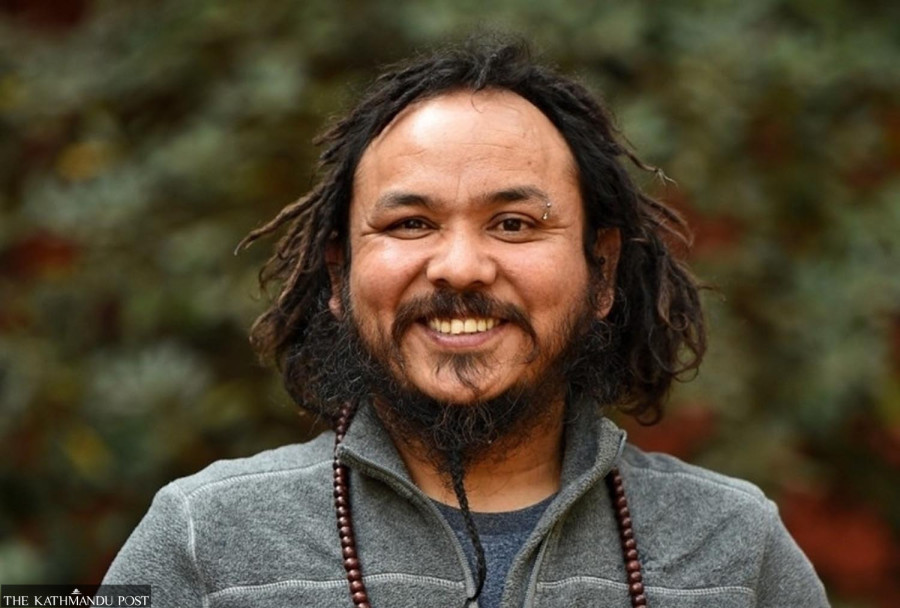
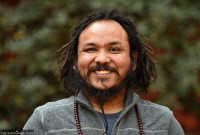
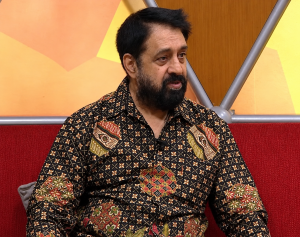
Min Bahadur Bham is an award-winning Nepali filmmaker whose work has brought stories from the country’s margins to international audiences. His films, including ‘Shambhala’, ‘Kalo Pothi’ and ‘Bansulli’, have earned international acclaim. In 2026, he became the first Nepali filmmaker to serve on the international jury at the Berlin International Film Festival.
Now Bham is stepping into frontline politics. He is contesting the Nepali Congress’s 15th general convention for the post of joint general secretary, saying his experience as a filmmaker has convinced him that many of the issues he has explored through cinema ultimately require political action.
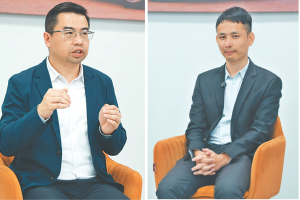
In this conversation with Kantipur’s Janak Raj Sapkota, Bham discusses his decision to enter politics, what he hopes to change within the Congress and why he plans to keep making films.
Here are excerpts from the conversation:
You have built a career in cinema. What made you decide to enter frontline politics and contest for a senior party position?
One reason is the constituency I am contesting from. It represents a historically marginalised region. I come from a disadvantaged part of Karnali province, and even as a filmmaker, I have focused on its language, culture, characters, landscape and stories.
I have always tried to make the communities I come from the foundation of my work. But over time, I realised that however much you speak through cinema, whether in Kathmandu or to international audiences, many of those concerns ultimately need to find their way into policy.
When the issues I was raising through my films did not translate into political agendas or policymaking, I became increasingly frustrated. I began to feel that if I wanted to see those issues addressed, I had to engage directly in politics.
I had been involved in politics as a student even before I started making films. Later, I worked on the Nepali Congress’s manifesto drafting committee, including on sections dealing with Karnali and with literature, cinema and music.
What struck me was that many of the issues we put into the manifesto were neither taken up nor seriously discussed when governments at the local, provincial and federal levels came into office.
That made me think seriously about my own role. If I was not going to try to play a leading or interventionist role in bringing change to cinema, literature, music and marginalised regions such as Karnali, I felt I would have to stop dreaming about them and worrying about them.
That is what pushed me towards frontline politics and eventually to contesting for a party office.
What are you telling delegates when you ask for their vote?
My main argument is that I can act as a bridge between the communities I represent and the Nepali Congress’s central leadership.
I come from a particular geography and social context, and making films has required me to study and engage closely with that place. I believe I can bring those voices into the party’s central committee and leadership.
The election process itself has shown that people across the country are looking for change in political personalities, tendencies and styles.
If I can combine my professional expertise and experience as a young person with what I have learnt from representing this geography and working in cinema, I believe I can contribute at the leadership level not just to setting the agenda but also to seeing it implemented.
So I am asking delegates to vote for me if they believe I am qualified to do that.
The Congress has been talking about creating a ‘new Congress’ and transforming itself through this convention. Do you think the changes underway will actually bring the party closer to the public?
Definitely.
From the ward-level conventions onwards, we have seen greater inclusion, along with the participation of people with expertise in different professions and fields and people representing different political styles and approaches.
I am confident that the central committee will include young people with expertise in different fields and backgrounds, representing different languages, cultures, regions, ethnic communities and professions, through both reserved quotas and open competition.
Simply amending the party statute and declaring that the Congress has been reformed can remain an abstract exercise. But bringing in new people, new political tendencies, new styles and a more inclusive leadership can transform the party and take it closer to the public and wider society.
You have many admirers of your films. Should they be disappointed now that you are becoming more active in politics?
Not at all. If anything, they should be happy.
Even in ‘Bansulli’ and ‘Kalo Pothi’, the stories, characters and settings were deeply political.
Cinema is a mirror of society. Politics, meanwhile, allows me to understand the realities faced by party workers and ordinary people at the grassroots. That experience can make me more mature and politically aware.
Those experiences will also feed into my filmmaking. So I see it as a double benefit.
So you are not going to stop making films because of politics. Will you make films while doing politics?
Exactly.
Whether I succeed or fail in politics, whether I become joint general secretary or contest a parliamentary election, I will continue making films with the same pace and commitment as before.
If anything, my understanding of politics and society will become much broader.




 18.17°C Kathmandu