Bureaucrats in the Home Ministry are against transgender people
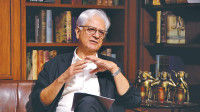
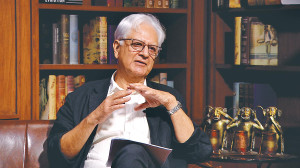
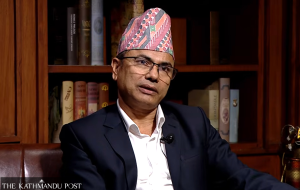
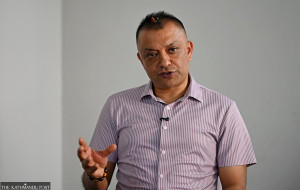
LGBTQI+ rights activist Rukshana Kapali discusses the stark gap between Nepal's international reputation for progressive laws and the rigid bureaucratic resistance, weaponised transphobia, and systemic gatekeeping that transgender individuals face daily. Rukshana Kapali, LGBTQI+ rights activist Post Photo: Dipesh Darshandhari
Nepal has long positioned itself as a beacon of LGBTQI+ rights in South Asia, frequently earning praise from international human rights bodies and global media alike. Yet, beneath the country’s celebrated constitutional guarantees lies a starkly different domestic reality—one mired in a ‘perpetual state of inactivity’ and rigid bureaucratic resistance. While the judiciary has repeatedly ruled in favour of queer rights, government departments such as the Ministry of Home Affairs have actively stalled progress, particularly concerning binary gender recognition for transgender individuals.
The Post’s Biken K Dawadi sat down with prominent LGBTQI+ rights activist Rukshana Kapali to dismantle the duality of Nepal’s international reputation versus its internal legal vacuums. From navigating hostile registrars and weaponised Western transphobia to drafting comprehensive, community-driven frameworks for gender recognition, she exposes how systemic gatekeeping forces individuals to fight exhausting, years-long legal battles just to update their legal identity. She puts a critical lens on the local political landscape and the corporate world, arguing that genuine systemic reform requires legislative quotas and year-round corporate accountability rather than the superficial ‘fluff’ of the June rainbow capitalism. Excerpts.
How has the perception of Nepal as a regional leader in queer rights evolved in recent years?
Nepal has long been held as a beacon of queer rights in South Asia. We are considered to be quite far ahead. This is according to the Human Rights Watch report and even according to local reporting, yet the Ministry of Home Affairs has actually stalled binary gender recognition for transgender folks who do not possess surgical documentation. Between Nepal’s progressive international image and the bureaucracy’s stalling, it is a huge question how we should reconcile this. I have been working on this very issue for a long time, and in those fifteen years, many things have progressed, while many things have not. While people say Nepal is a beacon of LGBTI+ rights, and it is much better than Bangladesh, India, or Pakistan comparatively, looking at Nepal’s own situation makes it difficult to simply call it progressive.
What does this signify in the context of the state’s legal obligations?
In legal arguments, I always contend that there has been a ‘perpetual state of inactivity’ from the state. This issue was raised as far back as the establishment of the Blue Diamond Society, and legally, an order was issued to address this in the 2007 case filed by the Blue Diamond Society. If we look at the progress from that time until now, excluding the recent election of Bhumika Shrestha to Parliament, the state has done very little between then and now. Their annual reports do not mention specific actions for this community, and it is not written anywhere in policies or programmes. This means that for a long period, the laws that should have been made by Parliament and the plans that should have been made by the government have not come into existence.
Can you elaborate on the administrative barriers individuals encounter when seeking to update their legal identity?
Regarding citizenship, seven precedents have been established in Nepal regarding queer rights. Article 12 of our constitution and the amended Citizenship Act state that gender identity must be disclosed ‘as prescribed’, but the bureaucracy claims there is no procedure or regulation for changing names and genders. When there is a legal vacuum, the courts must fill it. However, this means that every person must individually go to court. And one cannot go directly to court. One must first submit an application to the relevant body, even though we know they will refuse it. We must go for the sake of paperwork because the court will otherwise claim that we have not sought an alternative. Individuals must go to the Ward, the Chief District Officer (CDO), and the National Examination Board. Often, they refuse even to register the application. If the application is not registered, we must use the post office, which can take days even within Kathmandu, or rely on the Right to Information Act, which is often met with silence from Information Officers.
Why is the Ministry of Home Affairs perceived as a primary obstacle to progress?
The process is further complicated because the National Information Commission often demands a photocopy of the individual’s citizenship, leading to disputes over the name. Cases often take a year just to reach the court because of these delays. We avoid the Supreme Court for individual cases because it can take five years. Instead, we go to the High Court, where it is faster, though the experience varies depending on the registrar. We use ‘changed names’ in court to protect privacy and avoid deadnames, leaning on the Civil Procedure Code, similar to cases involving forced children. However, registering a case remains difficult. In Baglung, I faced hostility from a registrar who questioned how a person previously identified as female could now be male. Even after winning a case, implementation is not easy. The Ministry of Home Affairs has stayed the execution of verdicts, filing for reviews in the Supreme Court. My observation is that the employees of the home ministry are against transgender people, using regressive arguments that recognition will lead to ‘negative social consequences’ and ‘perversion’. Their written replies exhibit extreme hostility, suggesting that this community should not receive rights.
What would a comprehensive, community-driven legal framework for gender recognition entail?
In 2078 BS, we drafted a Draft Bill on Gender Recognition involving forty-seven organisations across thirty-five districts. This draft explained the concepts of transgender and non-binary identities and envisioned a process for legal recognition based on the right to privacy. We envisioned a system where an individual could submit a form to the ward office to change their details, and based on that recommendation, all other offices would correct their documentation. Currently, as the head of MP Bhumika Shrestha’s secretariat, I believe a stronger process would involve registering an application in the District Court where an order is issued in the presence of a judge. This would ensure a permanent record and a sense of ease for the individual.
How does the state’s use of the ‘Third Gender’ category fail to address the specific needs of transgender and intersex individuals?
The state often assumes that a catch-all umbrella term like ‘Gender and Sexual Minorities’ or ‘Third Gender’ is sufficient. However, specificity is vital. For example, intersex children face genital mutilation and surgeries to make them ‘normal’ at a young age—experiences that gay, lesbian, or trans people do not share. Conversely, transgender children may only express their gender identity during adolescence, necessitating different rights regarding expression. The Patan High Court has issued an order stating that the term ‘Third Gender’ should not be used to address the entire community and that specific terms should be used as required. Unfortunately, the home ministry has not implemented this.
How has international political discourse influenced local attitudes towards the transgender community?
There is a growing trend of weaponising these identities, such as claiming that trans women are encroaching on women’s reservation quotas. This transphobia is often imported from Western media in the US and UK. In Nepal, transphobia existed, but it was of a different intensity until recently. The fear-mongering regarding bathroom use is exaggerated. People do not need to show citizenship to use a bathroom. If someone intends to commit sexual harassment, a sign on a door will not stop them, and statistics show most assaults are committed by people close to the victim, regardless of gender. Rights are not a finite resource that decreases by being shared. The narrative that trans rights snatch away others’ rights is similar to regressive arguments used against Dalits, Janajatis, or Madhesis.
What is the significance of the recent renaming of the ministry to include gender and sexual minorities?
The recent renaming of the ministry to include Gender and Sexual Minorities is a historic and symbolic milestone, but it is only the beginning. Previously, the lack of clarity in the ministry’s Terms of Reference (TOR) allowed the bureaucracy to claim that our issues fell outside their jurisdiction. We were often thrown between the CDO, the home ministry, and the Council of Ministers. Now, while issues of gender and sexual minorities are cross-cutting, this ministry will be the one to initiate legislation and programmes. We are discussing the creation of a dedicated division or section within the ministry, which would allow for a proactive bureaucratic body to coordinate with social development sections in every municipality.
How can the political participation of queer individuals transition from tokenism to substantive legislative influence?
There is a general lack of willingness among the political elite to debate these issues. Many do not even think the community exists. During my candidacy, I worked within the Statute Drafting Committee and the Manifesto Making Committee of the party to ensure that social justice and the formation of an LGBTI department were addressed. While MP Bhumika Shrestha’s presence in Parliament is a source of pride, it sometimes feels like tokenism. To ensure future individuals from the LGBTQI+ community can legislate effectively, we are looking at amending the election acts for the National Assembly, the House of Representatives, and the local level to provide at least a 1 percent quota. If we had representation in every provincial assembly and municipality, it would create a powerful network. Furthermore, a 1 percent quota in the civil service would ensure our voices are heard within the bureaucracy, rather than us having to shout from the outside.
How do you reconcile receiving prestigious international accolades with the daily struggles faced on the ground in Nepal?
It is a bittersweet reality that to receive recognition in Nepal, one often must first receive recognition abroad. It was only after international accolades like the BBC 100 Women list and Forbes 30 Under 30 that I became widely known. However, this recognition has made it easier to work in Nepal. For instance, court employees in Baglung and Dipayal have shown me respect because they recognised me from these lists. While it is unfortunate that many Nepalis do not know our work until it is validated internationally, the recognition serves as a tool for progress.
What is your perspective on the corporate engagement with Pride Month?
Regarding Pride Month, much of the corporate engagement feels like fluff or an attempt to capitalise on the community. Our queer youth group organises Pride on the second of June every year with a ‘No Corporate’ policy. Simply putting a rainbow on a food packet is not support. We ask: What kind of inclusive policy does your company have? Is there representation of this community within your institution? Rainbowing is not the same as supporting. Focus should be on Social Corporate Responsibility and genuine representation throughout the year, not just for the benefit of the company during Pride Month.




 15.67°C Kathmandu