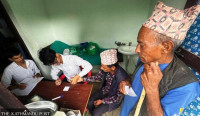
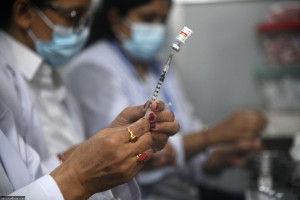
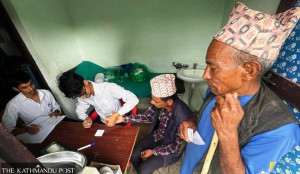
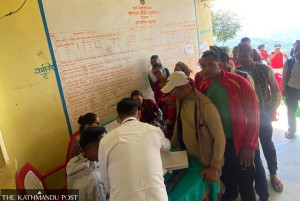
Screening for four major non-communicable diseases—hypertension, diabetes, kidney function, and obesity—in Kathmandu Metropolitan City (KMC) will begin only after mid-March, as authorities have postponed the planned programme due to the March 5 parliamentary elections.
As the election code of conduct prohibits large gatherings at any location, officials at KMC’s Health Department said they have decided to postpone the planned screening programme by around a month.
“Month-long screening of four major non-communicable diseases will start only after mid-March,” said Dr Deewash Neupane, an official at the department. “We have also decided to continue free screening of cervical cancer at Bir Hospital and are also planning to provide free screening of other cancers at tertiary level hospitals.”
The month-long screening of four major non-communicable diseases is an annual programme designed to map the burden of non-communicable diseases among the general public. The Ministry of Health and Population started it last year. This time, the Health Ministry had directed the agencies concerned to complete the screening programme before the March 5 election. However, most health agencies under local governments have not yet started the screening.
The Mental Health and Non-Communicable Disease Section at the Epidemiology and Disease Control Division has allocated Rs100,000 to every district, and local units have been provided up to Rs520,000 based on the population size to conduct the screening, according to officials.
Multiple studies carried out in the past show that the burden of non-communicable diseases has been rising alarmingly in the Nepali population.The Nepal Burden of Disease 2017 report attributed two-thirds (66 percent) of total deaths to non-communicable diseases, while the figure jumped to 71.1 percent in the 2019 report. The Global Burden of Disease 2021 report shows 73 percent of deaths are caused by non-communicable diseases.
Hypertension, diabetes, renal disease, liver problems, heart problems, and cervical cancer, among others, are major contributors to morbidity and mortality in the country, according to public health experts.
They say that the month-long screening programme will help make people aware of risk factors, diagnose ailments at an early stage, and start medication, which will help prevent conditions from getting worse.
Many people in the country do not even get their blood pressure checked and often learn about their condition when complications become severe.
A study conducted by the KMC’s health department last year uncovered a growing health crisis among the city's residents. According to the findings, 39 percent of the population aged 30 and above in the city suffers from high blood pressure, or hypertension—a condition in which an individual’s blood pressure remains elevated over time.
It is an established risk factor for ischemic heart disease (also known as coronary heart disease), stroke, and kidney disease.
Of those suffering from high blood pressure, 13 percent were unaware of their condition, and around three percent were not taking medications despite knowing about their health problems. Those not taking any medications are mostly young people who believe they can manage the condition by controlling their diet and exercising. They also worry about high treatment costs, according to the department’s study.
Likewise, five percent of people in the metropolis were newly diagnosed with diabetes, while 14.5 percent of those who underwent testing said that they already had the disease. Officials say another 2.4 percent of people were found not taking medications despite knowing that they had high blood sugar levels. The reason was the same—young people who thought that they could control the problem by changing their diet and exercising regularly, and those who were worried about high medical bills. Altogether, 22 percent of the metropolis residents above 30 were diabetic, according to the report.
Doctors say changes in dietary patterns, such as increased consumption of processed foods, sedentary lifestyles, and rising stress levels, are among the factors driving the rise in non-communicable diseases. They say most patients seek treatment after their condition worsens, and in many cases, it is too late.
Public health experts say it is high time to focus on non-communicable diseases, as their prevalence has risen alarmingly. They said many lives could be saved if testing were made free. Along with free testing, authorities should focus on behavioural changes—improving eating habits and promoting physical exercise, among other things, experts say.




 19.27°C Kathmandu