Major state-run hospitals will soon begin screening for mental health conditions in children and adolescents, with the Ministry of Health and Population launching a five-day training programme for psychiatrists and psychologists to operate designated clinics.
The move comes amid reports that a growing number of children and adolescents suffering from various mental health conditions are deprived of the services.
“Only two hospitals—the Kanti Children’s Hospital and the Nepal Mental Hospital—have been providing the child and adolescent mental health service at present,” said Dr Pomawati Thapa, chief of the Non-communicable Disease and Mental Health Section of the Epidemiology and Disease Control Division. “After the training, hospitals providing psychiatric and psychological services will start providing child and adolescent mental health services.”
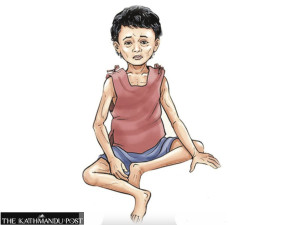
Multiple studies show that huge numbers of children and adolescents in Nepal also suffer from mental health issues, but most are deprived of timely treatment and counselling.
A recent report of the Nepal Multiple Indicator Survey (MICS) 2024-25, unveiled on Monday, shows that 9.3 percent of adolescents aged between 15 and 14 years were found suffering from anxiety and depression. Of them, the percentage of females is two fold—12 percent—of their male counterparts at 6.1 percent.
According to the report, 8.5 percent of females of the age group and 4.4 percent of males were reported as having depression. Likewise, 10.4 percent of females and 4.8 percent of males were found to be suffering from anxiety. Altogether, 7.9 percent of the population between 15 and 24 were found to have anxiety, and 6.6 percent had depression.
The national-level study was conducted by the National Statistics Office (NSO), in partnership with the United Nations Children’s Fund (UNICEF), as part of the Global MICS Programme. Data was collected by selecting 540 clusters—304 from urban areas, and 236 from rural areas—across the country. Information was sourced from 12,960 households, according to the report.
The National Mental Health Survey Nepal-2020 showed that the prevalence of mental disorders among adolescents was 5.2 percent that year, and the neurotic and stress-related disorders were the most prevalent at 2.8 percent.
Likewise, the prevalence of current suicidal thoughts among adolescents was around four percent, while suicidal attempt in the same age group was 0.7 percent. The same report also shows that 0.6 percent of children and adolescents were found to be suffering from depression.
The prevalence of suicidality, including current suicidal thoughts, lifetime suicidal attempts and future likelihood of suicidal thoughts, was found to be prevalent in 7.2 percent of the population.
A study carried out by the Nepal Health Research Council in the past shows that about 13 percent of Nepalis suffer from some form of mental disorder. This means around one in eight Nepalis have mental health issues. Moreover, the country simply does not have enough experts to treat mental health problems, it added.
Experts say that mental health problems in children and adolescents could be several times what the survey shows. They say that around 10 to 15 percent of the total children and adolescent population could have been suffering from various types of mental health issues, and due to methodological problems, the survey could not portray actual problems.
“Children and adolescents could suffer from various types of mental health problems, including attention deficit hyperactivity disorder, anxiety, depression, conduct disorder, obsessive-compulsive disorder, and post-traumatic stress disorder,” said Dr Arun Kunwar, child and adolescent psychiatrist. “But very few parents and teachers realise the problems and seek medical attention. Children get scolded and beaten both at school and at home.”
Experts say that five to seven percent of the children and adolescent population could have been suffering from serious types of problems, which need immediate care. If treatment is not provided on time, such children and youths cannot continue their studies.
“Instead of contributing to the national GDP in the future, such youths will be a burden to families and the state,” said Kunwar. “Problems can be addressed on time if treatment is provided on time. For that, access to services must be ensured.”
Health officials said they have invited psychiatrists and psychologists from all seven provinces to the master trainer training in Kathmandu, which starts on Wednesday. Those doctors will share their knowledge with approximately 150 health workers, including medical officers, nurses, and paramedics.
Health officials said there are only around half a dozen child and adolescent psychiatric doctors and only one psychologist serving under the Health Ministry.
The World Health Organisation says that one in four people in the world are grapple with mental or neurological disorders at some point in their lives, and around 450 million people currently suffer from such conditions, placing mental disorders among the leading causes of ill health and disability worldwide.




 13.15°C Kathmandu