Ministry seeks Rs 1 billion to keep health insurance services running
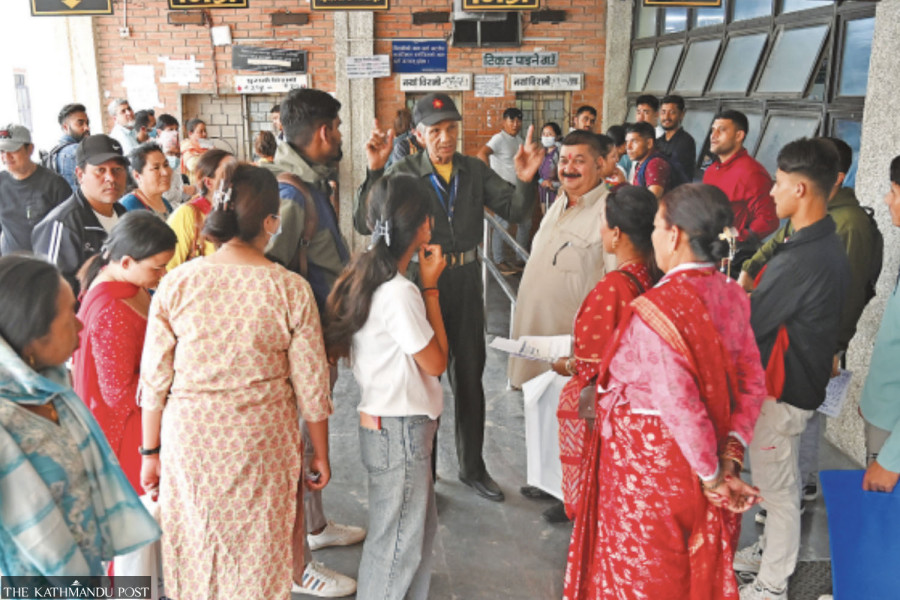
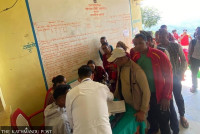
Services remain halted at TU Teaching Hospital, while Bir Hospital reports severe pressure from soaring patient loads. This photo taken on April 27, 2025 shows people outside the closed outpatient ticket counter at TU Teaching Hospital in Maharajgunj after doctors went on strike demanding better pay. The hospital has stopped entertaining patients with government’s health insurance fromJanuary 15 over reimbursement dispute with the Health Insurance Board. Post file photo
After the Tribhuvan University Teaching Hospital (TUTH), Maharajgunj halted health insurance services over unpaid dues, the Ministry of Health and Population has sought permission from the Ministry of Finance to transfer Rs 1 billion to keep the services running.
Officials at the Health Insurance Board hope that health insurance services can resume if the board is provided with the amount.
“Most health facilities have issues of overdue payments,” said Bikesh Malla, information officer at the board. “Some hospitals have also been complaining about the low service rates paid by the government. We are also working to revise service prices.”
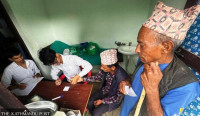
Thousands of ailing people have been deprived of treatment at the TUTH, after the hospital administration stopped providing services under the government’s health insurance scheme from January 1. Every day, hundreds of patients who reach the hospital for treatment with a health insurance card either return without receiving service or are forced to pay hospital charges, like patients without insurance coverage.
The hospital administration complained about overdue payments of around Rs 400 million, rejection of claims submitted by the hospital, and low service rates, among others. According to officials, around 50 percent of the hospital’s claims were not approved by the board, so the hospital lost over Rs 20 million every month.
Officials at the board said that such complaints are not limited to the TUTH but extend to all tertiary-level hospitals. The board purchases health services from over 500 health facilities, including the TUTH. Officials said they have been working to resume the service at the hospital at the earliest.
“We held discussions with officials at the hospital and hope to reach an understanding at the earliest,” said Dr Krishna Prasad Paudel, executive director at the board. “The hospital administration will submit a proposal outlining its demands and ways to make the health insurance service sustainable, and we will work towards an agreement.”
Officials said that the Health Ministry has taken the halt in health insurance services at the TUTH seriously.
“We are also under intense pressure to continue the health insurance service,” said Dr Pradeep Vaidya, professor at the Institute of Medicine at the TU Teaching Hospital who is tasked to prepare a proposal. “We will furnish the proposal within a couple of days.’
Meanwhile, state-run hospitals in the Kathmandu Valley, including Bir Hospital, have complained that they have been overwhelmed by patients seeking treatment under the government’s health insurance scheme.
“We are struggling to maintain reagents in labs and medicines in pharmacies for patients seeking treatment under the health insurance scheme,” said Dr Dilip Sharma, director at the Bir Hospital. “We have not stopped services, but we are facing problems similar to those at the TU Teaching Hospital.”
The number of patients seeking outpatient care at Bir has exceeded 3,000 per day, up from around 2,000 during winter, according to officials. The hospital administration is in talks with board officials regarding the dues, which exceed Rs400 million, and other issues.
Officials at the board said all government funds allocated for health insurance services and premiums collected from the public have already been paid to health facilities. Altogether, Rs14 billion had been paid by December. This included Rs11 billion from the Ministry of Health and over Rs3 billion collected in premiums from the public.
The board needs to pay an additional Rs10.5 billion in dues to over 500 health facilities, including the TU Teaching Hospital. Officials said this shortfall is due to a funding crunch, not intentional delays. On average, about 50,000 people use services each day, and over 10 million people are covered by health insurance.
According to officials, around 20 percent of service claims are rejected, meaning one in five bill claims across hospitals is denied. Common reasons include missing doctors’ Nepal Medical Council registration numbers on prescriptions, diagnostic tests conducted without prescriptions, medicines dispensed without prescriptions, and medicines differing from those prescribed.
Malla said that the board formed an expert committee a few months ago to revise the costs of health facility services, which will furnish its report soon. Based on the recommendations, service costs will be revised, but the board will try to purchase the service at the lowest possible price.
Under the scheme, a family of up to five members pays Rs3,500 for treatment, including medicine, check-ups, and counselling. One family member can use the insurance coverage worth Rs100,000 per year, or the amount can be divided among five members. Families with more than five members pay Rs700 per additional member for an extra Rs20,000 in health insurance coverage.
People covered by the insurance can access healthcare services at designated facilities by presenting their identity cards. The expense incurred by the health facilities is reimbursed by the Health Insurance Board.
For patients of chronic diseases, the government provides Rs200,000 in insurance coverage, and as of this fiscal year, the board has paid over Rs 50 million, officials said.
The government also covers premiums for certain groups—those living below the poverty line in 26 districts, those above 70 years, family members of people living with HIV, disabled people, and those suffering from leprosy, and multi-drug resistant tuberculosis.
Currently, the government pays the insurance premiums for around 55 percent of people enrolled in the scheme.




 21°C Kathmandu