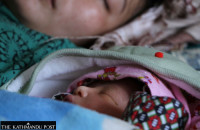
Pregnant women in Karnali province in farwestern Nepal have been forced to walk longer for delivery services, as the province has far less birthing centre coverage than other provinces.
The lack of accessible birthing centres puts women’s lives at risk, especially during emergencies like complicated deliveries. Without better-equipped birthing centres and a strong referral system, many women and newborns in Karnali, one of the most remote provinces, face preventable dangers every day, experts say.
According to a preliminary report on a recent national-level assessment of birthing centres providing C-section deliveries, conducted by the Family Welfare Division under the Department of Health Services, the service delivery gap in Karnali province is significantly higher than in the other provinces.
“We have studied geographic distance, quality of the services, availability of trained human resources, the referral system and other factors during the study,” said Nisha Joshi, a public health officer at the division. “The preliminary report shows gaps in service delivery in Karnali’s birthing centres compared with other provinces.”
Caesarean section, also known as C-section, is a surgical delivery procedure performed during emergencies. The procedure is lifesaving when vaginal delivery poses a risk to the mother or baby due to obstructed labour, foetal distress, or an abnormal position of the baby, doctors say.
The division had carried out the assessment in all hospitals of all seven provinces providing caesarean delivery services, hospitals running special newborn units and birthing centres, to identify service gaps and plan improvements needed to reduce deaths.
Health workers had also examined health facilities providing special newborn care units. Special newborn care units are general units designed to care for newborn children who fall ill shortly after birth. Doctors, nurses, and paramedics monitor ailing newborns admitted to the unit.
“We have completed the assessment in all seven provinces and are preparing the final report,” said Dr Madan Kumar Upadhyaya, director at the division. “Our preliminary findings show some kind of problems in birthing centres throughout the country. Some birthing centres are overcrowded, and others have been providing services to fewer than 10 women in a year.”
Studies carried out in the past also showed that only 23.6 percent of households in Karnali can reach a health institution within a half-hour walk. For the rest, a visit to the nearest healthcare facility can take hours, if not days.
Health officials say that establishing birthing centres does not guarantee quality care, and that no single centre can ensure it. Strengthening the referral system and improving service quality across all birthing centres can help ensure maternal and newborn safety, according to officials.
Referral delays and mismanagement, delays in reaching health facilities and delays in providing treatment are equally responsible for high maternal deaths in Karnali province. Both maternal and child mortality rates in the province are higher than the national average. Compared with other provinces, Karnali has far fewer private health facilities, which is one reason for the service gap, health officials concede.
Nepal has reduced maternal deaths by over 70 percent since 2000, according to the World Health Organisation.
The UN health body, in its report released in April, stated that 142 Nepali women die from maternity-related complications per 100,000 live births.
A 2021 study by the National Statistics Office reported 151 maternal deaths per 100,000 live births.
In 2016, the country reduced the maternal mortality rate from 539 per 100,000 births in 1996 to 239 per 100,000 births, for which it received the Millennium Development Goals award.




 19.72°C Kathmandu