State-run food company dismisses rumours about fortified rice
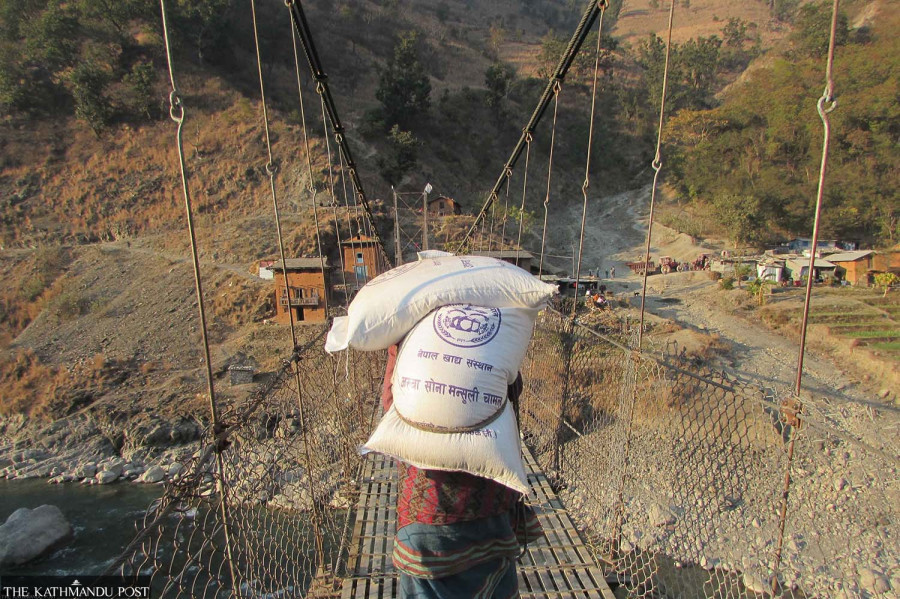
The Food Management and Trading Company says it is working to set up a factory to produce eight essential micronutrients for rice fortification. Post file photo
Two years after introducing fortified rice in the malnutrition-hit Karnali province, the state-run Food Management and Trading Company has responded to rumours and misconceptions about its rice.
After some claims suggested that the rice tastes different or even contains plastics, the company dismissed them as rumours and asked the public to try it themselves before believing such claims
The company has been fortifying rice with essential vitamins and minerals at five places across the country. Besides Surkhet in the Karnali province, the company has started rice fortification in Rajapur of Bardiya, Janakpur, Thapathali in Kathmandu, and in Kailali. It blends iron, zinc, vitamin A, B1, B2, B6, B12, and folic acid into commonly consumed rice varieties.
“Micronutrient-blended rice is beneficial for everyone,” said Ramesh Acharya, chief executive officer of the company. “Using the rice blended with crucial minerals and vitamins helps address growing micronutrient deficiencies, especially among small children and elderly people.”
The company said it has so far fortified around 11,000 metric tons of rice.
Officials say three varieties—sona mansuli, jeera masino, and local rice—are being fortified with the eight micronutrients provided by the World Food Programme. The company is also working to set up a factory to produce these micronutrients.
“Detailed project reports for the micronutrient plant to be set up in Hetauda have been completed, and we are in the process of issuing a tender for machines,” said Neupane. “We also plan to export micronutrients to other countries, once production starts.”
Health officials say micronutrient deficiencies are not limited to remote regions, and those living in big cities, including the Kathmandu Valley, also suffer from health problems linked to deficiencies of crucial micronutrients, including vitamin B12. Officials hope that various problems caused by micronutrient deficiencies will decline once people start eating the fortified rice.
Officials say consumers do not have to pay extra for the fortified rice, which is available at the company’s outlets.
Malnutrition is considered a silent health crisis in Nepal. The country has made significant progress in reducing stunting among children under five, which fell from 57 percent in 2001 to 25 percent in 2022, according to the Nepal Demographic and Health Survey-2022.
Malnutrition plays a major role in the under-five mortality rate, according to the nutrition section at the Family Welfare Division under the Department of Health Services. Experts say malnutrition also hinders children’s mental development, and eventually affects the country’s economic health by weakening intellectual capacity, reducing productivity in adulthood, and increasing vulnerability to diseases.
Although the 2022 survey showed some improvement in the country’s overall nutrition status, progress is not the same in all provinces. The report showed a large number of children from certain provinces suffer from wasting—the most immediate, visible, and life-threatening form of malnutrition.
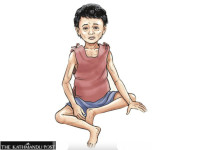
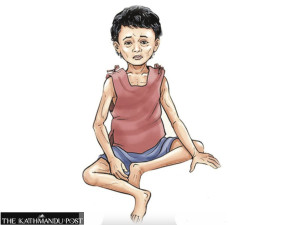
Wasting, a debilitating disease that causes muscle and fat tissues to waste away among children under five, decreased from 11 percent in 2001 to eight percent in 2022. Wasting or underweight for one’s height in children, if not treated properly and on time, is associated with a higher mortality risk, according to the WHO.
The national average of wasting was eight percent in 2022.
Nutritionists say that, based on the 2022 survey, wasting represents a failure to get adequate nutrition in the period immediately before the study.
Experts say malnutrition also affects children’s mental growth, which in turn undermines the country’s economic health. It weakens intellectual capacity, limits productivity in adulthood, and increases vulnerability to certain diseases.
Malnourished children will be stunted if they do not receive treatment on time. Such children are also prone to be affected by multiple non-communicable diseases later in life.
“Various measures are being taken to address the improvement of the nutrition status,” said Lila Bikram Thapa, chief of the Nutrition Section at the Family Welfare Division under the Department of Health Services. “Micronutrient fortification in rice is one among several measures being taken to tackle the existing malnutrition problem. We hope that this measure will be effective.”
Nepal also has an international obligation to improve the condition of malnourished children.
The country needs to reduce stunting to 15 percent from the existing 25 percent by 2030 in order to meet the SDG targets, wasting to four percent from the current eight percent, underweight condition to 10 percent from the existing 19, and anaemia to 10 percent from more than 43 percent at present.




 18.11°C Kathmandu