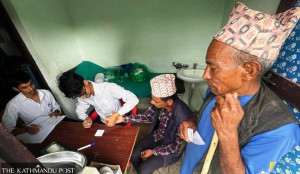
A few days ago, a 43-year-old man from Kathmandu reached Basundhara-based the National Cardiac Centre for treatment of high blood pressure. Doctors attending the patients found that the man’s blood pressure was extremely high, 220/110mmHg.
“The patient had severe headaches, blurred vision, shortness of breath and serious renal problems due to high blood pressure,” said Dr Om Murti, an interventional cardiologist. “Until a few months ago, his blood pressure was under control, but when he stopped exercising after the start of the cold months and changed his eating habits, he suffered from multiple problems at once.”
Doctors say this is a common refrain among many people who stop morning walks and other regular exercise due to chilling temperatures and also ignore health risks related to unhealthy eating, and these habits cause severe health complications. Avoiding regular exercise under the pretext of cold weather is the worst idea, doctors warn, stating that this increases the risk of multiple non-communicable diseases, which have emerged as a major public health problem in recent years.
“Many people stop exercising regularly during winter and consume unhealthy foods, while alcohol intake and smoking increase,” said Anil. “Such habits are very dangerous for one’s health. More exercises are required instead in the cold season.”
During winter months, the body also produces several hormones like catecholamines, adrenaline and vasopressin to keep the body warm, which increases the viscosity of blood that ultimately raises blood pressure, heartbeat and affects the heart, brain and other vital organs, according to doctors.
"Those with high blood pressure, diabetes and heart disease or those with a family history of these conditions are highly vulnerable during the winter months," said Anil. "They are at high risk of stroke, heart attack, heart failure and cardiac arrest."
A lack of exercise and eating more could mean weight gain and a rise in triglyceride levels.
Elevated triglyceride levels may be a risk factor for atherosclerosis, in which plaque, made up of fat, cholesterol, calcium and other substances in the blood, builds up inside arteries.
Experts say people with health complications may slow down the pace of exercise, but should not stop their workouts altogether.
“If it is too cold or pollution is high in the early morning, people should go for a walk after sunrise or in the evening,” said Dr Jagadish Agrawal, former dean of the Institute of Medicine. “One can also practice indoor exercises, but physical exercises should not be stopped under any pretext.”
Agrawal, who is also a senior consultant cardiologist, gives seven mantras for a healthy life—walk for at least an hour daily; eat sufficient green vegetables and fruits; control weight; live an addiction-free life; sleep at least eight hours a day; meditate; and talk to friends.
“I am already over 70 and have been living a healthy lifestyle,” said Agrawal. “I advise everyone to live healthily. Money cannot buy health.”
Of late, the burden of non-communicable diseases has risen alarmingly in Nepal.
The Nepal Burden of Disease 2017 report attributed two-thirds (66 percent) of total deaths to non-communicable diseases, while the figure jumped to 71.1 percent in the 2019 report. The Global Burden of Disease 2021 shows 73 percent of deaths are caused by non-communicable diseases.
A report published a few months ago in The Lancet, a leading international medical journal, stated that walking 7,000 steps a day significantly lessens the risk of major non-communicable diseases, including the risk of mortality from cardiovascular diseases, cancer, dementia, and depressive symptoms.
According to the report, walking 7,000 steps a day lowers the risk of all causes of mortality by 47 percent. Walking 7,000 steps a day also lowers the risk of developing cardiovascular disease by 25 percent, reduces the risk of dying from cardiovascular diseases by 47 percent, lowers the risk of type-2 diabetes by 14 percent, dementia risk by 38 percent, and depressive symptoms by 22 percent compared to those who walk only 2,000 steps a day.




 19.27°C Kathmandu