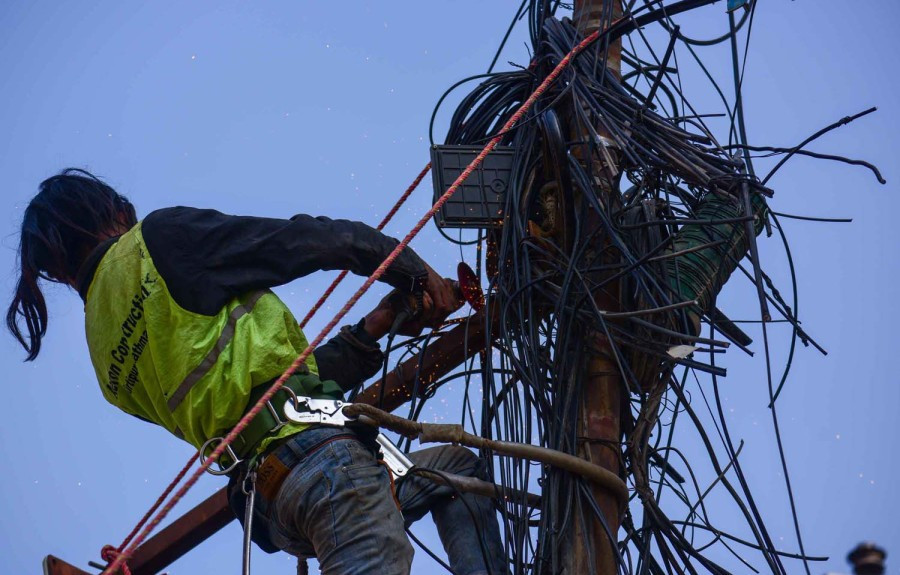
Nepal has made remarkable progress in expanding access to electricity. If government figures are anything to go by, around 97 percent of the country now has power, which deserves recognition. But this success has come with a disturbing cost. Every year, hundreds of people across the country fall victim to electrocution, with many of the incidents proving fatal. A study of Nepal Police records covering July 2014 to July 2019 documented 2,267 electrical injury incidents in five years, of which 59.1 percent resulted in death.
A report compiled by the National Human Rights Commission paints an equally alarming picture. It records 449 deaths from electric shock over a five-year period. The number of survivors left with lifelong disabilities is also substantial. The pattern is similar across provinces, and in a significant number of cases the cause is not negligence on the part of the victims but poor management of electrical infrastructure.
The commission has documented numerous cases in which people died or lost their limbs while repairing water pumps because of power fluctuations. Farmers have been electrocuted after coming into contact with snapped power lines left unrepaired without any warning to the local communities. Highvoltage transmission lines damaged by storms or other causes have continued carrying electricity until the Nepal Electricity Authority repaired them, resulting in avoidable deaths and permanent disabilities.
One such tragedy occurred in March 2024 in Rapti Rural Municipality of Dang, where three members of the same family died after coming in contact with a live power line that had not been repaired on time. Incidents like these raise questions about the authority’s handling of damaged electrical infrastructure. It frequently attributes many such accidents to haphazard road expansion and excavation, which apparently weaken or topple electricity poles. While there is merit to this argument, it cannot excuse the authority’s gross neglect of responsibility to ensure that damaged infrastructure is repaired promptly and the public is protected from known hazards.
Victims and their families often face a long struggle to get compensation, which in most cases is meagre. Sabita Thapa of Gothatar, who lost both her arms after suffering an electric shock in 2014, waited months before receiving Rs 375,000 in compensation, even though her medical treatment cost around Rs 5 million. Her case is far from unique. Beyond the loss of lives and livelihoods, the damage to electrical equipment caused by voltage fluctuations has also gone largely under the radar.
Successive governments have rightly prioritised electricity generation and expanded access to power. They also see the sector as one of Nepal’s greatest economic opportunities, with growing exports to India and Bangladesh and ambitions to reach other markets. Yet the focus on generation, transmission and exports has not been matched by an equal commitment to public safety.
Electricity should improve people’s lives, not destroy them. While the expansion of electricity access to an overwhelming majority of households is a commendable achievement, it cannot come at the cost of lives and livelihoods. As Nepal continues to expand electricity generation and extend the power grid, equal priority must be given to safer infrastructure, timely repairs, stronger accountability and fair compensation for victims. There can be no justification for deaths and lifelong disabilities caused by hazards that are foreseeable, and hence preventable.




 13.77°C Kathmandu