Holding parliamentary elections on March 5, bringing to an end the political transition at the earliest and getting national politics back on track—they are not the sole responsibility of the Sushila Karki government. As responsible are major political forces such as the Nepali Congress and the CPN-UML, among other traditional and emerging forces. Yet, often, it appears that the political parties are taking one step towards the elections and two back.
The Congress and the UML—the two biggest political parties in the recently dissolved House of Representatives—should have championed the electoral process and shown the way for the newer forces. But UML chair KP Sharma Oli, who was ousted as prime minister by the Gen Z uprising, still appears unable to come to terms with the drastic change in the country’s political landscape. He has been threatening not to participate in the elections to be held under the present government. The party, however, appears to have geared up its apparatus for the March polls; second-rung UML leaders are in constant touch with the election commission. This push-and-pull strategy of the UML only adds to the uncertainty around the polls.
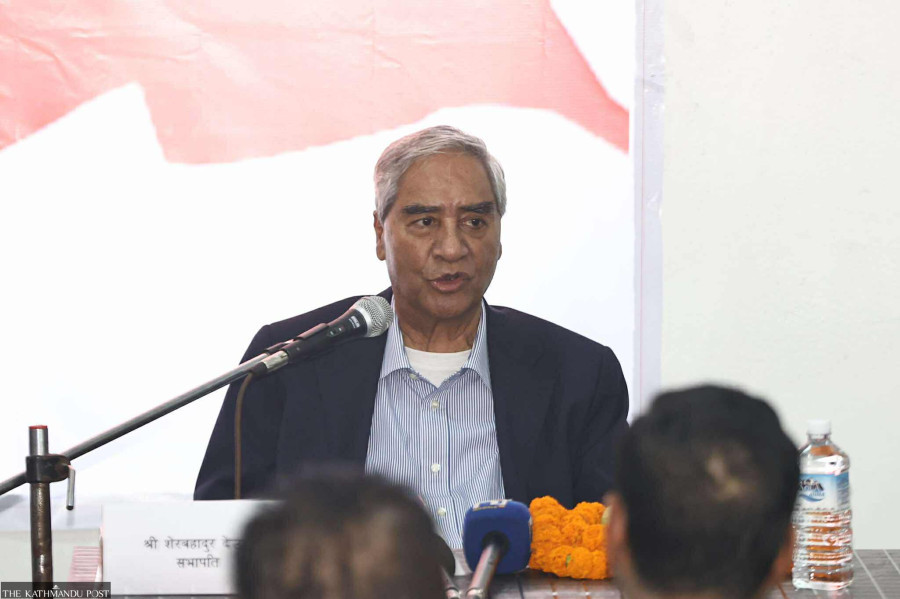
Likewise, the Nepali Congress has officially decided to take part in the parliamentary elections. But over the past one and half months, it has failed in its national duty by failing to orient party members and lower committees to the elections. This largely owes to internal disputes over whether to hold its general convention ahead of the parliamentary polls. After nearly two months of wrangling, the party on Monday decided to organise the convention in the second week of January. Still, given the time constraint, the dissident faction suspects some foul play from the party establishment, which wants to convene it only after the March 5 polls.
Congress President Sher Bahadur Deuba in mid-October handed over the party’s acting presidency to Vice-president Purna Bahadur Khadka. But the Khadka-led team failed to resolve the dispute over the convention date. As the agreement to hold the convention from January 10-12 was reached only after Deuba’s return, the party chief is believed to have played a decisive role in breaking the deadlock. Still, suspicion persists. Now it is again up to Deuba to once again rise above factional interest and organise the convention on the scheduled date—so as to orient the whole party towards national elections.
As Deuba is already retiring as the party’s top executive after the convention, he now has a rare opportunity to leave the political scene on a high note. It is worth remembering former Congress President, Girija Prasad Koirala, in this regard. He was often quoted as saying during the time of the first Constituent Assembly polls that although he knew his party would lose, he would do everything possible to conduct the polls for the sake of democracy. By leading the process of mainstreaming the former Maoist rebels and holding the CA elections, Koirala earned respect even from his critics, who came to regard him as a statesman. Deuba, who often describes Koirala as his political guru, would do well to heed the enduring message of his former party chief.




 14.81°C Kathmandu