Politicians return every election, but promises of land titles remain unfulfilled
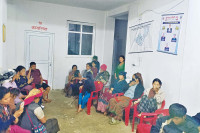
Freed Kamaiyas in Sani Ambapur, Dang, say for years they have been paying taxes on land they do not legally own. The freed Kamaiya settlement at Sani Ambapur in Dang in this recent photo. As Nepal prepares to vote in parliamentary elections this Thursday, residents complain that politicians promise them land titles every election, but never deliver. Angad Dhakal/TKP
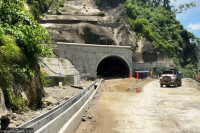
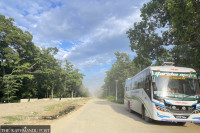
Tin roofs of the ageing huts at the freed Kamaiya (indentured labourer) camp in Sani Ambapur are coated in dust from the unfinished Ghorahi-Tulsipur road. Children play beside mounds of gravel and sand that have lain for road construction, while women sit outside sorting leafy greens for the evening meal. Beyond the bustle of election season, the promise made repeatedly remains unfulfilled—land ownership certificates.
Fifty-three households in the settlement, around five kilometres from Ghorahi, have been living without land titles since 2004. The camp lies in Dang Constituency No 2, where candidates in every election over the past two decades have pledged to distribute land title yet none has delivered.
“We have been waiting for 20 years. During elections, leaders from every party come and assure us we will get our land certificates. Once they win, they never return,” said Santoli Chaudhary of the settlement. She complains that the government collects land tax from the settlement, issuing only payment vouchers because the land remains registered in the name of the District Administration Office. “If they had measured the land we have been living on and given us certificates, our children would not have to say they are Kamaiyas.”
The Kamaiya system of bonded labour was formally abolished in 2000, following years of advocacy and media attention. Since then, successive governments have promised rehabilitation, including land distribution. The delays in identifying beneficiaries, disputes over public land and weak coordination between federal, provincial and local authorities have delayed their rehabilitation, leaving many freed Kamaiyas in limbo.
The locals say that land ownership would allow them to build permanent homes, use property as collateral for small businesses, and secure better education for their children. “When we try to build concrete houses or even a water tank, we face intimidation because the land is still in the government’s name,” said Santoli. “How long are we supposed to live in these huts in such a pitiable condition?”
According to the residents of the freed Kamaiyas camp, they are deprived of various amenities for not having land ownership certificates. Sabita Chaudhary said even connecting electricity becomes difficult without a land certificate. “We elected the leaders for five years. They returned in three years to seek votes again. But they did not bring our lalpurja (land owner certificate in Nepali),” she said.
The freed Kamaiyas began settling on the 25 bighas (around 17 hectares) of land in Sani Ambapur, which lies in ward 16 of Ghorahi Sub-Metropolitan City, in 2004 after missing out on earlier beneficiary lists. Initially, 120 families erected temporary shelters; some have since migrated elsewhere. Those who remain continue to pay taxes without proof of ownership.
A similar story unfolds along the banks of the Patu stream in Tulsipur-5, where a sprawling settlement has grown over 21 years. Rows of large concrete houses line the riverbank, yet none of the residents holds legal land title. Leaders have sought votes there in every election, promising regularisation.
Parbati Oli Pun of Buddhanagartol said she has been paying land tax for years without receiving ownership documents. “They said the certificates would be issued immediately after the election. Nothing has happened as of now,” she said. “Roads and drains remain incomplete.” According to her, almost all the candidates contesting the March 5 polls have visited the settlement canvassing votes but she trusts them no more.
Dhan Bahadur Giri shares similar frustration. “Every election, leaders promise to resolve all problems. Until we see the land certificates in our hands, we cannot believe them,” he said. According to him, the political parties and their leaders betray the locals on various pretexts.
The settlement has expanded rapidly despite prolonged debate over whether it should be relocated or formalised. Now home to around 3,500 households, it functions like a small town. Though the land remains unregistered, transactions occur informally through 27 local settlement development committees. Buyers receive certificates labelled “Temporary Land Ownership Registration for Unregistered Plots”, which ward offices use to recommend basic services such as electricity and water. The sub-metropolitan city collects taxes and issues receipts.
Lalmati Bhandari, who was elected as a ward member from the settlement, says she has been consistently fighting to address the community’s problems. Despite repeatedly raising the issues on behalf of residents, she admits that no concrete solution has yet been achieved.
“Land ownership certificates, drinking water, roads and drainage are the main problems here. To distribute the land certificates, leaders from all political parties need to come together and put in place the necessary legal provisions. The process has been prolonged, which is why the work has not moved forward,” said Lalmati.
Encroachment extends beyond riverbanks. Municipal land near the Bus Park area has also been occupied, with nearly 200 houses built across several plots officially registered to the sub-metropolitan city. Early public notices ordering residents to vacate went unheeded.
Mayor Tikaram Khadka of Tulsipur Sub-Metropolitan City acknowledged the complexity. “Once a settlement is established, it becomes difficult to remove it. We are compelled to provide basic services,” he said, noting that legal procedures for distributing land titles are lengthy and require coordination with federal authorities.
A 2019 field study by the National Vigilance Centre found that about 1,000 bighas (around 677 hectares) of public land north and south of the Gwarkhola bridge in Tulsipur-16 had been illegally occupied and traded by land brokers. In 2020, the central government directed the chief district officer and the sub-metropolitan city to take action against encroachers and ensure protection of public land. The Commission for the Investigation of Abuse of Authority also issued a similar instruction in 2019.
The sub-metropolis wrote three times to the District Administration Office and local security agencies seeking support to clear encroached land. None of the efforts succeeded. Nor have residents received land titles.
The political weight of the Patukhol settlement complicates matters further. Of 6,000 voters in Ward 5, more than 4,000 live in the riverbank settlement. In the 2022 local elections, three of the four ward members were elected from the area. Regardless of party affiliation, candidates with support there stand a strong chance of winning.
For many, the settlement has become little more than a vote bank. As election banners rise once again, Santoli looks at the dusty road and wonders how many more campaigns will pass before promises turn into paper. “Leaders change but our land is still not in our name,” she lamented.




 15.34°C Kathmandu