Women in the remote Rolpa district often arrive at the hospital only after uterine and reproductive health conditions have become severe, doctors said, with stigma and lack of awareness keeping many from speaking openly about their symptoms.
At Rolpa Hospital, doctors report that patients frequently avoid discussing issues related to menstruation, uterine prolapse and other gynaecological conditions. Even when they do seek treatment, many do not fully describe their symptoms.
“Only a small number of women clearly explain their actual problem,” said Dr Niraj Ghimire, a doctor at the hospital. “Most tolerate pain for a long time and come only when the condition becomes severe. By then, infections are often already advanced.”
Health workers said the pattern is closely tied to social discomfort around reproductive health, combined with limited understanding of early warning signs. Conditions such as cervical lesions, they warned, can progress into cancer if left untreated.
“There is very little awareness about infections and preventive care,” Dr Ghimire said. “If women come earlier and describe their symptoms, treatment is much simpler, and outcomes are far better.”
Doctors also point to broader social factors. Early marriage, early childbirth and repeated pregnancies remain common among patients seeking care, particularly in rural communities. These factors are associated with higher rates of uterine infections and prolapse.
To improve early detection, the hospital has been conducting screenings, including the Visual Inspection with Acetic Acid (VIA) test, a low-cost method used to identify precancerous cervical changes.
Health officials said screening programmes for cervical and breast cancer have been expanded in the district, alongside treatment support initiatives.
According to the District Health Office, 369 women aged 30 to 49 and 113 women above 50 were screened for suspected cervical cancer in the current fiscal year. Six were found to have infections. In addition, more than 400 women were screened for suspected breast cancer across different age groups.
The office also recorded 480 screenings for obstetric fistula, a childbirth-related condition that develops when timely medical care is unavailable. Three women required surgery.
But officials said uterine prolapse remains the most widespread condition. A total of 574 women were examined, and 103 were found to be in the most advanced stage. Most were treated with a non-surgical ring device, while one required an operation.
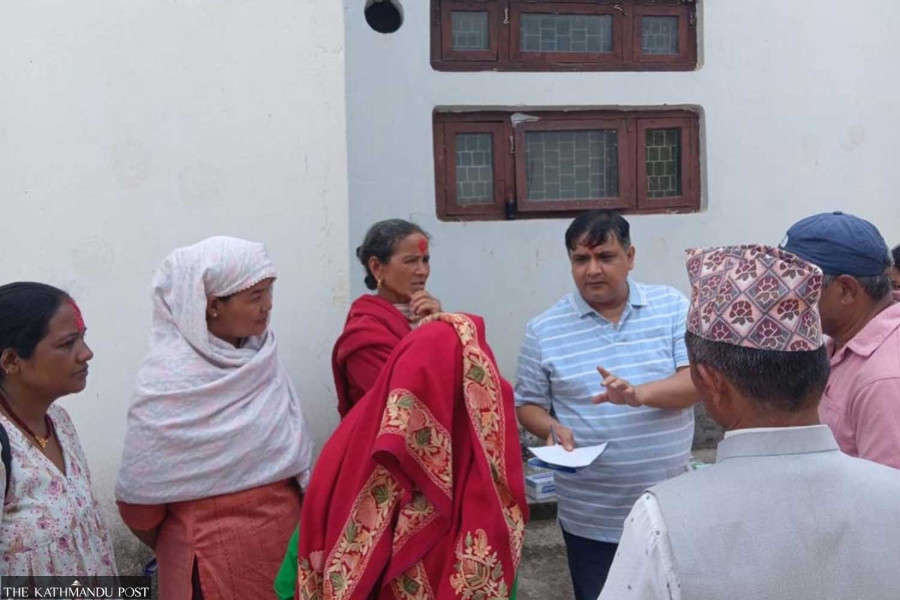
Health workers said many cases are only identified during outreach programmes in rural settlements. In one recent free health camp held in Nuagaun in western Rolpa, 155 women were examined. Organisers said most showed signs of uterine infection or related complications.
“Many women were found to have been living with untreated conditions,” said Lok Bahadur Dangi, chairperson of a local cooperative that helped organise the camp. “The screening helped identify problems that had gone unnoticed for years.”
Specialists who attended the camp echoed concerns over early marriage and limited reproductive health education.
“Early marriage, early childbirth and lack of attention to reproductive health are major reasons behind these problems,” said Dr Prabin Yogi, a senior gynaecologist from Ghorahi who led the medical team. “If treated on time, most of these conditions are manageable.”




 17.65°C Kathmandu