Nepal working on measures to protect its citizens in the Gulf
Foreign ministry to register Nepalis in West Asian nations for protection and possible repatriation. Smoke rises after reported Iranian missile attacks, following United States and Israel strikes on Iran, as seen from Doha, Qatar, March 1, 2026. Reuters
The government has decided to adopt a multi-pronged strategy to deal with the ongoing crisis in the Gulf region following the coordinated attacks carried out by the US and Israel in Iran.
A Nepali national, Diwas Shrestha of Gorkha, was killed in UAE by an Iranian drone attack.
According to officials at the Ministry of Foreign Affairs, they will open a registration for Nepali citizens across the Gulf nations. “We will call for registration of Nepali citizens so that we have proper details of Nepali citizens working in the Gulf. This registration will be used, if needed, for repatriation, and for any future use related to welfare or security,” an official told the Post.
Leaders of the Non-Resident Nepali Association (NRNA) have urged the government to take measures for evacuation of the Nepali citizens.
“As of now, very few Nepalis have formally requested to return to Nepal,” said the foreign ministry official. “So we have advised them to stay safe.”
A few Nepali citizens working at air bases in some Gulf nations have informally requested evacuation.
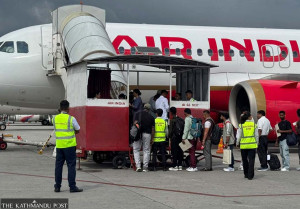
“As several airports in Gulf countries are closed and there is a very limited window for evacuation, we are closely following the situation and exploring several options,” the official added.
Similarly, a rapid action team (RAT) to be headed by foreign secretary Amrit Bahadur Rai is also going to be constituted by Tuesday. Senior officials from different ministers will be part of the RAT, which will coordinate with Nepali missions in the Gulf as well local government agencies for swift evacuation, if needed, according to officials.
“RAT will explore how to keep Nepalis safe in the Gulf and, if the war escalates, it will coordinate evacuation with different government agencies,” the official said.
The process of forming RAT was delayed due to public holidays, but it will be announced soon, said Lok Bahadur Paudel Kshetri, spokesperson at the Ministry of Foreign Affairs.
“We are coordinating with our embassies,” he said, “and our missions are closely following developments.”
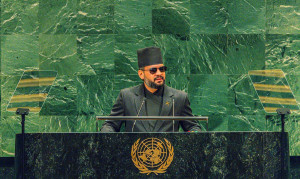
On Monday, Prime Minister Sushila Karki stated that the government is closely monitoring escalating tensions in West Asia.
In her address to the nation on Monday, she mentioned that the developments in Iran and surrounding areas have raised significant concerns. She emphasized that the safety of Nepali citizens residing in the region for employment and other reasons is a top priority.
She informed that all Nepali missions in West Asia have been actively engaged in facilitating necessary security measures, and that continuous monitoring is being carried out through the Ministry of Foreign Affairs.
In case of an emergency, the government is prepared to take necessary actions, she said. The prime minister urged Nepalis in the region to stay alert and remain in contact with their respective embassies and missions.
The Non-Resident Nepali Association (NRNA) International Coordination Council has urged the Nepal government to take immediate diplomatic and security measures to help its citizens.
Ramesh Shrestha, the Middle East coordinator of the NRNA International Coordination Council, informed Foreign Minister Balananda Sharma about the situation and urged the government to make preparations for the safety and evacuation of Nepalis.
He wrote a letter to Minister Sharma stating that over two million Nepalis are working in countries such as the United Arab Emirates, Saudi Arabia, Qatar, Oman, Kuwait, and Bahrain.
“The NRNA has reported that the growing military activities and incidents of attacks in these countries have led to increased fear and insecurity within the Nepali community,” the letter to the minister states.
The NRNA expressed deep sorrow over the death of the Nepali citizen in an attack at Abu Dhabi airport.
“Following this incident,” said Shrestha, “there has been growing fear and uncertainty among the Nepalis residing in the region.”
A virtual meeting, attended by both co-chairs of the NRNA International Coordination Council and coordinated by Shrestha, made several requests and decisions in relation to the Nepal government, said the letter to minister Sharma.
The letter mentioned that there had been heavy bombing and missile strikes from Iran in seven West Asian countries.
Additionally, the NRNA has proposed to coordinate with the Nepal government, the Ministry of Foreign Affairs, Nepali embassies, and diplomatic missions, to set up a 24/7 hotline service. Specifically, NRNA members from the National Coordination Council in the Middle East will be actively engaged in direct coordination to expedite emergency assistance and information exchange, according to the organisation.
The association also decided to coordinate and facilitate the return of Nepali citizens from various countries who may face difficulties while transiting through West Asia on their way back to Nepal.
If the situation continues to deteriorate, the NRNA has urged the government to prepare to safely and systematically bring back Nepali citizens from the war-affected areas through diplomatic channels.
Anil Giri is a Chief Sub Editor covering diplomacy, international relations and national politics for The Kathmandu Post. Giri has been working as a journalist for more than two decades, contributing to numerous national and international media outlets.




 15.26°C Kathmandu