Misuse of new algorithms, as seen in AI-driven disinformation, ChatGPT and various forms of social media, has, for the first time, become a subject of concern in Nepal as well. Intelligent commentators have started writing about its misuse in politics and governance, with an unsettling impact on human rights, press freedom and even the judiciary. These changes are also related to developments occurring within the political structure of Nepal, including parties with both long and short histories.
If these developments are not handled properly and on time, they could create serious problems for individual integrity, prestige and rights in both private and public life. But if used properly, the developments in information technology can make life easier by opening new possibilities.
Change and innovation are the two mantras that we have once again begun to notice and feel. As an academic and literary writer, I have always felt comfortable with the resources and innovations available for use in my domain. There was nothing radical about such use, for that matter. But a few questions regarding the mantra of algorithmic changes are always already there. The changes addressed here are subtle. They represent the idioms of new developments, something we have felt and also engaged ourselves with.
The most conspicuous changes, as we have been addressing, are evident in our writings, speeches, singing, paintings and the use of media. They all require a more subtle system of study and thinking. For lack of space, I will only allude to the nature of these changes and the psyche associated with them. Political transformations and the related anxieties are of primary importance.
We are familiar with political transformations and power dynamics, and the process by which power changes hands. But sometimes the political nature of these changes dominates the discussion and represents our psyche of internalising the metamorphoses happening all around us. I am basically referring here to the most repeated idioms of political change. Change, in this context, is a complex, challenging, daunting and inspiring subject. It seems politics has taken up most of the space in our consciousness. The world is experiencing the impact of political change. The question of who governs and what political agenda they have has become the most talked-about subject.
Lately, with new developments in the world of media, we are quickly becoming its users. To understand the nature of the change, we should also look at the history of the media. In the sixties, Marshall McLuhan’s Understanding Media: The Extension of Man(1964) had a major academic impact on how we perceive change. The medium itself became the message in communications and the very ‘extension of man’. It was believed that the channels greatly shape our thinking patterns. And our modus operandi became more important than the way we thought, acted and expressed our ideas about society.
But today we are exposed to a new algorithm of change. At this moment, we need connection, but it seems this new algorithmic development is isolating us from one another by creating and promoting groups that are temporary and unstable. The online misuse aggravates that. A culture of openness that shapes how we negotiate agreements and differences reflects the health of the politics of change gaining ground these days. My own experience about what I prefer to call the algorithmic upsurge for heuristic reasons represents the experience of people with similar backgrounds and interests. The persona I evoke here is that of an academic who has taught for over half a century and written articles and books on literature, politics and politicians.
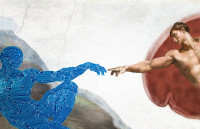
Social media is rife with AI-oriented disinformation. The most alarming part of this is the practice of churning out disinformation. Long before the advent of AI, British novelist George Orwell saw this as the creation of dystopia. Misuse of AI creates such a mechanism. It has facilitated the spread of disinformation, which takes the form of a movement. The question arises—where is human presence in this? Do the users have full control over Facebook and Instagram? People are growing more savvy as well as sceptical about that.
My area being art, academic practice and literature, I would always like to see them flourish as human actions. Showing me what was called ‘new paintings’, a painter presented their recent works. Each painting was so perfect that I could sense the algorithm that produced them. I had gone to see the paintings longing for the artist’s innovations, the movements within imperfect compositions, the original flaw, and the poetry that is the soul of a good painting. But I quietly left the gallery missing the flow of colours, lines, figurality, imperfection and the human soul.
The next shock came from someone who brought a couple of novels he had written in English. As this was the work of someone whose PhD work I had supervised over a decade ago, I read those texts with great care. But I have no need to repeat here that those works were the products of AI. To mention one other incident, a Nepali writer giving me a published copy of his literary work glibly said, “You know, it has become easier to do literary writing these days. Use AI or ChatGPT first. It does the initial work; then you can comfortably edit the stuff. It becomes a perfect work.”
As a teacher, I am informed about the use of AI in research writing. This continues to be wider and more complex day by day. It is best to be alert and promote the works of human imperfection and related dynamism.




 8.12°C Kathmandu