This is also where cricket authorities should not just myopically focus on profit but on how to make the best use of it to build a grassroots foundation. Post File Photo
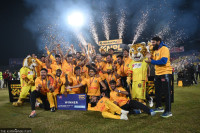
Scottish George Munsey’s swashbuckling 125 in 54 balls gave the Sudurpaschim Royals a 10-wicket thumping victory inside 14 overs over the Lumbini Lions in the final match of the third edition of the Nepal Premiere League (NPL). This was sweet revenge for the Royals as the Lions had made light of them in last year’s final, not to mention twice this year—in one of the 28 league matches and then the qualifier one; the Royals ran the show against the Chitwan Rhinos in qualifier two in a low-scoring cliffhanger, winning by four wickets with one ball to spare. The 2026 winners also reached the final of the inaugural edition in 2024 but were defeated by the Janakpur Bolts.
The tournament features eight franchise teams, with the other four being Biratnagar Kings, Kathmandu Gorkhas, Karnali Yaks and Pokhara Avengers, and it has yet to see a repeat winner. The Royals dominated seasons one and two but fell short in both finals; this time, they stumbled into the final but delivered when it mattered most, even as the trophy favourites, the Lions, who were excellent with the ball throughout the season, fell apart. Only three years old, the tournament has had its share of ebbs and flows in performance. The Lions finished last in 2024 but lifted the trophy in 2025. The Bolts won in 2024 and finished last in 2025 and 2026.
The league has come a long way. The Tribhuvan University International Cricket Ground, where all matches are currently held, has been transformed from grassy slopes for spectator seating into concrete parapet stands, surrounded by six floodlights; additional seats were added this year. As a significant development, shortly after the November 21 final, Prime Minister Balendra Shah announced his government’s plan to build within three years separate floodlit stadiums for the eight teams to allow home-and-away matches. This is a major government commitment to build infrastructure for cricket and is probably—and rightly—responding to the growing craze for the sport across Nepal.
Nepal has been known for zealous fans both at home and abroad, showing up in numbers even in overseas stadiums with the national flag and traditional Nepali musical instruments in support of the national team. If anything, the NPL has broadened this fan base. In the third season, nearly all the evening matches were held before a packed stadium. Advertisers are noticing this. The Cricket Association of Nepal (CAN) awarded this year’s broadcast, streaming and ticketing rights for a combined Rs335 million. Franchisees’ brand value has continued to climb, and there is a lot of room for continued growth in the years to come. The league, and the buzz it is creating, is getting noticed.
Ten days before the start of season three on October 26, the International Cricket Council granted official recognition to the matches, so player performances count towards official T20 statistics. The enhanced credibility enticed the likes of Andre Russell (West Indies), David Miller (South Africa), David Warner (Australia) and Shakib Al Hasan (Bangladesh) to come and play. Others from Test-playing nations making their NPL debut include Moeen Ali (England), Sherfane Rutherford (West Indies), Sri Lankans Charith Asalanka, Sahan Arachchige and Tharindu Ratnayake, and Sikandar Raza (Zimbabwe). Shikhar Dhawan (India) played in 2024 and Faf du Plessis (South Africa) in 2025.
Domestic players had already been rubbing shoulders with the likes of Kiwis Scott Kuggeleijn and Jimmy Neesham, English Ravi Bopara and Dawid Malan, Sri Lankan Niroshan Dickwella, Scot Brandon McMullen, Namibian Ruben Trumpelmann, and Australians D’Arcy Short and Will Bosisto, among others. The NPL organisers and the CAN should see to it that the domestic players use the league not only to make money and get exposure but also to learn from the foreign players. Batter Bopara’s ability to change gears as needed is a special skill to have. Pakistani Jahandad Khan, of the Gorkhas, gave a real exhibition of swing bowling in one of the league matches against the Lions.
Mostly, the local batters struggled to score runs. Indeed, the pitches seemed to help the bowlers more than the batters. If the curators designed it that way, this probably needs to change. We are talking T20 matches, not ODI’s, let alone Tests. Fans come to cherish fours and sixes. But pitches prepared only to help the batters also do injustice to the bowlers. Ideally, a score of 150 and above should strike a balance between bat and ball. The highlight this year was the performance by local pacers. Rijan Dhakal led with 17 wickets. In 2025, Hemanta Dhami impressed, and he deservedly caught the attention of national selectors. Kamal Singh Airee (13 wickets) probably merits the nod this year.
Local spinners continued to leave their mark, and there is no dearth of them. Sandeep Lamichhane and Lalit Rajbanshi, of course, are the frontline spinners for Nepal. Sher Malla excelled last year, and he has now established himself as a regular in the national team. Right on their heels are a bunch of talented youngsters such as Anil Kharel, Ranjit Kumar, Santosh Yadav, Shahab Alam and Tilak Bhandari, with Abhishesh Gautam, who also took a gravity-defying, one-handed catch in the deep against the Avengers, probably the pick of the pack. Ironically, Nepali batters had difficulty coping with left-arm spin, which is perplexing given the quality of domestic left-arm spinners.
At a time when Nepal’s economic growth has slowed to low- to mid-single digits, the NPL turned out to be a bright spot, as fans opened their wallets and sponsors and advertisers theirs. This is also where cricket authorities should not just myopically focus on profit but on how to make the best use of it to build a grassroots foundation. There is a paucity of local- and district-level tournaments. It is okay to dream of Test cricket, but it takes discipline and patience to play long innings. Nepal does very well in T20s but struggles even at 50-over matches. The confidence to be able to differentiate one from the other is gained through enough time on the pitch, and with better teams.




 8.12°C Kathmandu