How Nepal can lead the global climate charge at UNGA 81 and beyond
From building global alliances at UNGA 81 to rallying vulnerable nations for COP31, former assistant secretary-general of the UN outlines a roadmap for urgent climate action and financing.Handout Photo
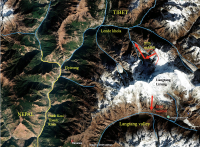
Prime Minister Balendra Shah’s maiden address to the United Nations General Assembly on September 24, 2026, is expected to focus on climate change and climate justice, in light of Nepal’s recent catastrophic ‘Himalayan Tsunami’.
Steered by Foreign Minister Shisir Khanal,Nepal will also host a high-level side eventon‘Sagarmatha to the Sea: A Call to Action for a Climate-Resilient Future’. Nepal is expected to highlight this same issue at several ministerial meetings of the Least Developed Countries (LDCs), Landlocked Developing Countries (LLDCs), the Non-Aligned Movement (NAM), and the Group of 77 and China.
All of this will launch Nepal’s call for climate justice and international assistance for climate-vulnerable countries that contribute little to greenhouse gas emissions and global warming but suffer disproportionately from their impacts. High mountain regions, small islands and coastal states are particularly vulnerable to such impacts.
The UNGA 81 offers a good, high-level forum to launch Nepal’s appeal. However, given the many other competing priorities, ranging from issues of war and peace, trade and commerce, and artificial intelligence to other pressing global concerns, the issue of climate justice is unlikely to be dealt with decisively at the UNGA alone. Along with other climate-vulnerable countries and like-minded stakeholders, Nepal should persevere in taking this issue to other relevant forums where climate justice will be central rather than peripheral.
One such forum will be COP31, the 31st Conference of the Parties to the UNFCCC (UN Framework Convention on Climate Change), which will be held in Antalya, Türkiye, on November 9-20. COP31 is a major international summit to negotiate global climate action, review progress under the 2015 Paris Agreement, and address issues of long-term climate financing, such as the Loss and Damage Fund to respond to the impacts of climate-induced disasters, the Green Climate Fund, the Global Environment Facility, and issues related to science and technology to alleviate the impacts of climate change.
It is important for Nepal to prepare itself well to participate effectively, and even take a leadership role, at COP31 and in its follow-up. Three urgent and important tasks for Nepal are constituting a strong official representation, forging a strong partnership with other countries, and developing close contacts with the COP31 presidency.
A strong official team to represent Nepal at COP31 should designate highly qualified Nepali experts to attend and influence negotiations in various sub-committees of the conference. There is also room for independent civil society activists to attend and influence COP31. The government should encourage and collaborate with Nepali NGOs, academics and activists who plan to attend COP31.
To forge a strong partnership with other climate-vulnerable countries, Nepal needs to look to those from the Hindu Kush Himalaya region, small island states in the Caribbean, Pacific, and Indian Ocean regions, and Nepal’s natural partners among the least-developed and landlocked states and neighbouring coastal states.
Nepal also needs to develop close contacts with the COP31 Presidency of Türkiye and its close partner Australia. If Nepal’s advocacy is framed as ‘Sagarmatha to the Sea’, Australia is likely to be a strong supporter of Nepal, given the long history of cooperation between Nepal and Australia. Australia and New Zealand are very close to and supportive of the climate-vulnerable Pacific Island states. Hence, this framing is likely to attract strong support from Australia, New Zealand and the Pacific Islands.
Besides these three big priorities, Nepal should also forge strategic partnerships with a number of other influential stakeholders. These would include Chris Bowen, Minister for Climate Change and Energy of Australia, who has been assigned as President of Negotiations for the duration of COP31; his colleague Julia Gardiner, who chairs the Subsidiary Body for Implementation of UNFCCC commitments; the UNFCCC Secretariat in Bonn, Germany, which prepares most of the documents submitted for consideration at various COPs; the government of Ethiopia, which will host COP32 in 2027; and prominent climate activists like Greta Thunberg and others who have spoken strongly in solidarity with Nepal.
Nepal should mobilise all its embassies in relevant countries to explain and advocate its position with relevant authorities and individuals. As Nepal does not have diplomatic missions in many small island states, the Nepal missions to the UN in New York and Geneva should be tasked with fostering partnerships with those countries.
COP31 has an extensive agenda and many committees and working groups. It will not be possible for Nepal’s relatively small official delegation to attend and influence all of them. Hence, it should pick and choose a handful of committees and working groups where it will focus its attention, while encouraging other like-minded countries and Nepali civil society activists to cover those agenda items and committees that are also important but of secondary interest to Nepal.
Besides the important plenaries and ministerial roundtables, which Nepal should definitely attend at the highest level possible, Nepal should strive to attend and influence at COP31 by participating in matters relating to long-term climate finance, the Green Climate Fund, the Global Environment Facility, the Fund for Responding to Loss and Damage, capacity-building and technology transfer to the least developed countries, and matters relating to gender and climate change.
In each of these areas, it is important for designated members of the Nepali delegation to do their homework, read the background reports prepared by the UNFCCC Secretariat, try to understand the negotiating positions of various groups of delegates, and formulate Nepal’s preferred position well in advance of COP31. In some of these areas, Nepal should strive to take a leadership position while being supportive of other like-minded delegates.
The special vulnerability of the high mountains, with the fragility of a large number of glacial lakes, compounded by the melting of permafrost on their mountain slopes, as in the case of the Nepal Himalayas, is not a separate and specific item on the agenda of COP31. Nepal should seek every opportunity to get this issue included in debates under all relevant agenda items.
COP27 had requested the Secretariat of the Climate Fund to include a summary of key findings on progress towards achieving the goal of mobilising $100 billion per year to address the needs of developing countries in the context of meaningful mitigation actions and transparency on implementation, for consideration at COP31.
The world is nowhere near the goal of mobilising that amount per annum. The current international atmosphere is not conducive to mobilising such an amount, given the recent trend in many rich and powerful countries to reduce overseas development assistance (ODA), increase military spending, even denying the existence of climate change, and prioritise other national and parochial concerns.
In this context, while not compromising on already agreed global commitments, Nepal and like-minded countries might consider coming up with more modest but pragmatic short-term proposals that address the acute and proven needs of the most vulnerable countries. Nepal’s own need for massive post-disaster reconstruction in the affected areas is generally appreciated by most countries and organisations. So is the need for a more robust early warning system to be developed in close partnership with our immediate neighbours, China and India, preferably coordinated by ICIMOD.
The horrific misfortune of the Himalayan Tsunami of August has catapulted Nepal onto the front pages of global media and ushered in a groundswell of sympathy and solidarity. This enables Nepal’s new government, born of a young people’s revolt and a promise of good governance, to seize a golden opportunity to exercise a leadership role on issues of climate change and the special vulnerability of developing countries. This is a unique opportunity for Nepal to stand up and be counted on an issue of global importance that directly affects Nepal.




 16.74°C Kathmandu
.PNG&w=200&height=120)