China and India should do more to save the Himalaya system
Is it unreasonable to ask our neighbours to engage in meaningful climate action through a regional legal arrangement? Photo: Courtesy of Indian Embassy and Chinese Embassy in Nepal
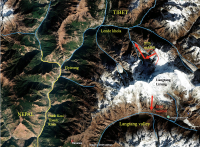
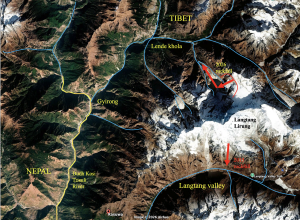
News about the colossal loss after the August 26 flood in the Bhotekoshi/Trishuli in Rasuwa, Nuwakot and other districts is still emerging. The data received so far indicates that no flood occurring in any single river basin has caused so much damage in the living memory of Nepal. The preliminary estimate of the loss given by the finance minister Swarnim Wagle is $5 billion. Geologists and climate scientists are characterising the whole phenomenon as an ice-and-rock avalanche-glacial surge flood. Some are using ‘Himalayan Tsunami’ to characterise the current devastation.
The stories of rising temperatures, receding snow and melting glaciers, or glacial lake outburst floods (GLOFs) have been reported in Nepal, India, Pakistan and China occasionally in the past. What is new in the Bhotekoshi/Trishuli event is the magnitude and scale. In this hour of crisis, the world seems to be standing with us. The entire country has come together. Everyone wishes that this is the last of such occurrences. But given the temperature rise in the Himalaya and the multidimensional disturbances it is causing, that seems unlikely.
Urgency and emergency call upon us to ask a few hard questions. The most pointed among them is: Shouldn’t our giant neighbours—China and India—do more than offer emergency assistance? Should they not lead in addressing the Himalayan climate crisis? While there are agreements on the Alps, the Andes and the Carpathians to conserve their environment and people, positively contributing to sustainable mountain development at varying degrees, can we envisage similar regional legal agreements to save the climate system and biodiversity of the Himalayas?
As such, mountain regions are, in the terminology of the IPCC Sixth Assessment Report (2023), global hotspots of climate change. Warming proceeds faster than the planetary average, and poverty climbs mountains in tune with increasing elevation. Scientific reports suggest that the warming trend across the Hindu Kush Himalayan (HKH) region is two to five times the global average. Rising temperatures, changing seasonal weather patterns, reductions in snow cover, loss of glacier mass, increased permafrost thaw and proliferating glacial lakes have been documented across the region. ICIMOD has documented 25,614 glacial lakes covering 1,444 km of the HKH region. This obviously creates a scary situation. The Himalaya, home to over a billion people, today presents a legally and scientifically complex illustration of mountain vulnerability.
The call for a regional initiative emanates from two duties recognised in customary international law relevant to the climate crisis: First, to prevent significant harm to the environment, and second, to cooperate in protecting the environment. These duties equally apply in crises brought by climate change.
While the duty to prevent harm traces back to the 1932 TrailSmelter case, the duty to cooperate is the foundation of the UN Charter. In its advisory opinion handed down on July 23, 2025, the International Court of Justice (ICJ) linked these duties to the ‘duty of due diligence’. The duty of due diligence requires the state to employ all means reasonably available so as to prevent harm) so far as possible. Many case laws vindicate these duties. According to the ICJ, “The conduct required by due diligence has several elements. These elements include States taking, to the best of their ability, appropriate and, if necessary, precautionary measures, undertaking risk assessments and notifying and consulting other States, as appropriate.”
There are several reasons for institutionalising regional cooperation through a regional legal arrangement. First is the service the Himalaya provides—water, energy and livelihood—to billions of people living in and around it. So far, we have taken its ecosystem services for granted. However, it is time to factor it in and pay back the Himalaya and her people.
Second, the new scientific evidence of biodiversity loss and climate change has created urgency and an emergency for action. Third, all the countries in the region are parties to the United Nations Framework Convention on Climate Change and the Biodiversity Convention of 1992. They have promised to stabilise greenhouse gas concentrations and conserve biodiversity. They are also bound by the Paris Agreement 2015. Among other things, all countries in the Himalaya are expected to follow the Agreement’s temperature goal, target and timetable. Every country, from the highest emitters of GHG gases to those disproportionately affected, has undertaken a good faith obligation to meet the temperature goal set out in Article 2.1(a) of the Agreement.
More importantly, the nationally determined contributions (NDCs) that the countries are required to submit need to be sufficiently ambitious to meet the temperature goal. As interpreted by the ICJ, preparation, communication and maintenance of NDCs by each country is an obligation not only of conduct but also of result. Given that temperatures in the Himalaya are rising faster than the global average, countries in the region must take NDC submissions seriously and remain mindful of the emerging crisis.
Fourth, besides GHGs, another vexing problem in the Himalaya region is the emission of black carbon. Black carbon deposition on glacial surfaces reduces albedo and accelerates melting. It is not difficult to determine the causal pathway between industrial activity in the north and south of the Himalaya and accelerated glacial loss. What is lacking at the moment is the deficit in action or the lack of political will for concerted and urgent action.
Despite the gloom, however, some positive notes are emerging. For instance, in 2009, China and India signed an MoU to establish a joint working group for policy coordination, practical cooperation and a common stance on climate change. Another initiative seen in this context is the 2019 Agreement between China and Nepal regarding disaster risk reduction and emergency response. These agreements could provide a basis for a regional agreement on more pressing issues such as protecting Himalayan climate and biodiversity.
The provisions of the treaty should be based on ‘best available science’. Beyond protecting human rights, the treaty should provide for prevention, mitigation and adaptation, arrange life rejuvenation and reparation measures and fund climate victims. Other components include arrangements for finance, technology, scientific exchange, joint risk assessment, real-time data sharing, monitoring, capacity building and infrastructure development. The treaty would encourage the region’s states to take a common stance at the international level while discouraging harmful domestic action.
All states in the Himalaya are bound by treaty obligations under the Paris Agreement, customary international law and general principles that include due diligence, prevention of transboundary harm and human rights protection and cooperation. Therefore, in view of the existential threat so vividly occurring and the colossal loss experienced amid compounding ecological vulnerabilities, is it unreasonable to ask our neighbours to engage in meaningful climate action through a regional legal arrangement that aims at the protection of the Himalaya system and create just climate governance, promoting a clean, healthy and sustainable environment as an inalienable right of the people of the region?




 18.94°C Kathmandu
.PNG&w=200&height=120)