



 14.1°C Kathmandu
Sun, Oct 11, 2026
Columns
Echoes of an empty assembly
What once was the biggest platform for international leaders has become an abandoned international arena today.
bookmark
Anurag Acharya
Published at : October 10, 2026
Updated at : October 11, 2026 06:44
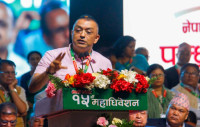
Two weeks back, Nepali Prime Minister Balendra Shah delivered 13evocative minutes at the UN General Assembly (UNGA), describing the country’s devastating floods that killed over 1,400 people, with close to 6,000 more still missing. He laid bare the consequences of humanity’s collective failure, as seen from the melting Himalayas, and the urgency of responding with an unprecedented resolve. It was a speech befitting a crisis already reshaping the lives of vulnerable communities from the mountains to the Pacific islands.
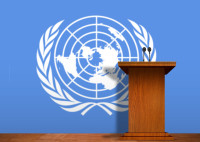
Unfortunately, the speech that made headlines back home seemed to echo in an empty chamber at the UNGA. What was once the world’s foremost platform for international leaders has increasingly become a diminished arena—its authority weakened, its audience distracted, and its ability to compel collective action increasingly uncertain; the glaring absence of its most powerful audience, tragic and unmistakable.
Fractured world, weakened institutions
After the powerful delivery, the most loyal supporters of the Nepali PM have written glowing eulogies about his speech. A lady on social media posted a video where she was choking with pride at the young Prime Minister’s delivery on the world stage. The emotion of a population that has endured years of conflict, political instability, corrupt governments, and the polycrisis of cascading disasters is quite understandable. But for observers of world politics, the broader context and the unfolding events matter as much.
Hours before Shah’s address at the UNGA, world leaders walked out en masse, boycotting the speech of the Israeli PM Benjamin Netanyahu. Less than 250 miles away, two of the world’s most powerful leaders, US President Donald Trump and the Chinese President Xi Jinping, were engaged in a highly anticipated bilateral meeting that could shape world politics more than the routine gathering at Turtle Bay. The last time a Russian President attended the UNGA was back in 2015, and even the Indian Prime Minister excused himself from this year’s gathering. Quite understandable!
The empty chairs these leaders leave behind are ultimately a reflection of a world that has become more fragmented and inward-looking. The United Nations was built on the premise that countries, however divergent their interests, could still find common ground to discuss humanity’s shared problems. But escalating rivalry among big powers—wars and growing distrust of multilateral institutions—has steadily narrowed that space. Powerful world leaders increasingly speak past one another, rather than with each other. The result is a widening gap between humanity’s mounting problems—from climate catastrophe, wars, pandemics and emerging threats posed by unrestrained AI development and the global collaboration and leadership needed to address them.
Rules without an order
The biggest challenge to the post-World War II rules-based order today is not that great powers have returned to pursuing their interests—they have always done so. It is a discomforting reality that institutions designed to manage the rivalry have failed to keep pace with their ambition and power. There is little disagreement about why the UN has spectacularly failed to prevent escalation of wars in Ukraine and the Middle East. The UN Security Council (UNSC) remains essentially a product of 1945, even as the economic, demographic and strategic weight of the world has dramatically shifted. The absence of permanent African, Latin American and Caribbean representation at the UNSC once again became a subject of discussion among global thinkers at this year’s Bay of Bengal Conversations, held a few days back in Dhaka. There is a consensus among civil society in the Global South that the exclusion is not accidental, but rather a deliberate one that has denied the rest of humanity control over their own destiny.
A meaningful reform of the international financial architecture and more effective multilateral institutions, however, can no longer be treated as acts of charity. Certainly not, if these institutions are to remain relevant, for the world is not going to become more peaceful or less competitive simply because institutions are reformed. The proliferation of power groupings—from the G7 and BRICS to strategic coalitions like NATO, CSTO, QUAD and the recent Mecca Pact—reflects the emergence of a multipolar world in which powerful states will continue to leverage security and influence through alliances rather than multilateral forums. However, more than the competing blocs themselves, powerful governments tend to rewrite the rules in their own favour and dictate the international system, which is unfair and increasingly becoming dangerous for the global population. Whether it is a reckless move by the US to exit the climate agreement or the continued lack of effective response to routine Himalayan disasters and climate impacts by large countries like India and China in the region.
A reformed and revitalised multilateralism will not stop great-power rivalry, nor should it pretend to; its purpose should be to provide a place where that rivalry can be managed, negotiated and, where possible, constrained. For countries in the developing world, whose security and prosperity depend less on power projection than on predictable rules, preserving that space is not an exercise in idealism. It is an essential hedge against a world in which the strongest increasingly decide the rules and the weakest are left to live with their consequences.
Besides fighting ‘third world’ problems like poverty, preventable diseases, stunted population and an economy, Nepal today sits on the frontline of a rapidly melting Himalayas, where retreating glaciers, erratic rainfall, floods and landslides are killing more people, destroying more livelihoods and infrastructure than at any time in recorded history. When leaders from vulnerable countries address the UNGA to describe these realities, they are not merely making national appeals; they are reminding the world that global crises are experienced most acutely by those with the least capacity to absorb them. If those warnings continue to reverberate through an increasingly inattentive international arena, the loss will be larger than the UN's diminished authority.
Anurag Acharya
Acharya is director at Policy Entrepreneurs Inc which is engaged in policy research on issues related to governance, aid and foreign policy.



Most Read from Columns

Before you take credit for Khula Manch, read its history
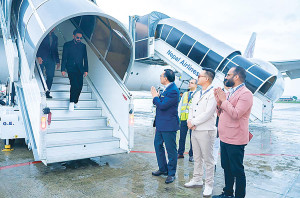
Shah went to the UN to speak for Nepal, then left before he could make the most of it
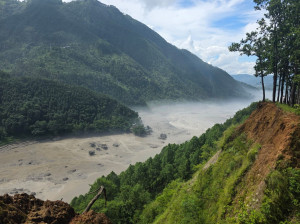
Why Nepal’s latest disaster needs a local name—not just a scientific label
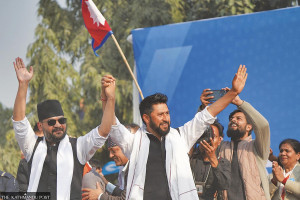
Balendra Shah should prepare for the worst

Lesson learned after the death of Ronaldo
Editor's Picks

Constitutional Bench caught in seniority, ‘pick and choose’ dispute

A Dom boy’s long road to becoming a doctor

From blankets to handmade dolls, two foreign women bring comfort to flood survivors

News Analysis: When institutional defence exposes institutional fault lines

It’s a bird … it’s a plane … it’s the Indian ambassador’s farewell tweets
E-PAPER | October 11, 2026

×