To answer this, we must acknowledge that countries own all the territory that is within their jurisdiction. All land, whether public or private, belongs to the government or the state through a concept called ‘Eminent domain’, where the government can take private property for public use. Similarly, all the airspace of the country, which is the portion of the sky that lies directly above a country, is also under the direct control of the said country. Article 1 of the Convention on International Civil Aviation, 1944, clearly establishes this principle.
Initially, however, countries had the ‘Open Skies theory’ which argued that airspace should be free for all humanity to use. It was after World War I that security concerns led countries to reject the theory and establish the notion of exclusive power of the nation over its airspace. This concept was incorporated in the Paris Convention in 1919.
But how much airspace is within the jurisdiction of the country? Airspace does not have a clear physical border that separates a country’s airspace from outer space. This is where the Karman line, an imaginary line 100 kilometres above the sea level, is used. Below this line, a country’s sovereign authority over its aerospace exists, and above it, outer space ends the country’s authority.
Outer space is the region that no country can own. Article 2 of the Outer Space Treaty, 1967, mentions that “no one owns the space as it belongs to the entire humankind”.
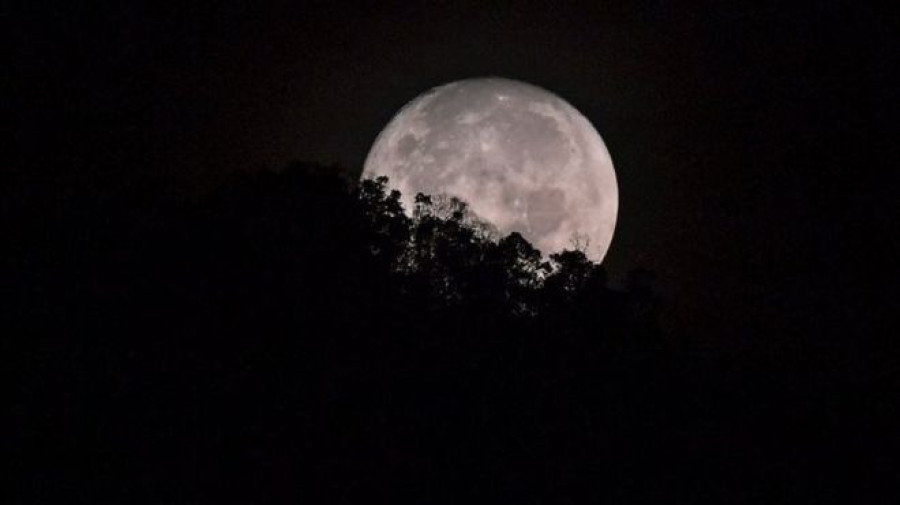
And like space, the moon is also a common heritage of mankind, and no country, however big or strong it may be. To ensure that the moon belongs to no one, countries all over the world signed the Moon Agreement of 1979. Article 1 of that agreement explains that its scope applies to the moon and all other celestial bodies within the solar system except Earth. Article 3 explains that the moon must be used only for peaceful purposes; no threat or use of military bases, weapons testing or nuclear weapon deployments are permitted. Article 4 states that the moon is a common province of mankind and its exploration shall be carried out to benefit all the countries. Article 6 explains that nations have the scientific freedom to collect mineral samples, such as rocks and dirt front he moon to conduct scientific research. Article 7 prevents any nation from disrupting the moon’s geography, and Article 8 states that countries can create a station anywhere on the moon.
Since the moon cannot be owned as per the agreement, it prevents lunar colonisation. However, some nation-states, including the US, China, and Russia, are not signatories to the Moon Agreement. Their absence from the agreement, however, does not undermine the basic fact: The moon is all of humanity’s common property. We can all see it in the night sky, and it reflects light to all of humanity in the night. Not one single nation can assert the exclusive right to that light. Not one single country can stop the moon from doing so either. For the moon does not discriminate, so cannot we. No one owns the moon, and everyone owns it at the same time. The Moon Agreement was 47 years ago. It is time for the countries that stake a claim to the moon to understand that no one, absolutely no one, owns the moon.




 21.12°C Kathmandu

.png&w=200&height=120)


.png&w=300&height=200)