



 22.44°C Kathmandu

Fri, Oct 16, 2026
Columns
Evolving threat of ‘pink eye’ H5N1 bird flu: Could it spread globally?
Evidence suggests that human transmission may occur through exposure to cattle or raw milk.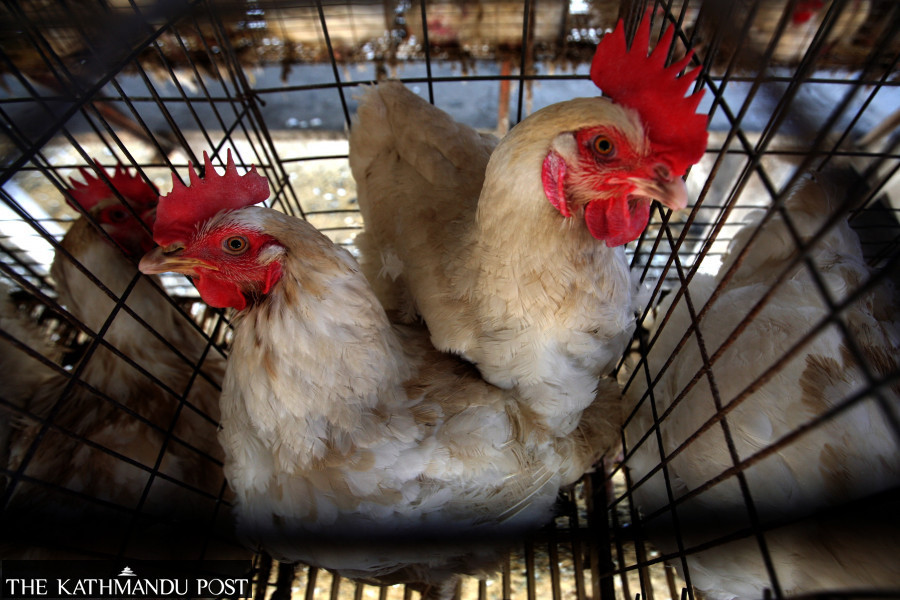
bookmark
Dr Sher Bahadur Pun
Published at : April 29, 2026
Updated at : April 29, 2026 08:57
Influenza A H5N1, commonly known as ‘bird flu’, is a respiratory virus that affects both human and bird populations. H5N1 bird flu was first reported in Hong Kong in 1999, where six of 18 infected patients died from complications, highlighting its virulence. It is considered a highly pathogenic avian influenza (HPAI) virus and is associated with approximately 50 percent case fatality.
In Nepal, the H5N1 virus was first detected in 2009 on poultry farms in the eastern region. A decade later, the country reported its first human fatality linked to the virus, which generated considerable public concern. Until recently, bird flu infections were considered the primary source of human infection. However, emerging evidence from the United States indicates a notable epidemiological shift, with increasing numbers of human H5N1 cases linked to exposure to infected cattle and raw milk.
Recent findings published in the New England Journal of Medicine further highlight an unusual clinical presentation: Many affected individuals exhibited ‘pink eye’ (conjunctivitis) as a prominent symptom. Although to date, such ocular manifestations have been reported in the United States, their emergence raises important questions: Could this form of ‘pink eye’ bird flu spread globally? And might currently mild or atypical presentations evolve into more severe disease, potentially contributing to future outbreaks or even a pandemic?
The time interval between exposure and the first appearance of H5N1 virus symptoms typically ranges from two to eight days (up to 17 days). Initial symptoms usually include fever, cough and/or sore throat. As the disease progresses, patients often develop shortness of breath around five days after symptom onset. Diarrhoea, vomiting, chest pain and bleeding from the nose and gums have also been reported. Pneumonia is the most common and serious complication associated with this virus, contributing to a case fatality rate of approximately 50 percent.
Nevertheless, the clinical presentation of H5N1 infection associated with exposure to dairy farms (cattle/raw milk) appears to differ from that of bird-to-human transmission. Emerging evidence suggests that ‘pink eye’ is a prominent feature in these cases (transmission from dairy farm). In contrast, the classic influenza-like illness, including fever, cough, and/or sore throat, appears to be less common or milder in H5N1 infections linked to dairy farm exposure.
Nepal is currently facing a fresh wave of H5N1 outbreaks in poultry farms across the country, raising concerns about potential human exposure. In 2019, the country reported its first fatal human case of H5N1 infection. Following this case, the medical team from Sukraraj Tropical and Infectious Disease Hospital were mobilised to investigate possible transmission among individuals who had close contact with the patient. Fortunately, no secondary cases were identified among these contacts.
Recently, concerns have extended beyond poultry farms, as dozens of wild birds, particularly crows, have suddenly died from H5N1 infection, raising serious questions about the potential for human transmission, particularly given the proximity between crows and humans in Nepal. Notably, in early 2019, mass mortality among crows (over 350 crows) due to H5N1 infection was reported in Kathmandu; shortly thereafter, the country documented its first fatal human case of H5N1 infection. Although no formal studies have established a direct link between crow die-offs and human infection in Nepal, such an association cannot be excluded. This warrants a comprehensive epidemiological investigation to understand potential transmission dynamics and associated risks.
Surveillance efforts should be expanded to dairy farms in Nepal, given growing evidence that the H5N1 virus can be transmitted to humans through exposure to dairy farms (cattle/raw milk). While such cases (cow/raw milk-to-human/dairy farms) have been reported in the US, the apparent absence of reports from other countries, especially low- and middle-income countries, may reflect underrecognition, potentially due to the generally mild clinical presentation that does not prompt individuals to seek medical care or testing. Thus, H5N1 infection in humans linked to dairy exposure may be more widespread than currently appreciated, warranting further investigation.
Currently available vaccines are primarily developed to protect against seasonal flu, including H1N1pdm09 (publicly known as Swine flu), H3N2 (known as Hong Kong flu) and Flu B viruses. However, no vaccine is currently available against H5N1. Many experts believe that a future pandemic is likely to involve a respiratory pathogen, and H5N1 remains a virus of concern, particularly as evolving transmission pathways, such as spread via dairy farm, and its capacity for further genetic mutation. In the meantime, antiviral medicine, specifically Oseltamivir, has demonstrated clinical benefit in the treatment of H5N1-infected individuals who were infected through exposure to dairy farms.
To conclude, the H5N1 virus can no longer be regarded solely as ‘bird flu’—previously known as a pathogenic virus transmitted exclusively from birds—as growing evidence suggests that transmission to humans may also occur through exposure to cattle or raw milk. At present, there appear to be marked differences in clinical presentation, with H5N1 infections associated with dairy farm exposure tending to be relatively mild, often characterised primarily by ‘pink eye’, while avian-derived infections remain highly pathogenic—a distinction that warrants further study. It is probable that the ‘pink eye’ virus may be silently circulating at a global level but remains unreported, possibly due to its mild clinical presentation.
Dr Sher Bahadur Pun
Pun is Chief of the Clinical Research Unit at Sukraraj Tropical & Infectious Disease Hospital.





Most Read from Columns

Before you take credit for Khula Manch, read its history

Shah went to the UN to speak for Nepal, then left before he could make the most of it

Bhotekoshi flood wasn’t a freak event. It’s the Himalaya doing what it does
Lesson learned after the death of Ronaldo
Why passive neutrality won’t take Nepal anywhere
Editor's Picks

Constitutional Bench caught in seniority, ‘pick and choose’ dispute

A Dom boy’s long road to becoming a doctor

From blankets to handmade dolls, two foreign women bring comfort to flood survivors

News Analysis: When institutional defence exposes institutional fault lines

It’s a bird … it’s a plane … it’s the Indian ambassador’s farewell tweets
E-PAPER | October 16, 2026

×