



 24.65°C Kathmandu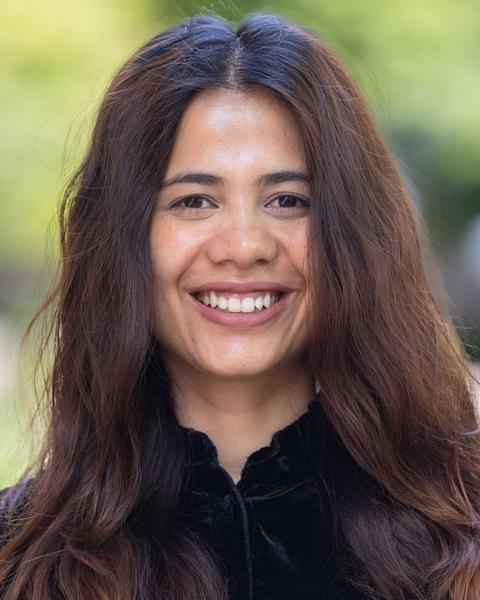
Tue, Oct 27, 2026
Columns
Doing away with exams, ushering in assessments
If exams fail to serve their very purpose, how should we actually assess learning?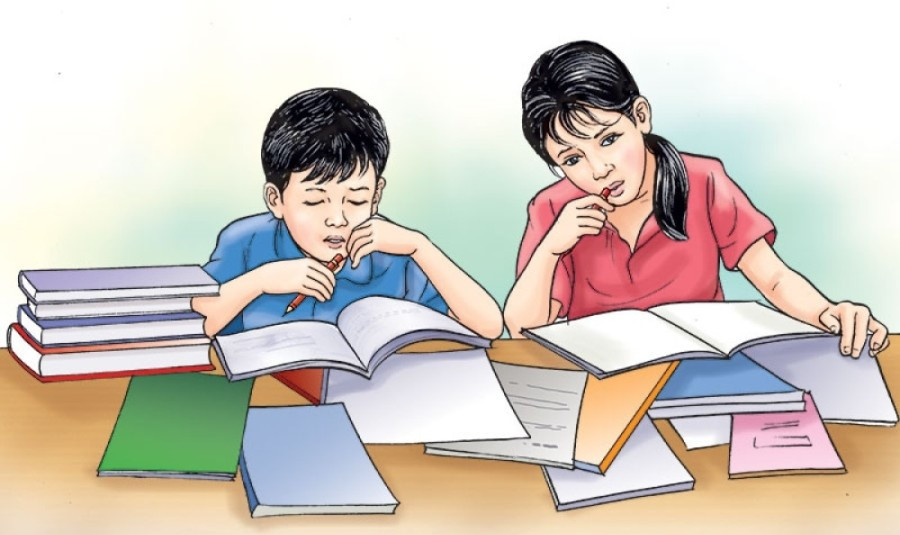
bookmark
Salome Bhatta
Published at : April 19, 2026
Updated at : April 19, 2026 13:50
The new directive from the government of Nepal to replace internal written exams from grades 1 to 5, citing stress relief among children, is a great promise. Stress alleviation is only a small gift of this new proposed reform. If we can get it right and assess what truly matters, we can change what Nepal becomes. At this moment, when the country is going through a transformative political change, we should all be asking ourselves: What do we want the future Nepali citizen to be? If we want our children to grow into adults capable of solving real-life problems, we need to move beyond traditional examinations towards evaluations designed to achieve that outcome.
When I first arrived at Harvard, I performed poorly in almost all my classes. Despite a clear assignment description, I was always confused about what I was expected to include in my submission. Evaluations here were different. What did ‘good work’ look like here? It took me nearly a whole year to understand what my classmates, teaching teams, tests and assignments were even asking of me. I realised that the coursework did not demand that I reproduce concepts through tests; rather, it called for me to build: To communicate the construction of my knowledge through evidence and to demonstrate what I could create with my learning. I now realise that those experiences have changed my ability to create and to live a learned life.
This experience brought something into focus for me. It was clear that my learning experiences in Nepal and India were evaluated only through written examinations that tested one skill: The ability to memorise.
Let’s reflect on the purpose of examinations. The primary purpose is to test whether or not our students have learned. To learn something is not simply to store it; rather, it is to be able to use it. Therefore, a high fidelity test of one’s learning is not ‘can you recall this?’ but ‘can you do something new with it?’ The current written test system in Nepal is not serving that purpose at all. In fact, I am actually convinced that these 100-mark final writing exams have regressed our ability to create and innovate. While our current testing system only rewards the ability to memorise, the true potential of Nepali youth is wasted on outdated cognitive exercises. We are trading precious years of curiosity and experimentation for rote recall. Our ancestors left us a legacy of original utility and art—the Sickle, the Sarangi, the Doko—tools born of necessity and innovation. Today, all we see around us are imported goods, copied innovations and second-hand lifestyles. This is a result of our copy and paste 100-marks exams.
If these exams fail to serve their very purpose, how should we actually assess learning? What should we test? What should our education system reward?
To meaningfully assess student learning in ways that prepare them as innovators and creators for the Nepali community, two things matter the most: Evaluating students’ learning through their ability to construct and assessing the quality of their learning experience.
Contextual and personalised project-based assessments that ask students to produce constructive evidence of their learning have long been championed by educators worldwide and are long overdue in the Nepali classroom. We should build mechanisms to assess and reward students based on artefacts they build, group projects, essays and reflection of their thought process in addition to written tests. Moving from one assessment practice to many others will not be simple. It requires a fundamental rethinking of how the curriculum is designed and experienced. An overhaul of the educational design needs to occur. At the heart of this proposal is a shift in our objective: Every chapter and every unit should move students from understanding to creating.
We learn the definition of all sorts of pollution in our science and environment textbooks. The students are tested with, ‘What is air pollution? Explain some of its causes.’ Instead, it could be: Based on your conversation with your local ward official about air pollution, how did their response shape or challenge the recommendations you brought them? These constructivist test questions are an excellent opportunity to put students at the centre of their own learning experience. These questions incentivise personal experience, learner agency, constructive thinking and data driven innovation. This changes the classroom: teachers facilitate, students build meaningful experiences, and knowledge is constructed rather than handed down. Designing a more authentic assessment like this can actually improve how we teach, learn and live.
Bloom’s taxonomy, the global benchmark for education reforms, reminds us that knowledge is only the beginning, but the highest form of learning is when students can synthesise what they know into something new.
Testing students alone is not sufficient for measuring the construction of their knowledge. Assessing the student’s experience is equally important. From my personal observation, the top universities like Harvard make it their utmost priority to collect course evaluations written by their students two or three times each semester. These evaluations determine if the intended outcome of the learning materials was achieved. They also show educators what the students’ expectations are and how the teaching team can recalibrate if necessary. I strongly believe that this simple feedback loop can solve a lot of problems in Nepali education. If Nepali institutions want to build something Nepali students find valuable, they must first ask their students. After all, the students are the biggest stakeholders in their own education. Their input is critical and constructive for building education worth their time.
The time for change is more urgent than ever. Today, artificial intelligence (AI) can already out-memorise, out-recall and out-regurgitate every student who sat for the SEE this year. If our assessment system is a competition with AI to spit out information, we have already lost. Continuing the status quo, Nepali youth face a double loss: Their memorisation skills become irrelevant on the global stage, and they remain ill-equipped to solve the problems that are actually theirs to solve at home. Education reform is overwhelming given its complexity, but evaluation redesign can be our compass. We need to reassess how we assess Nepali students and design the education system backwards from that.
This piece is part of an op-ed series in collaboration with The Nepal Discourse, a convening at Harvard University and MIT focused on shaping Nepal’s strategic vision for the next decade.
Salome Bhatta
Bhatta is a learning experience designer and a teaching fellow at Harvard University.

Most Read from Columns



Editor's Picks

What to know about the US trial over Mamta Kafle’s disappearance
NPL returns with bigger ambitions and global recognition
What’s new in the Nepal Premier League’s third season?
After Nepal’s recent disaster, it wants to test whether COP31 can deliver climate justice

Why does an hour long flight to Dhangadhi cost more than a flight to New Delhi?
E-PAPER | October 27, 2026

×