



 22.23°C Kathmandu
.jpg&w=200&height=120)
Tue, Sep 29, 2026
Columns
Himalayan hopes
Will Nepal’s new government live up to expectations?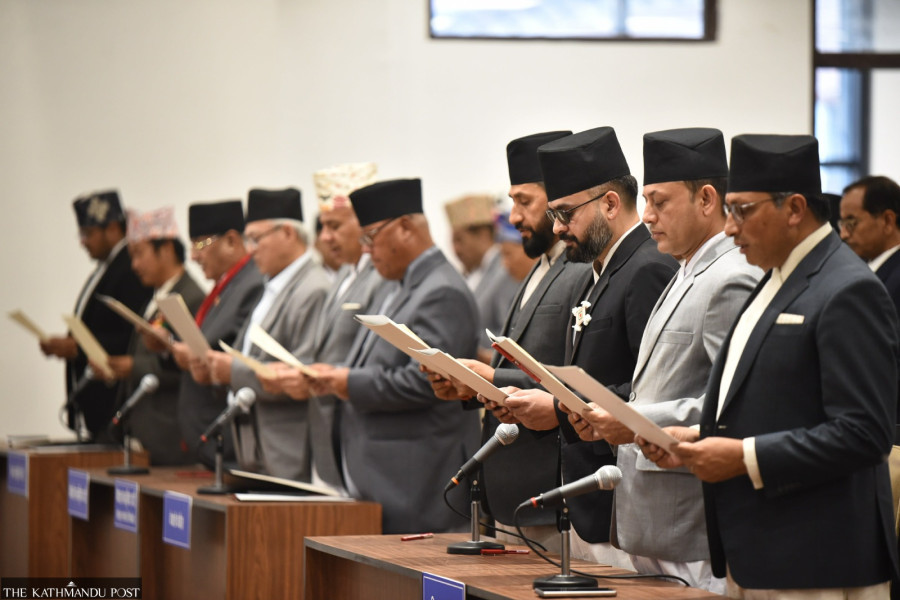
bookmark
Mahir Ali
Published at : April 1, 2026
Updated at : April 1, 2026 19:22
Following last September’s demonstration of people power in Kathmandu, the consequences promptly ensued. The prime minister quit on the second day of the protest. 76 protesters lay dead, some of them still in their school uniform. The army briefly took control, but rapidly made way for an interim administration led by former chief justice Sushila Karki, which announced elections and an inquiry into the violence of Sept 8-9.
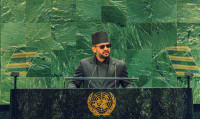
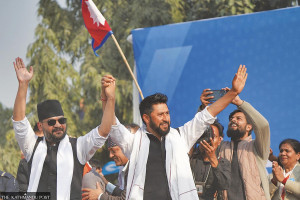
Last month’s elections delivered a scathing verdict against the political parties that have guided Nepal’s destiny across recent decades, with voters offering the relatively new Rastriya Swatantra Party (RSP) an almost two-thirds majority in the lower house of parliament. The enthusiasm appears to have been based mainly on the popularity of the party’s prime ministerial candidate, Balendra Shah, a rapper who has served as the independent mayor of Kathmandu.
At 35, Balen, as he is known, is only marginally older than the Gen Z cohort that provided a convenient tag for last year’s rebellion. He was sworn in as PM last Friday at 12:34pm—an auspicious moment according to astrologers, although indicating an adherence to superstition. His ascendancy nonetheless signifies a departure from the pattern whereby youth-led popular revolts have led to political change without obviously empowering the young.
In Sri Lanka and Bangladesh, for instance, long-established regimes were overturned and subsequent polls led to a potentially hopeful departure from the status quo with less dramatic generational change. In Madagascar, meanwhile, the military decided to hold on to power following unrest that more or less coincided with last year’s uprising in Nepal.
The immediate trigger for the latter was a blanket ban on social media, but lingering frustrations related to nepotism and corruption were also a crucial motivating factor. Nepal has undergone a number of convulsions in recent decades, evolving from an absolute to a constitutional monarchy and then turning into a republic (seven years after the then crown prince killed his parents and other family members in 2001), while also emerging relatively peacefully from a decade-long rural Maoist rebellion.
Yet every successive break from the past failed to deliver substantial change in terms of socioeconomic development, and younger Nepalis in particular couldn’t help but notice that the repeated shifting of power between the three main parties—Communist, Maoist and the older Congress—made little difference to their lives. Unemployment among the youth is recorded at 20 per cent. No wonder so many of them choose to emigrate: to India, the (currently problematic) Gulf, Israel (even more problematic), Europe, America and Australia. Who can blame them?
Some of them are now indicating that they might change their minds about escaping if the Balen government lives up to the huge expectations that propelled it into power. That is by no means a certainty. Balen was scathing about the RSP until he joined it. He has also been critical of India, China and the US, the three powers key to Nepal’s foreign policy. Nepal was also the first Asian nation to recognise Israel, as far back as 1960, and it remains one of the favourite destinations for Israeli soldiers taking a break from killing Palestinians. If its new PM has any views on that, he hasn’t expressed them.
Many of those who participated in last September’s protests were shocked by the accompanying arson, and suspected darker forces were piggy-backing on the spontaneous outburst of indignation. Perhaps we’ll never know for sure. Inquiries into the violence led on Saturday to the arrest of KP Sharma Oli, the Communist Party PM who quit after last year’s travesty. That was his fourth stint as PM in a polity where heads of government rarely survive for longer than a year. It’s notable, though, that Balen unseated Sharma Oli in his Jhapa 5 constituency, a long-time stronghold of the Communist Party of Nepal (Unified Marxist-Leninist). It’s not hard to imagine Marx, Lenin or Mao being appalled by those who adopt their names but ignore their opinions.
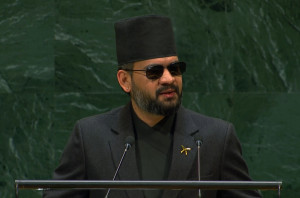
We’ll have to wait and see what kind of alternative Balen has in store. A bit like Donald Trump, he prefers to communicate with his followers via social media. He might need to change his tack as PM, and perhaps remove the Ray-Bans that possibly cloud his vision. For far too long, Himalayan hopes have rapidly slipped down the famed slopes of lofty mountains. It must be hoped that Balen and his colleagues can implement the structural changes that rescue Nepal from its predicament, possibly holding out lessons for India and Pakistan.
It’s too early to tell, but there’s more than a scintilla of hope that the gerontocracy that has hitherto pretended to thrive is now a thing of the past.
-Dawn (Pakistan)/ANN
Mahir Ali
Mahir Ali is an Australia-based journalist. He writes regularly for several Pakistani publications, including Dawn.

.jpg&w=200&height=120)
Most Read from Columns
Editor's Picks
What triggered the Rasuwa flood? Scientists piece together a complex chain of events
The floods keep coming. Nepal keeps starting over
In a settlement destroyed by the Bhotekoshi flood, a disabled couple offer strangers the little they have
Nepal working on detailed assessment as Bhotekoshi flood reconstruction could cost up to $5 billion

Rabindra Dhant gave Nepal a reason to smile. Now his camp wants real action behind the praise
E-PAPER | September 29, 2026

×