



 23.73°C Kathmandu
Sun, Oct 18, 2026
Columns
The eleven battles of Balendra
Ultimately, his real test will not be in his decisions, but in his perspective.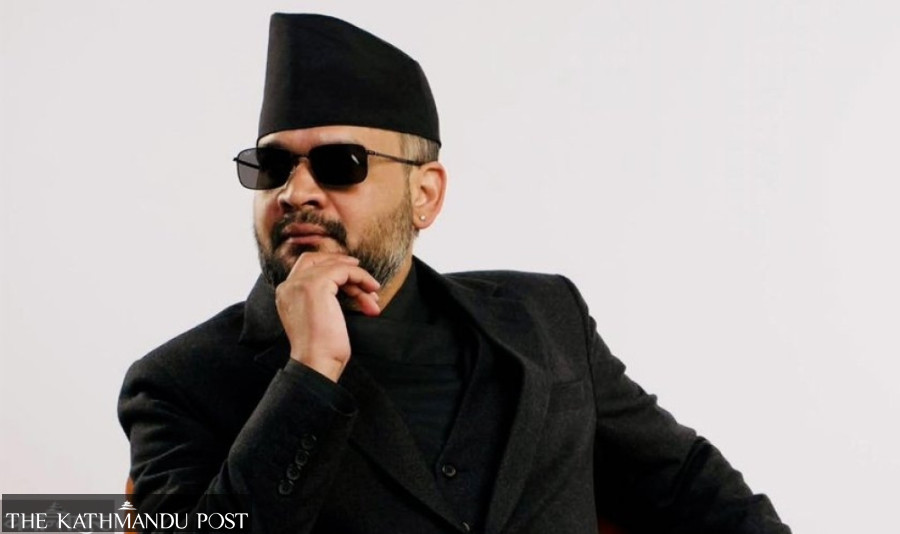
bookmark
Chandrakishore
Published at : March 23, 2026
Updated at : March 24, 2026 07:30
The tale of an extraordinary struggle between power, the system and hopes places Balendra Shah at the centre of Nepali politics as its narrator. This very week, he will formally enter Singha Durbar, the secretariat of the chief executive. The story of reaching Singha Durbar is full of suspense and thrill, and has become legendary in its own right. Yet, this is also the message of electoral politics.
However, the most decisive and deepest battle is one with oneself. This is a realm with no spectators, no applause and no criticism. Here, there is only the individual and their inner conscience. However, herein symbols carry a danger as they can obscure realities. Therefore, it is essential that we also see Balendra as a human being with his limitations, his mistakes and his process of learning. Because if we view him solely as a hero, we will expect from him what is impossible for any human. But by presenting himself as a human, it is necessary for him to overcome the weaknesses stemming from his past nature and behaviour.
Balendra’s battles in this sense are not personal. They are the battles of every citizen disillusioned with the system who aspires for change and who believes a better society is possible. Here, Balendra ceases to be merely an individual and becomes a symbol that demonstrates it is possible to struggle against the system even while remaining within it.
Contemporary Nepali politics stands at a juncture where the test of balance between personality and the system has become tougher than ever. In this context, Shah’s ascent to the post of prime minister is not merely one individual’s achievement, but an outburst of the people’s aspirations. The higher this surge, the deeper the battles he must endure. The first condition to understand is that he is not some miraculous figure but a public servant trying to make a sincere effort, and perhaps this is his greatest strength.
The first battle is with this very myth—breaking free from the glamour of ‘heroism’. In democracy, the institutions endure, not heroes. If Shah allows himself to be presented as an all-powerful saviour, it will be as dangerous for his politics as for the country. He must advance a culture of collective leadership while understanding his own limits.
The second battle is the balance between party and individual. Now he is no longer just a popular face, but a senior leader of a party which holds a commanding majority in the lower house. This entails aligning with party structure, discipline and collective decision-making processes. History bears witness that whenever a leader has weakened the party to place himself at the centre, ultimately, not only does the party disintegrate, but governance also becomes unstable. Therefore, he must absorb the party, not stand above it.
The third battle arises from the tension in power relations that has repeatedly caused political accidents in the past. Historically, in Nepali politics, there has been friction between the ruling party leader and the head of government. If this tension becomes imbalanced, the direction of governance goes off track. Shah will have to skillfully manage this complex equation, neither via complete surrender nor unnecessary confrontation.
The fourth battle is that of ‘stature’, i.e., popularity versus institutional restraint. No leader can be bigger than their party or country. This is not merely a moral statement, but the touchstone of political conduct. Translating it into practice is the real challenge. Upon reaching the pinnacle of power, such leaders get surrounded by an aura that shields them from reality. But shattering this illusion is the mark of mature leadership.
The fifth, and perhaps most important, battle is the battle for power balance. Nepal’s democracy rests on the principle that the true source of power is the House of Representatives (HoR). The HoR is a symbol of people’s sovereignty and not just an institutional framework. If any power centre attempts to stand parallel to or above it, the democratic balance is disrupted. Shah must clearly establish that his primary loyalty is to this institutional balance, without any ifs or buts.
The sixth battle is to redefine the concept of development. Assuming that the people only want ‘delivery’ is a dangerous oversimplification. For marginalised and peripheral communities, ‘dignity’ and respect are as important as service delivery. Where the classes with easy access to Singha Durbar see only a ‘crisis of delivery’, those on the margins struggle for acknowledgement of their existence and respect. The recent mandate’s rejection of monarchy is a sign of this consciousness. In the symbolic context of Gyanendra Shah, it is clear that no self-respecting citizen is now ready to accept birth-based superiority. The joy of democracy lies in equality, not privilege.
The seventh battle is that of dialogue. After becoming prime minister, he can no longer afford the luxury of prejudice towards anyone. He must adopt a communicative, interactive approach with the cabinet, other organs of the state, media, political parties and civil society. Good governance is not the achievement of one individual; it is the result of collective effort.
The eighth battle is that of federalism and inclusivity, especially in the context of Madhesh. Nepal’s federal structure will be meaningful only when all regions, including Madhesh, feel genuine partnership. Shah must become not just a policymaker, but a ‘bridge of friendship’. A bridge of trust between Madhesh and the state. This bridge will be built not through declarations, but through equitable distribution of resources and respectful participation.
The ninth battle is that of transparency. Good governance cannot be established through opaque behaviour. People now look not just at the face but at both character and conduct. In this age of information, every decision, process and action becomes part of public discourse. Thus, transparency is not an option, but a necessity.
The tenth battle is accepting criticism. For a popular leader, the greatest danger is the circle of flattery. If he hears only praise, he will disconnect from reality. The courage to listen to healthy criticism and learn from it will make him a mature leader.
The eleventh and final battle is that of memory, i.e., remembering one’s origins. He is the product of the Constitution. His current political position, whether from the era of independent politics or the present party commitment, is a result of opportunities provided by the Constitution. Therefore, loyalty to the Constitution is not a mere formality, but the foundation of his existence.
Amid all these battles, it is extremely important to note that the people have elevated him to this height with great expectations. This height is as alluring as it is risky. And the fall from here can be equally swift. Therefore, he has no license to fail; not only personally, but also in the trust the people have placed in him.
Ultimately, Shah’s real test will not be in his decisions, but in his perspective. Will he treat power as an end or as a means? Will he weaken institutions in the charm of popularity, or strengthen institutions to make his popularity enduring? These questions will determine the direction of his leadership.
The people of Nepal have not merely made him prime minister. They have given him an opportunity to make democracy deeper, broader and more humane. This opportunity is also a responsibility, and therein lies his greatest battle.
Chandrakishore
The author is a veteran journalist.



Most Read from Columns
Before you take credit for Khula Manch, read its history
Shah went to the UN to speak for Nepal, then left before he could make the most of it

Bhotekoshi flood wasn’t a freak event. It’s the Himalaya doing what it does
Lesson learned after the death of Ronaldo
Why passive neutrality won’t take Nepal anywhere
Editor's Picks

Dashain paints the country in festive colours
Buying a goat for Dashain? Look for the green mark

Explained: Why does an hour long flight to Dhangadhi cost more than a flight to New Delhi?
Bhotekoshi flood wasn’t a freak event. It’s the Himalaya doing what it does

How Tenzing Sherpa became Nepal’s breakout star at the Asian Games
E-PAPER | October 18, 2026

×