



 14.69°C Kathmandu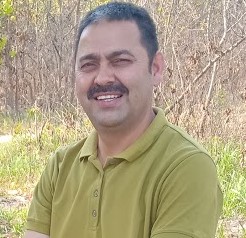

Sat, Oct 24, 2026
Columns
Time to ring in federalism reforms
The size of the federal government and the structure of provinces deserve particular attention.
bookmark
Khim Lal Devkota
Published at : March 17, 2026
Updated at : March 18, 2026 07:09
Nepal stands at an important political moment. With the possibility that Balendra Shah may assume the office of prime minister, expectations are amassing across the country about the direction of governance reform. Among the many policy questions ahead, one stands out: The need to strengthen Nepal’s federal system.
During his election campaign, Shah repeatedly highlighted the incomplete implementation of federalism. Two of his interventions are particularly important: His speech in Janakpur on February 19 and his interaction with voters of Damak on March 3. Together, they point directly to the reforms the federal system now requires. If he becomes prime minister, the responsibility to translate those ideas into action will rest squarely with him.
Shah’s first major public address during the campaign in Janakpur carried a simple but powerful message: Citizens should not need to travel to Kathmandu to claim their rights. If they visit the capital, he said, it should be for pilgrimage, not to request authority from Singha Durbar.
Local governments, he argued, should not have to appeal to the federal government every time they require administrative leadership. This responsibility, he suggested, should be handled at the provincial level.
This message resonated widely because it reflects a core contradiction in federal transition. While the Constitution grants substantial authority to provinces and local governments, in practice, these governments remain dependent on the federal centre for personnel and administrative decisions.
Balen’s remarks were shaped by his own experience as Mayor of Kathmandu Metropolitan City. During his tenure, he faced repeated obstacles in implementing municipal decisions. In many cases, a lack of cooperation from federal authorities constrained municipal governance.
One recurring challenge involved the appointment and conduct of the Chief Administrative Officer (CAO), who is appointed by the federal government. Even when controversies arose regarding a particular CAO, requests for replacement were ignored. At one point, officials who supported the mayor reportedly faced institutional pressure, including actions taken against the head of the municipal police. Such incidents illustrate that subnational governments possess constitutional authority but lack administrative autonomy.
This problem is not unique to Kathmandu. Across the country, many local governments have struggled due to the absence of properly appointed CAOs. In numerous cases, administrations are run by acting officials, resulting in institutional instability and delays in service delivery.
In this context, Balen’s position carries immediate policy significance. If he assumes office, this issue offers one of the most practical entry points for federalism reform. There is a strong expectation that the commitment made in Janakpur will be translated into action from the outset. The management of local-level administrative personnel through provincial mechanisms could emerge as one of the first decisions of his government.
More broadly, his principle that local governments should not depend on Kathmandu for authority but operate through empowered provincial systems signals a shift toward genuine federalisation.
The issue, however, extends beyond administrative postings. Nepal’s Constitution grants provinces and local governments executive, legislative and judicial authority. Yet in practice, the exercise of these powers remains incomplete. Even routine administrative decisions often require federal approval. Local governments still lobby Singha Durbar for staff. Federal bureaucrats sometimes hesitate to support provincial laws, even when they fall within exclusive provincial jurisdiction.
Prime Minister Sushila Karki recently stated in a media interview that many senior officials, including secretaries, avoid decisive action and rely on procedural excuses. If such inertia exists at the federal level, it is unsurprising that officials deployed in provincial and local governments often show limited responsiveness to subnational leadership.
The structural imbalance becomes even more visible in everyday governance. The Chief Minister of Gandaki Province recently explained during a public forum that when disciplinary action was taken against a civil servant for irregularities, the official simply secured a transfer elsewhere while pressuring the provincial leadership. Such incidents highlight the fragility of provincial administrative authority.
The challenge also affects law-making. Provincial legislation is frequently delayed on the grounds that federal laws must be enacted first. As a result, provinces struggle to operationalise their constitutional mandates. A decade after the Constitution’s promulgation, the Federal Civil Service Act, essential for managing a federal administrative system, remains unresolved. Similarly, attempts to re-centralise powers through legislation, such as in the School Education Bill, have further constrained the spirit of federalism.
During his interaction in Damak, Shah addressed another important issue: The perception that provincial governments are excessively expensive. Some political narratives argue that abolishing provinces would reduce public expenditure. Shah rejected this view. He emphasised that implementing constitutional responsibilities requires adequate resources. Fiscal data support this position. According to the consolidated financial report for FY 2024-025, total administrative expenditure across all three levels of government amounts to around Rs300 billion. Of this, 4.69 percent is spent at the provincial level. This clearly shows that the claim that provinces are excessively expensive is more of a political perception than a fiscal reality.
The manifesto of the Rastriya Swatantra Party (RSP) proposed several institutional reforms, including constitutional amendments, a directly elected executive system, limiting the number of federal ministries to 18, and restructuring provincial governance. Two areas deserve particular attention: The size of the federal government and the structure of provinces.
Administrative reform debates in Nepal are not new. As early as 1991, a commission chaired by Girija Prasad Koirala recommended reducing ministries. Later, reform committees suggested limiting federal ministries to around 12. In 2017, the Federal Administrative Restructuring Committee proposed 15 ministries at the federal level and 7 in each province. Yet, instead of rationalisation, the number of federal ministries eventually increased to 22.
Given that nearly 60 percent of government functions have been devolved, the principle ‘organisation should follow functions’ suggests that the federal structure could be significantly streamlined. At the provincial level, reforms should aim at efficiency, not elimination. The number of provincial ministers, currently capped at 20 percent of assembly members, could be reduced, with five to seven ministers likely sufficient. A directly elected chief minister could enhance stability and accountability. Similarly, the number of provincial assembly members could be rationalised while maintaining inclusion. The largely ceremonial role of Provincial Chief could also be reconsidered to improve administrative efficiency. More importantly, provinces should focus on larger inter-local and regional development initiatives rather than small-scale projects that local governments can handle independently.
If Shah assumes office, the real test will be whether these ideas are translated into policy. Nepal’s federalism remains a work in progress. The Constitution has laid the foundation, but institutional culture has yet to fully adapt. The question now is whether the leadership that rang the bell of reform during the election campaign will ring it again from the highest office of the state. If it does, Nepal’s federal system may finally move closer to its constitutional promise.
Khim Lal Devkota
Devkota is an expert in federalism.





Most Read from Columns





Editor's Picks





E-PAPER | October 24, 2026

×