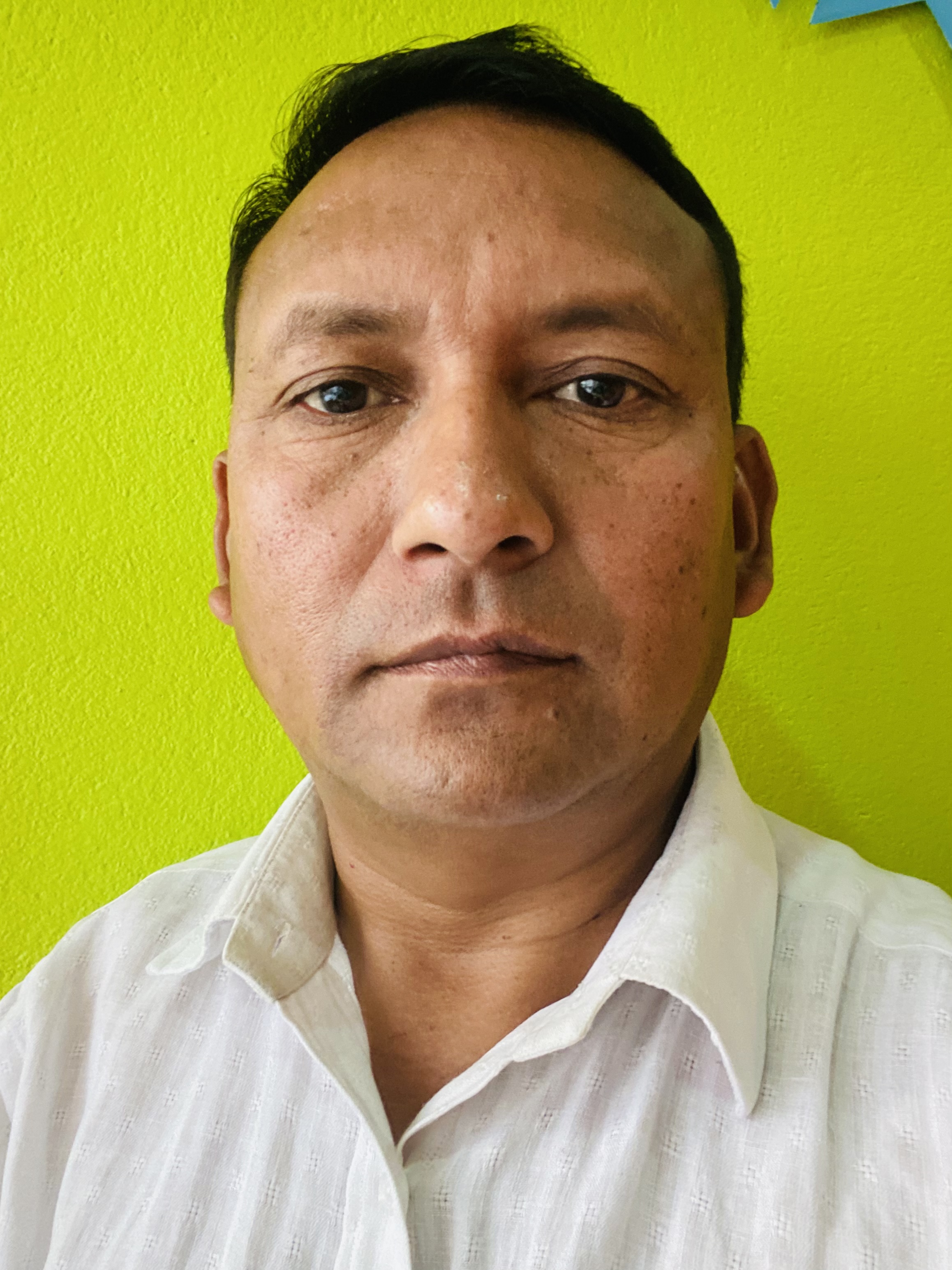
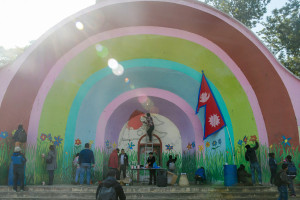
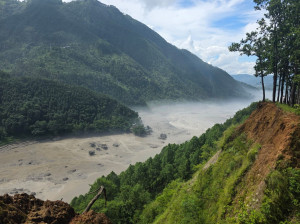
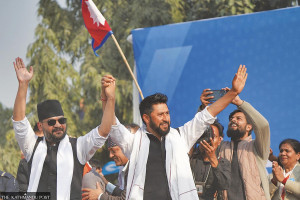
As a candidate through the proportional representation, I am in the midst of electioneering in the foothills and mountains of my home district, Gorkha. I have been appealing to the masses of this historic place to support the party I am affiliated with. Besides seeking political support, this has been a fantastic opportunity to learn and to get an update on the empirical situation of society, particularly of the Dalit community. What I saw was remarkable changes in many areas, but hardly any change in the practice of untouchability. Here is a reflection of some of the major findings from this hectic yet critical journey.
Visible economic progress
Before I went to study at Oxford University in late 2008, most Dalits were poor. They lived in mud huts in dirty and narrow streets, often perched on dangerous rocky slopes. Still, much of the flatter and fertile bits of the real estate are indeed occupied by the upper castes. Yet, there has been a visible change in the economic status of many Dalits, including those living in remote corners of the mountains. Neither the homes of Dalits nor public streets are now pelted with human faeces and animal excreta.
Modern facilities are rapidly arriving in the Himalayan foothills. Dirt tracks and electrical lines are expanding fast; there are few towns and villages devoid of clean running water. Thanks to the collaboration of government and non-government organisations, modern buildings have been built for schools and health centres. Dalits are beneficiaries of these changes, of course. Their access to foreign employment, particularly in the Gulf countries and Malaysia, has pulled many Dalit families out of extreme poverty—and, therefore, out of, to some extent, caste hate. Mud huts in Dalit hamlets are being rapidly replaced by concrete buildings. They have also started using smartphones and secured access to the internet, which has enabled them to learn about things going on in the country and beyond.
Remittance has enabled a growing number of Dalits to educate their kids in private schools in nearby towns. Some have indeed built homes in rural areas and shifted their families there. Of course, upper castes are migrating to towns much more rapidly, emptying their homes and villages, but Dalits are following the trend as well.
Confused old folks
As expected, most villages were sparse of the young men (and women to some extent). They have either gone abroad for work, mainly for unskilled labour, or emigrated to the towns or flatlands of the south. What remains are elderly men and women and some children.
And these elderly people left behind in their ancestral homes find themselves politically confused. Their younger kin working in foreign countries often ring them and tell them to vote for the new parties this time. They have been told that older guys and older parties have ruined the future of the nation.
The older the people get, the more resistant they become to change. What’s more, many of them have contributed directly or indirectly to the political changes of the recent decades, such as the end of the one-party Panchayat regime under the monarch in 1990, the Maoist revolt of 1996-2006 and the termination of the Hindu monarchy in 2008.
These old folks do agree that the mainstream parties, the career politicians in particular, haven’t behaved responsibly towards the people in recent years. They, too, are fed up with widespread corruption and poor governance. And the Dalits are deeply distressed by the persistence of the practice of untouchability and the parties’ apparent apathy.
Yet, no matter what, these old folks find it a little too daunting to be asked to dismiss the parties and the forces that they actively helped bring about changes in the past. These men and women are obviously nervous about the so-called new parties and forces.
What agendas do the new parties have? Dalits would like to know how the new parties and aspiring new leaders plan to end the persistent practice of untouchability. One doesn’t see anything about caste and gender equality, about ethnic and cultural identity, in the slogans and declarations of these new figures and parties. That’s why it has been so confusing.
Dalits on the left
Nepali politics has long been dominated by leftist ideologies and politics. Yet they have not been as influential as they’d have been because of factions and divisions. More importantly, leftist or communist parties have ignored their ideological backgrounds, especially when in power.
But a big chunk of the Dalit community, both the old and the new generations, is still with the leftists. As I discovered from my recent trips, despite their frustrations over the recent years, many Dalit villages continue to support the Maoists. The people still cherish how the Maoists protected and supported underground revolutionaries during the insurgency period.
Many Dalit voters told me that the Nepali Communist Party (a coalition of former Maoists and other groups) still has a future in politics. But for that to happen, its leadership must act in the spirit of the great janayudda. The party must align itself more with the marginalised communities: lower castes, lower classes, the Madhesis and indigenous groups. The party must reinvigorate its push for societal transformation, including the end of caste-based exclusion and humiliation.
Conclusion
As noted above, many Dalits are pulling themselves out of dire poverty. The highly exploitative patron-client system is fast losing its hold in the villages as well. Dalits have access to foreign employment, and their traditional skills now have a market value. Things look great in that regard, but society still treats them as outcasts.
It was frustrating to see that most political activists campaigning for votes have swept the issue of untouchability under the carpet. They talk about many issues and propose many agendas, but hardly speak out against the continued denial of dignity to Dalits in society.
The new parties, who love to portray themselves as the harbingers of hope, are the worst in this regard. We basically hear nothing at all about caste inequality. As populists, they only talk about superficial issues, about matters that everyone would like to hear. They fail to ponder anything about the deeper, structural issues.
A graduate of Oxford University, Pariyar is a Dalit rights activist who has worked in universities in Australia and England. Pariyar is affiliated with the Nepali Communist Party.




 16.01°C Kathmandu