Movie review: ‘I Am Jit Bahadur’ finds an actor within the ordinary man
Despite relying on conventional storytelling, the movie captures the emotional reality of an artist’s pursuit of recognition. Photos: Screengrab Via YouTube
Jit Bahadur understands the art of acting. Every dialogue’s tone, emotion, and ‘ras’ matter to him, and in his village’s theatre group, he is valued.
‘I Am Jit Bahadur’ is a story of the character Jit, played by Jitu Nepal, navigating what it means to be an actor.
Famously known as ‘Mundre’ through the celebrated Nepali sitcom ‘Jire Khursani’, Nepal, a comedian, actor, and now a producer with a career of over three decades, presents this fictional story of Jit as his own.
Financially dependent on his father’s dhoop business, Jit becomes a visible burden on his family. But in acting, that does not pay him; he is good, he is really good.
With his wife, daughter and father at home, the middle-aged man encounters a producer while cunningly selling dhoopat a bus park and somehow gathers the courage to dream of becoming a movie star.
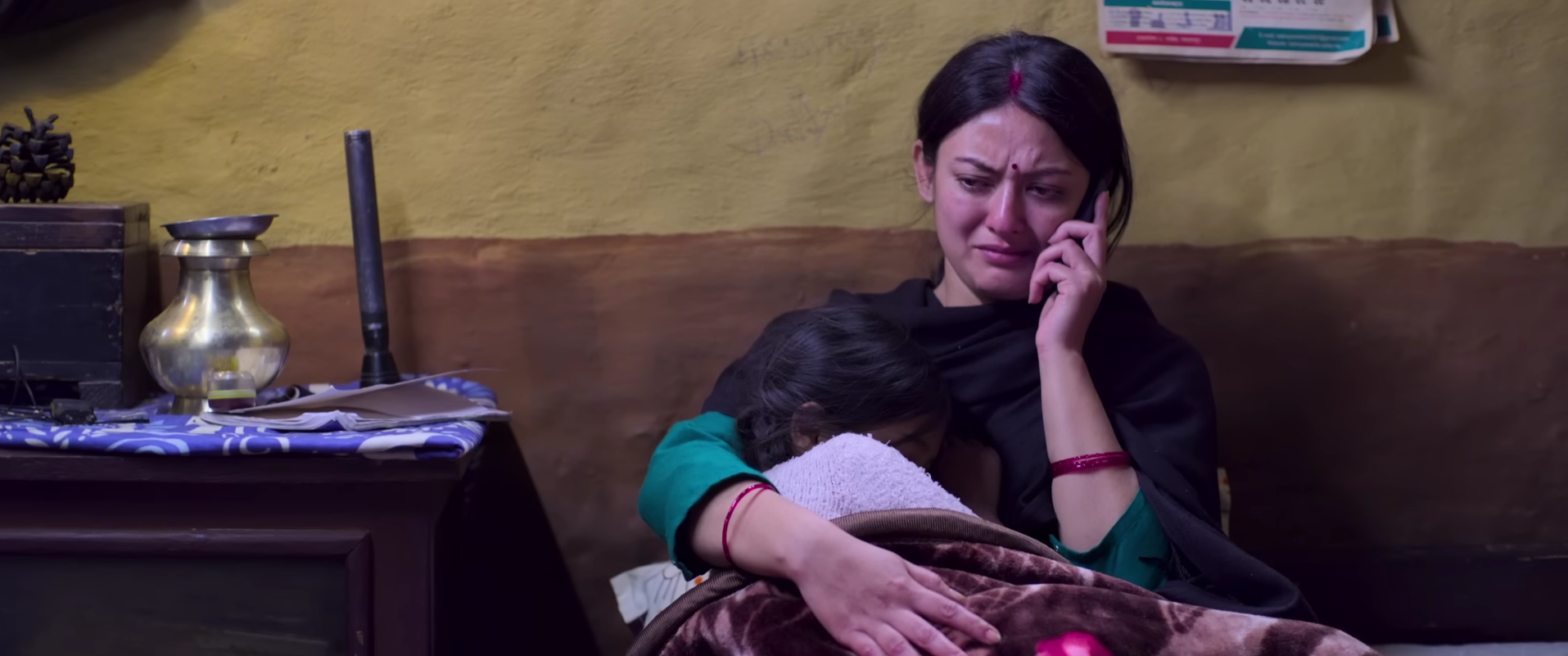
Written conventionally, most characters merely absorb established cultural habits and routines. Jit is bound to be the bread-winner of the family, and Niti (Barsha Raut), his wife, is written with an overarching dedication to patriarchal norms, which most Nepali films do not miss. When Niti receives an offer to work as a janitor at her daughter’s school, her father-in-law declines, saying that the women in his household are not allowed to work outside the home.
It has become an almost inevitable choice in this landscape to portray at least one female character as entirely dependent on men and as a vessel for their emotional catharsis. Perhaps it is a step towards raising awareness, or perhaps it is a commercialisation of the suffering produced by patriarchy.
Regardless, Raut delivers a sublime performance, bringing the character’s nuance and authenticity to life. Her natural gesture of frequently covering her hair with her saree or scarf aligns with the restrictive societal structure that the film attempts to depict. While Jit journeys to pursue his dreams, she remains his reliance, taking care of their home and family.
The sheer predictability and occasional unnatural escalation of the plot counteract its own emotional arc, dulling the movie’s narrative excitement. With its alignment to the traditional patterns of Nepali movies, it fails to present a contemporary dimension, reflecting many of the narrative conventions that the audience has criticised in Nepali films.
Cinematically, however, the film leaves a hallmark for Nepali productions. From the sweeping aerial shots of Jit’s village to the intimate close-ups that deepen emotional moments, cinematographer Aebinda Narayan Dolai crafts a visual language that elevates the film beyond its conventional narrative.
Juxtaposition is one of the film’s most compelling highlights. While there are stills of Jit’s village, the editor draws a parallel with his experiences in Kathmandu, giving value to both scenarios. Niti navigates her father-in-law’s deteriorating health and her daughter’s growth alone while Jit struggles to earn money in the city, balancing his passion for acting.
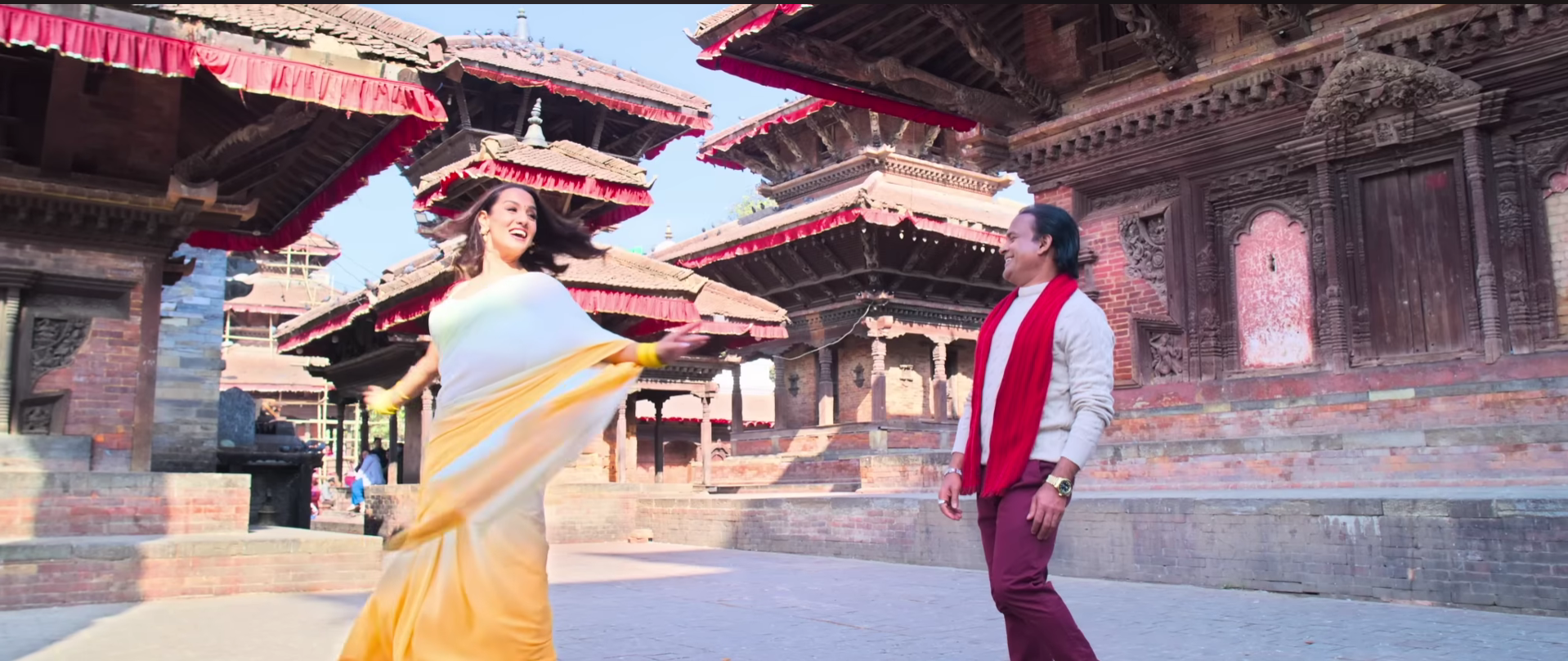
Even in terms of the characters, there is a visible contrast between those of the village and those of the city. Sunita, a glamorous film producer played by Priyanka Karki, greatly affirms Jit’s acting. As Jit experiences emotional turmoil, Sunita’s role offers a pivotal turn in his character development.
Amit, played by Sandip Chhetri, is a memorable character in the film. While Jit feels entirely alienated in Kathmandu, he finds Amit, a production manager, who would later become his loyal friend. Sharing the same room, kitchen and dream, Amit’s character becomes a refuge in Jit’s journey. A supportive character, as such, provides a sense of assurance to the audience as well.
Rarely do we see a story of Nepal’s theatrical landscape on the big screen. Overlooked by the government, the sector has continuously lacked recognition and support. The film, however, visualises Nepal’s participation in the International Theatre Festival through Bijay Baral’s character ‘Guru’, perhaps as an ironic satire of the system.
The journey of theatre actors invites the struggle for visibility, financial stability and institutional support. Through Jit, a theatre actor and the main character, the film acknowledges a community of performers whose contributions to Nepali culture are monumental.
The film also brings together renowned and veteran figures of Nepali cinema, including Niru Shah, Dinesh DC, Deepak Raj Giri, Deepashree Niraula, Niti Shah, and Aaryan Sigdel.
Screengrab from YouTube
While the film rarely surprises, Jit Bahadur’s story realistically narrates the cost of becoming an artist in Nepal. Moving through struggles, loss, and success, the film depicts the journey toward a true appreciation of acting, performance, and art. Jit’s resilience is not fragile. He does not let time or circumstances decide whether a dream is worth pursuing. He loves acting, and he simply goes for it—a rare act of courage that many struggle to achieve despite social and economic challenges.




 24.12°C Kathmandu