Is it still rape if the perpetrator is your husband? It's neither considered a crime nor has any strict laws. The plot of ‘Chiraiya’, centring marital rape, explores societal conditioning, patriarchy within households and themes of consent.
Directed by Shashant Shah, this 6-episode web series is the Hindi remake of the Bengali web series ‘Sampurna’.
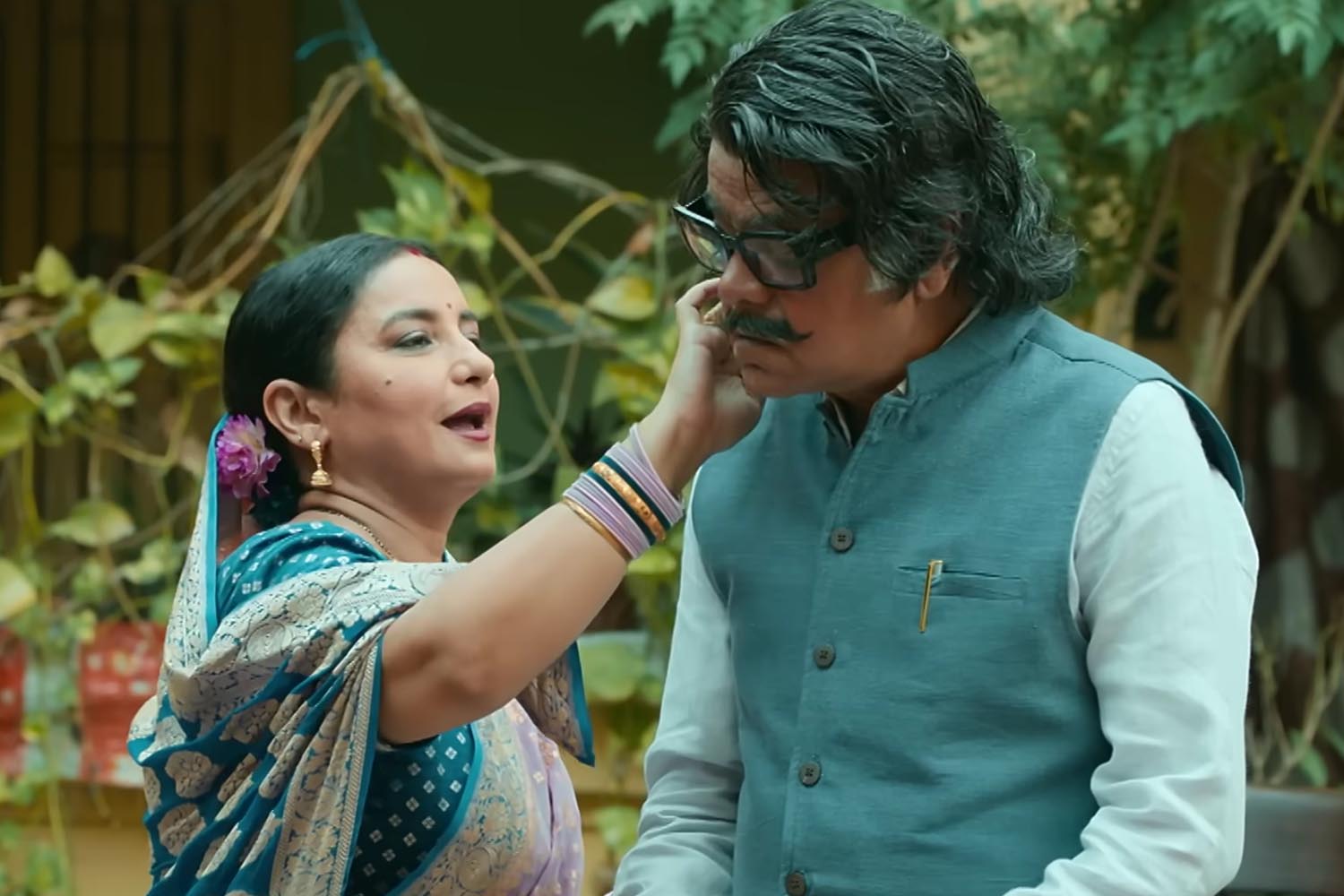
Initially, Kamlesh (Divya Dutta), a devoted housewife, disapproves of her to-be-wed sister-in-law, Pooja (Prasanna Bisht). Mainly because she views her as a threat to her title of a ‘bahu’. Pooja is considered to be too woke. She is educated, fights for what’s right, attends LGBTQIA+ parades and confronts taboo topics. Her image doesn’t seem to fit right into an idealised ‘bahu’; Kamlesh then resorts to protesting their relationship loudly.
This hatred towards Pooja stems from her insecurity about not being as educated as the members of her household, which simply seeps into their conversations. As she didn’t bear a son for the family, a new bahu’s arrival would also mean challenging her authority.
On the day of the marriage, Pooja is raped by her husband, Arun (Siddharth Shaw). Despite her crying and begging him multiple times to stop, he ignores her.
She then turns to Kamlesh, hoping for any help. But Kamlesh, unknown to the concept of consent, becomes hostile instead, even slapping her sister-in-law.
After constant violations of her autonomy for several months, Pooja inflicts a severe injury upon her reproductive organs, reflecting the profound psychological trauma caused by the abuse she endures. Upon hearing it, her sister-in-law is conflicted. On one side, there lies her beloved brother-in-law, equivalent to a son-like figure; on the other stands his wife, who is riddled with suffering and has no support system.
There is a powerful scene after this revelation. Kamlesh, hysterically lying on a bathroom floor, attempts to see the extent of torture Pooja faced by imagining herself in the same situation. Even taking a blade near her body seems to be frightening. That is when it becomes clear: seeking justice is more important than loyalty.
Divya Dutta’s character is something of an anti-hero, deeply entrenched in the cycle of internal misogyny. Not every time can female characters be labelled as a ‘girls' girl', and that is exactly what the series has achieved through Dutta’s character in the first few episodes.
Education isn't limited to formal schooling and academic institutions; it is also an effort to question one's existing beliefs. Arun, an adult with years of schooling, fails to respect his own wife’s requests, never trying to understand her ‘no’. On the other hand, Kamlesh, a homemaker who only reads the entertaining/home-oriented pages of the newspaper, is initially detached from social issues. Yet, she goes the extra mile to learn about consent and women’s rights. Her willingness to change and challenge what has been taught to her helps Pooja take a stand for herself and fight the injustice she faces in her own safe space.
The beauty of showing a lifelike setting lies in not distinguishing characters in a black-and-white zone. The series has intentionally followed this pattern throughout. ‘Bapuji’ (Sanjay Mishra) is a man of words, academically conscious, vouching for women’s rights through the Mahabharata and Ramayana, and seemingly ticking off every point of being ‘progressive’.
He is thought to respect the women in his household, yet when the truth about his son is revealed, he takes it very lightly. He simply makes Arun apologise in the most ironic way by saying ‘sorry’. Sanjay Mishra embodies the role of the vilified father-in-law.
Continuing the montages from the past, narrating scenes when the family ‘failed’ to raise him right is probably a genius take on how subconscious beliefs work. Kamlesh herself is responsible for Arun’s behaviour. One scene cuts to a time when Kamlesh is seen throwing a tantrum, blaming herself right after giving birth to a daughter. ‘What if I had a son?’ says Kamlesh. But unknown to her, Arun is already starting to instil a belief in gender superiority, showing that actions are learnt from seemingly small remarks, household traditions and subtle jokes.
The ending part, after both daughters-in-law are forced to return, seems rushed. After any family feud, there is no sudden turning point in getting along quickly. The tension built throughout the show quietly melts away, which is almost agonising to watch.
It ends with Kamlesh preaching the details of what happened to Pooja in a religious setting. Arun apologises publicly, then Kamlesh cuts ties with him. All of this happening in a single episode makes the aftermath of such a serious issue feel rushed, failing to depict the social and emotional consequences that would follow. Resolving the conflict at such an alarming pace dilutes the ending.




 14.59°C Kathmandu