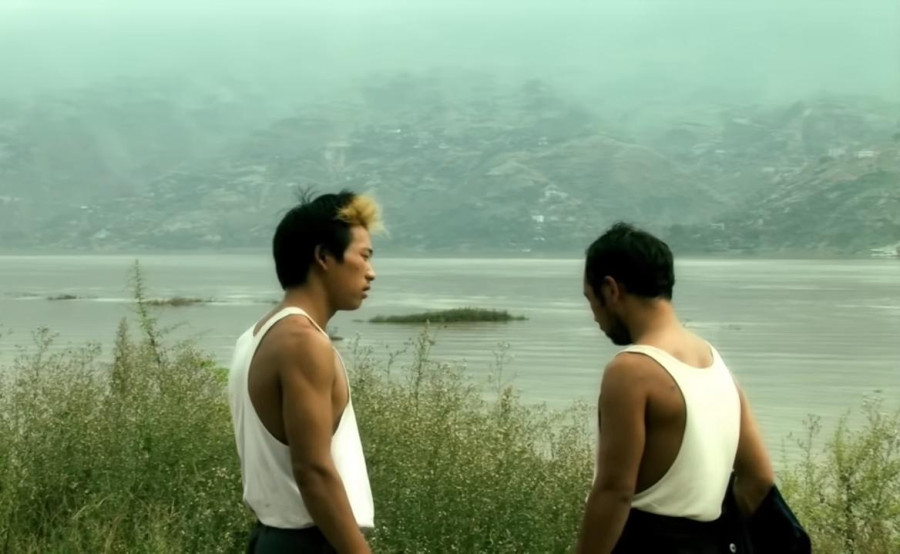
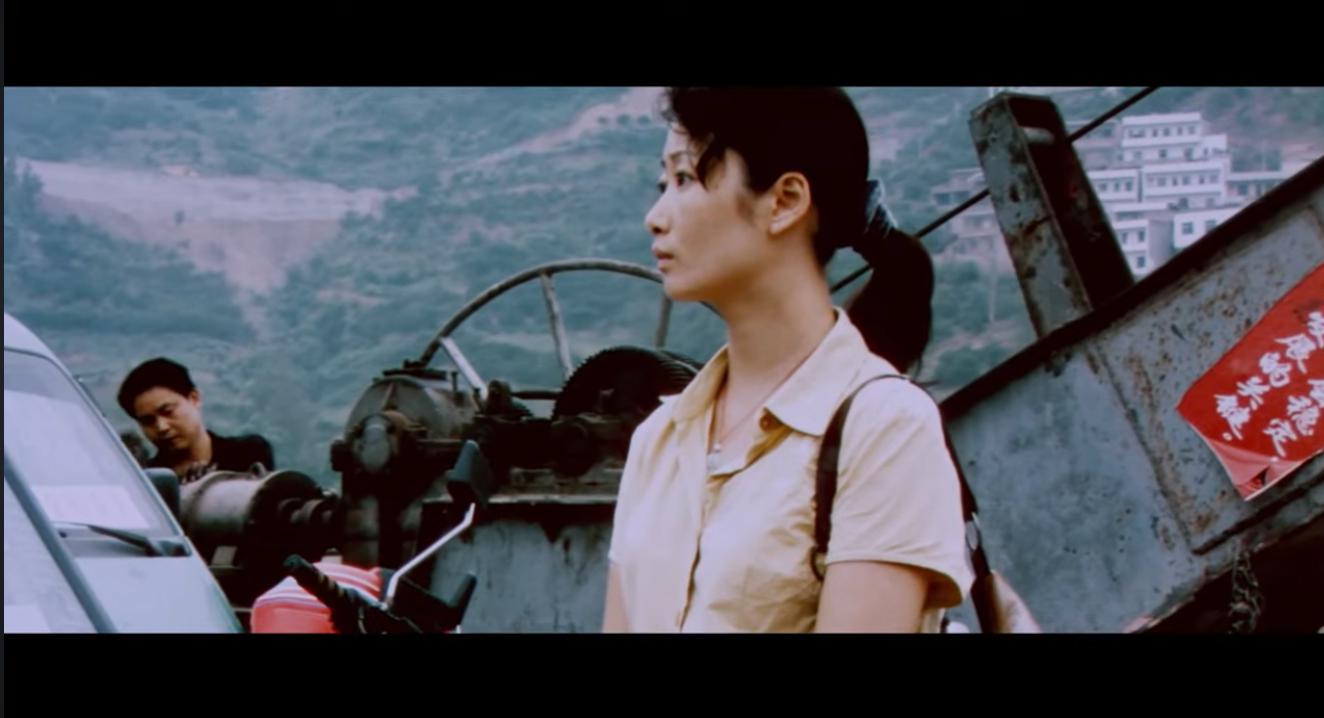
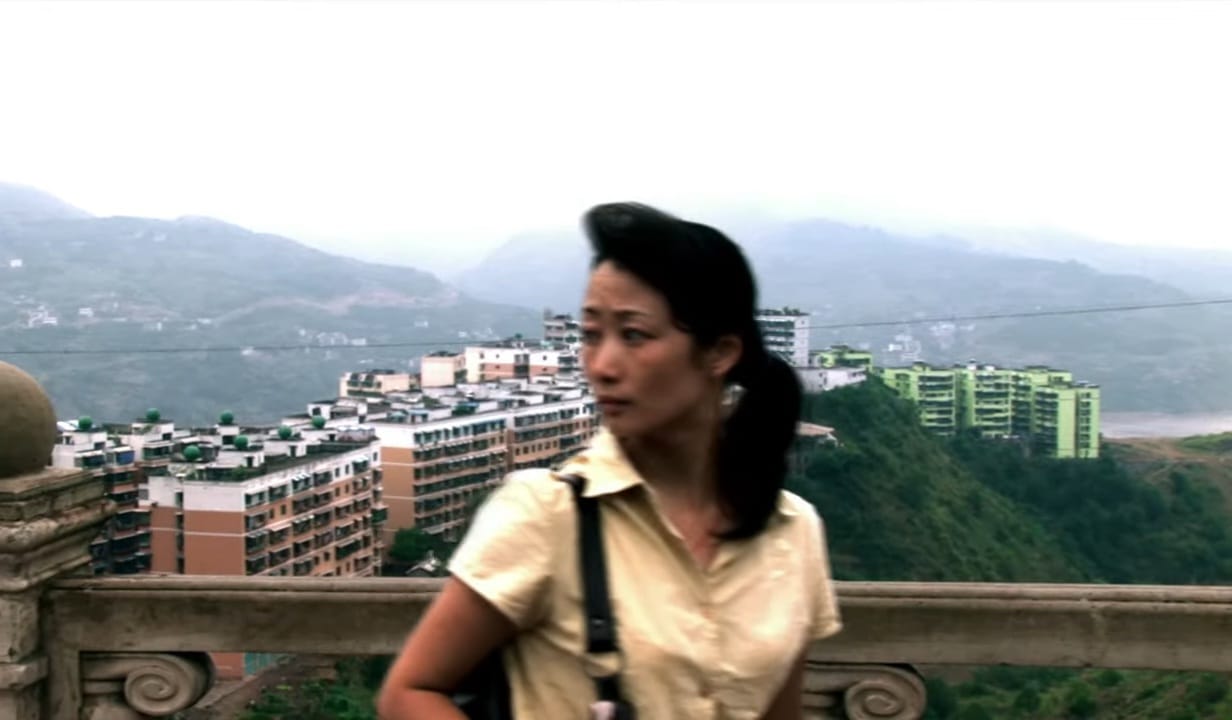
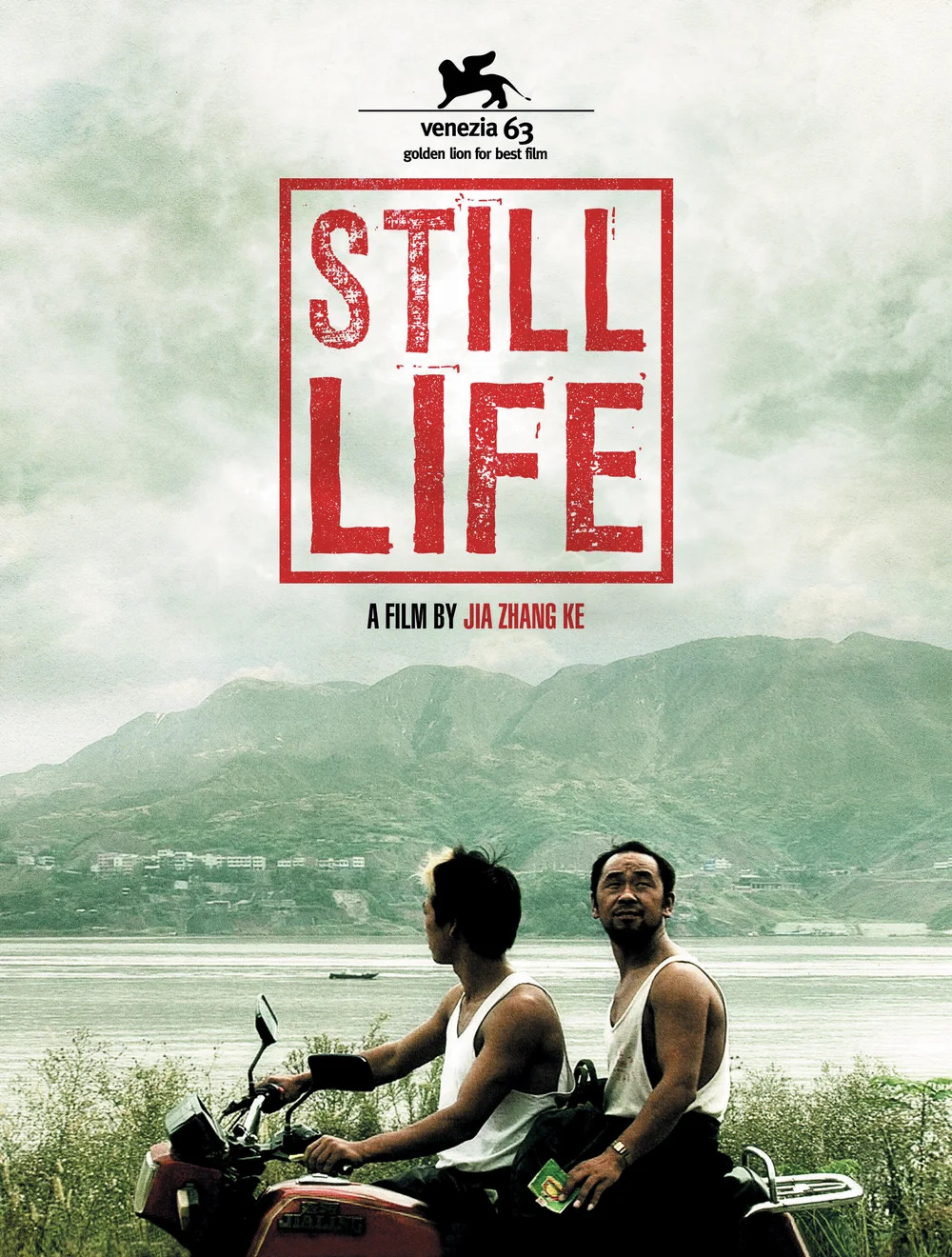
Jia Zhangke’s ‘Still Life’ offers a stark portrait of displacement that resonates with the lived realities of squatters in Nepal.Screengrab Via YouTube
What happens when a guy returns to his village after sixteen years, only to find his home submerged in water for the construction of the Three Gorges Dam?
In ‘Still Life’ (2006), Jia Zhangke transforms this premise into a meditation on loss, displacement, and the cost of progress. Zhangke is one of the most prominent Chinese modern filmmakers who moved away from conventional storytelling towards a cinema that lets its audience form a mosaic of observation, where meaning emerges through body language, landscape, and silence.
His films consistently engage with the effects of rapid social transformation in China, constructing a cinematic language rooted in realism and spatial awareness. Drawing inspiration from his hometown and similar provincial settings, Zhangke places ordinary individuals at the centre of the abrupt economic and cultural changes. The static frames and environment in his films function as a force that reflects the crude reality of their lives.
This approach extends across his works from ‘Platform’ (2000), ‘Unknown Pleasures’ (2002), ‘Mountains May Depart’ (2015), ‘Swimming Out Till The Sea Turns Blue’ (2020) and ‘Caught By The Tides’ (2024), where personal histories remain in parallel to the national transformation.
Correspondingly, ‘Still Life’ follows two separate characters, Han Sanming and Shen Hong, whose journeys intersect in a disappearing landscape with torn-down neighbourhoods and displaced citizens. Their narratives, while appearing disconnected, still articulate the shared critique of capitalism and modernisation.
Han Sanming arrives in Fengjie County, located in Sichuan Province, China, which was almost entirely submerged, with its citizens displaced, to make way for the construction of the Three Gorges Dam, a government-run hydropower project said to have been in the planning stage since the twentieth century. In terms of progress, the demolition was a national win. However, the loss and grief that arrived for its own sake remained only personal.
In his search for his wife and daughter, Sanming endures the costs of displacement. He also finds a job demolishing houses, where he develops connections with his fellow workers. As time progressed, he found his wife. It is revealed that he had bought her for 3,000 Yuan, highlighting the complications of marriage at the time. Their relationship exposes the economic and social absurdity.
Meanwhile, Shen Hong continues her journey in search of her husband, who has been absent for two years. She meets Wang Dongming, her husband’s friend, who helps her in the process. Hong is presented in a rather composed and restrained emotional state. Her identity as a nurse is briefly revealed when she responds to a medical emergency at a restaurant.
Her patience while navigating unfamiliar environments juxtaposes the surrounding destruction and demolition. Her emotional ambiguity and dignity demand that the viewers connect the dots of her emotional processing. Perhaps Zhangke was intentionally particular about how he portrayed an independent and confident female character amid the restrictive gender roles in China at the time.
Hong’s character, played by his wife, Zhao Tao, who often appears in his films, brings the narrative closer to the director and the audience, making it feel deeply personal.
When Shen Hong finally meets her husband, the confrontation and emotional climax between them is striking for its restraint and lack of drama. Argument and desperation remain at a distance. They meet one last time to part, and what lingers is a simple, subtle acceptance as they process reality rather than chase illusion.
While Sanming continues to search, holding on to the possibility of reunion, Hong chooses clarity over longing.
The static shots commonly used in Jia Zhangke’s filmmaking allow viewers to observe every corner of the frame. The delicacy with which he portrays the scene reflects his sharp visual mastery. Sanming frequently appears in the background of demolition, and even often as part of it. Throughout the film, Zhangke neither moralises nor intervenes directly. He simply projects the impact of scrutiny of government decisions on ordinary people.
In the film, music sung by the local residents becomes a refuge amid the annihilation. While they appear momentarily, these melodies offer a fragile counterpoint to the surroundings of loss.
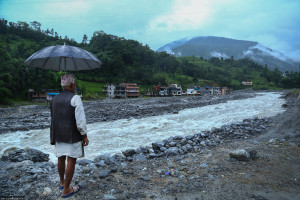
The film’s depiction of displacement and demolition can also be read beyond its immediate setting. It resonates with the patterns of urban restructuring in Nepal, where informal settlements are subject to state-led decisions, resulting in evictions of squatters. What remains consistent in both contexts is the human cost of progress borne by those with the least social and economic power, suggesting that ordinary lives remain still while the nation progresses.
In the chasm between demolition and reconstruction, the film suggests that progress is always experienced unevenly. By relying on stillness, minimal dialogue, and observation, Zhangke makes viewers confront what is excluded from the dominant narrative of development. In presenting how people endure loss, his approach depicts their lives as shaped by forces larger than themselves.




 21.12°C Kathmandu