NCFT graduates stitch Nepal’s ecology into high fashion
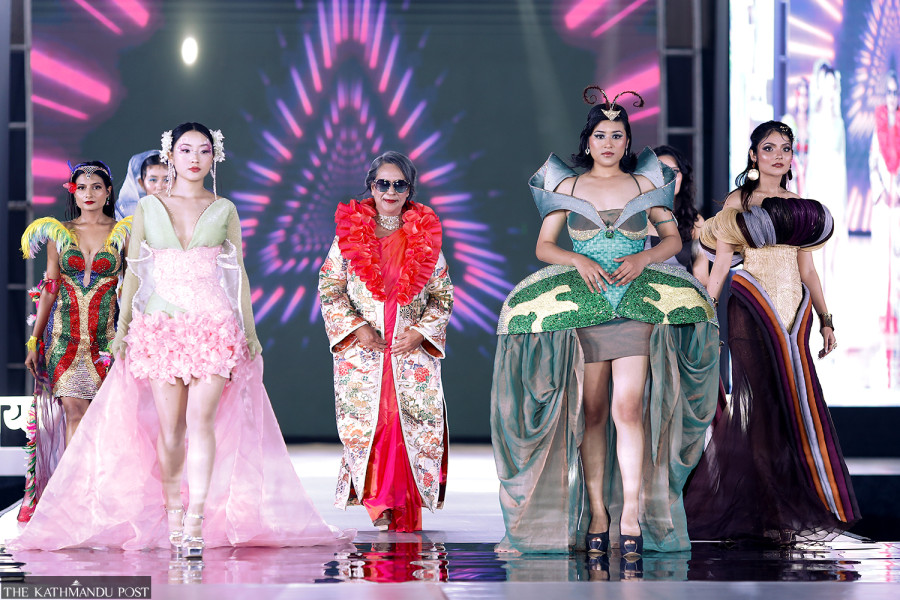
Namuna College of Fashion Technology presents six sequences inspired by Nepal’s landscapes, expressed through experimental textiles and conceptual couture. Gyani Shova Tuladhar (centre), founder-principal of Namuna College of Fashion Technology (NCFT), with six promotional ensembles. Mahesh Pradhan/TKP
Through evocative fashion storytelling, Namuna College of Fashion Technology (NCFT) unveiled ‘Journey of Fashion XX: Vividayam Saundaryam’ on Saturday, March 28, translating the rich beauty of Nepal’s natural diversity into fashion expressions.
The showcase, held at The Plaza in Lalitpur, featured the works of 62 graduating designers from NCFT’s 20th Batch.
Each of the six thematic sequences explored a distinct interpretation of nature and cultural identity. Entitled ‘Nepalium: Where Ice Finds its Flow’, ‘Iridescent Shells’, ‘Armor Softened by Elegance’, ‘Aavaran Mrittika: Beneath, Beyond, Becoming’, ‘Aviora’, ‘Red List Reverie’ and ‘Vanaspati Kusum: Forest Blooms of Nepal’, they crafted seamless environmental presentations and bold conceptual expressions.
The theme, ‘Vividhaya Saundaryam’, was the conceptual foundation of the showcase, drawing inspiration from Nepal’s forests, wetlands, mountains, wildlife, and flora.
The show opened with the runway appearance of Gyani Shova Tuladhar, founder-principal of NCFT, and six promotional ensembles crafted by the teams for each sequence. This set the framework for the show’s aesthetics and creative pieces.
The first sequence, ‘Nepalium: Where Ice Finds its Flow’, was introduced through dramatic flares, flowing trails, and carefully orchestrated movements, with synchronisation and choreography by Rojin Shakya. His visual storytelling through movement and placement elevated the creative visions of the collections.
‘Himasputa’, designed by Ranjita Lama, presented an alluring parallel with the theme, ‘Veins of Ice’. Combining the hues of ocean blue and white, the piece projected the transformation of ice to a ‘blooming form’. The bottom structure, crafted from embellished fabric, was woven with plastic and GI wire, followed by the bust area, which was sharply embroidered with silver threads, beads, and pearls. The silhouette of this design was indefinite, with the petals resting flawlessly on the model, Nisha Shrestha’s halo depicting the flow of ice.
Shrestha’s hair and makeup, too, emphasised natural movement and fluidity, complementing the garments that prioritised motion and organic structure.
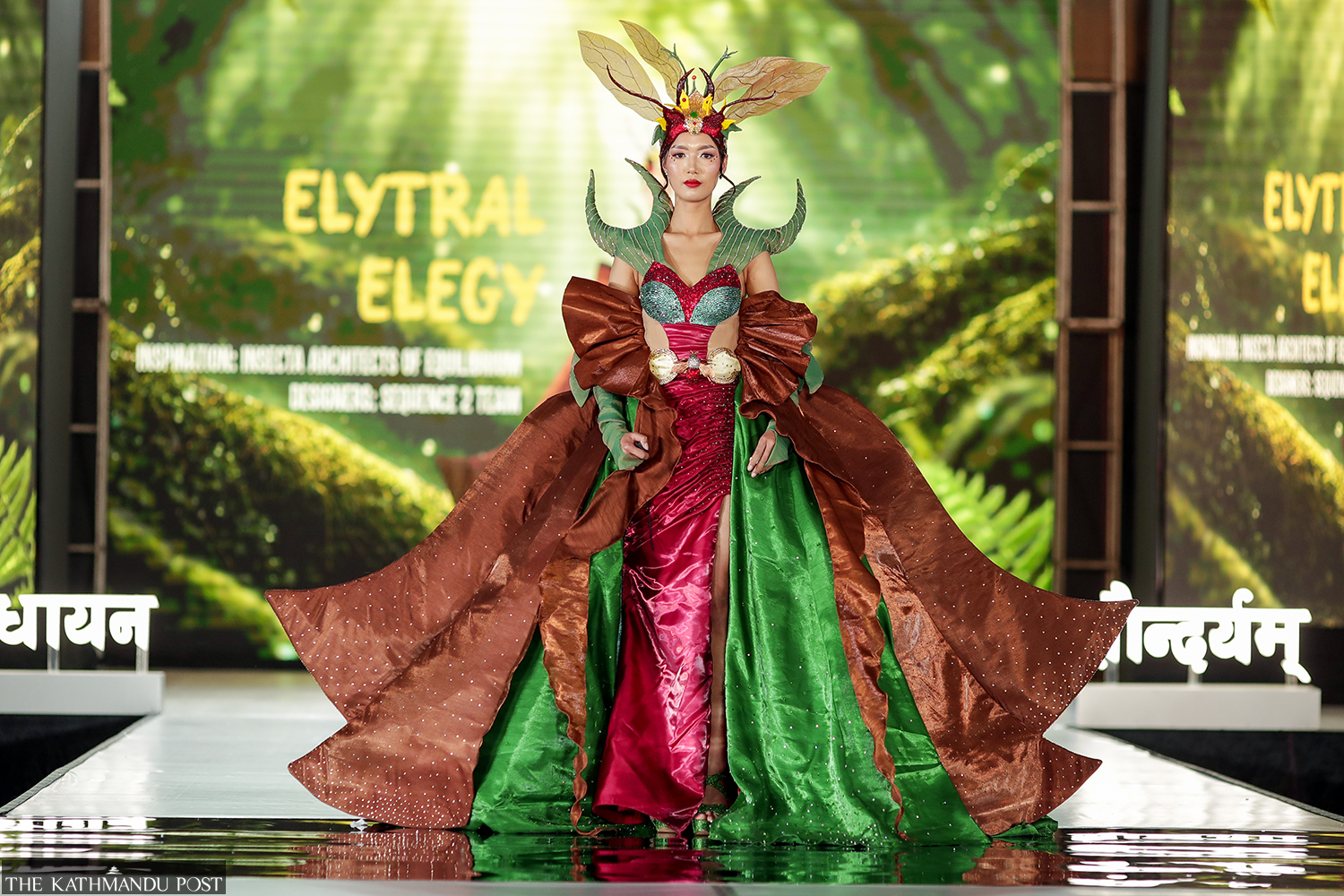
Trisha Chemjong wearing ‘Elytral Elegy’, designed by the Sequence 2 team.
The sequence’s creative wear, ‘Girivenu’, captivated the audience with its dramatic silhouette, with each drape and textile conveying an environmental narrative. A vast mountainous structure was embedded in the design, followed by an enchanting corset depicting the strength of ice, then emerging into fluidity through the sculptural draped forms and elongated blue elements.
The fashion show was not simply an abrupt occurrence. It was the upshot of months of experimentation, trial, and refinement. Understanding the nature of the fabric, experimenting boldly and trusting the process of creativity and construction, the designers embraced the journey, transcending the challenges.
Through their individual and collective pieces, they paid close attention to the fabric behaviour, experimenting with how textiles drape, move and interact with the human body.
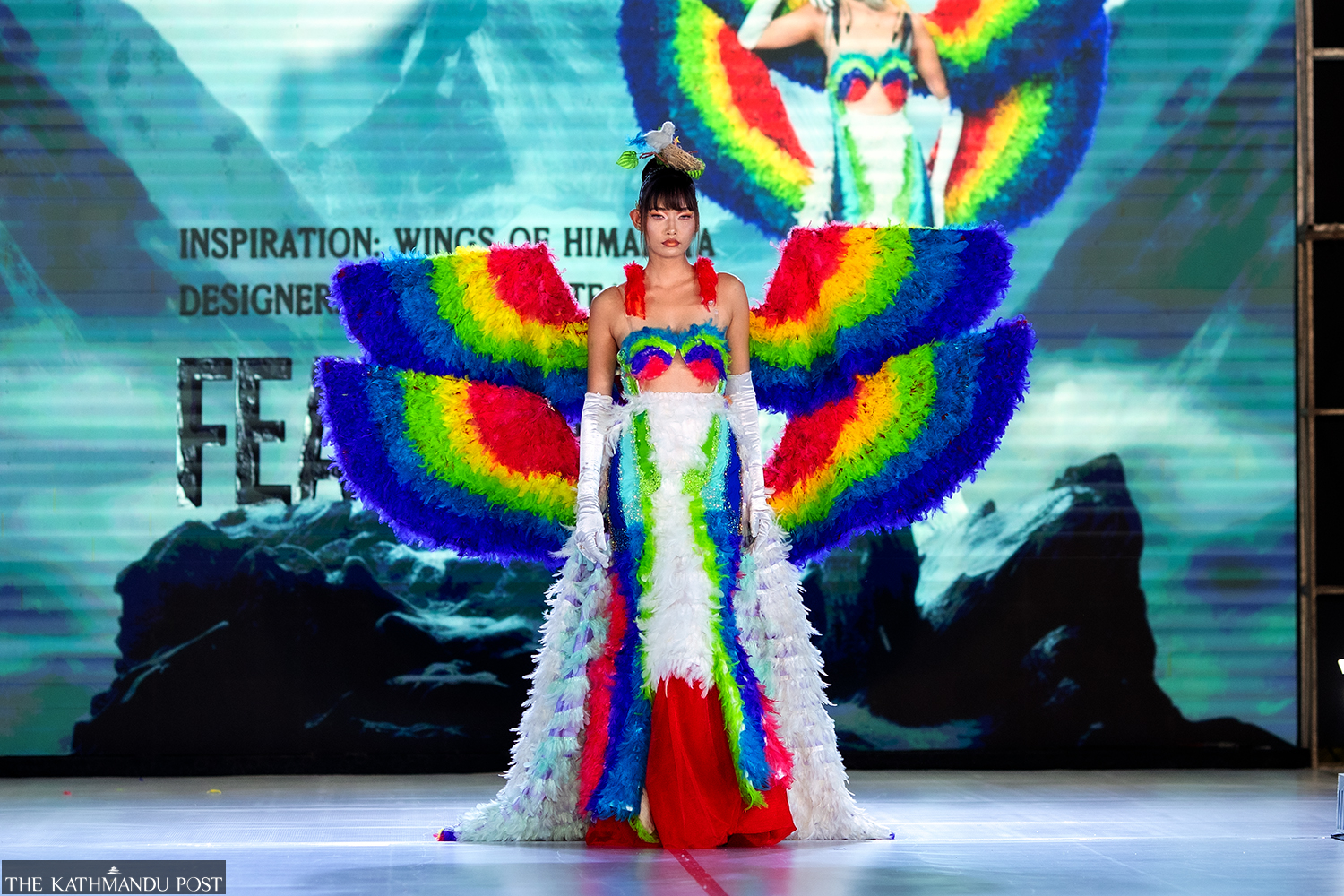
Sandy Rana Magar in ‘Feathoria’, designed by the Sequence 1 team.
The second sequence, ‘Iridescent Shells’, paid homage to beetles, presenting them as often-overlooked engineers of ecosystems that shape balance through instinct, resilience and form. Celebrating the subtle designs of the beetles, this sequence highlighted the balance of instinct, resilience, and form through a distinct colour palette that included iridescent greens, deep obsidian tones, earthy browns, and metallic finishes. The maximalist headpieces presented the natural architecture of beetles, transforming biological structures into wearable art.
Layered texture, sculptural silhouettes and reflective surfaces mimicked shells and exoskeletons, creating a dialogue between fragility and protection. The garments embraced haute couture craftsmanship, in which meticulous handwork, experimental construction, and conceptual storytelling converged.
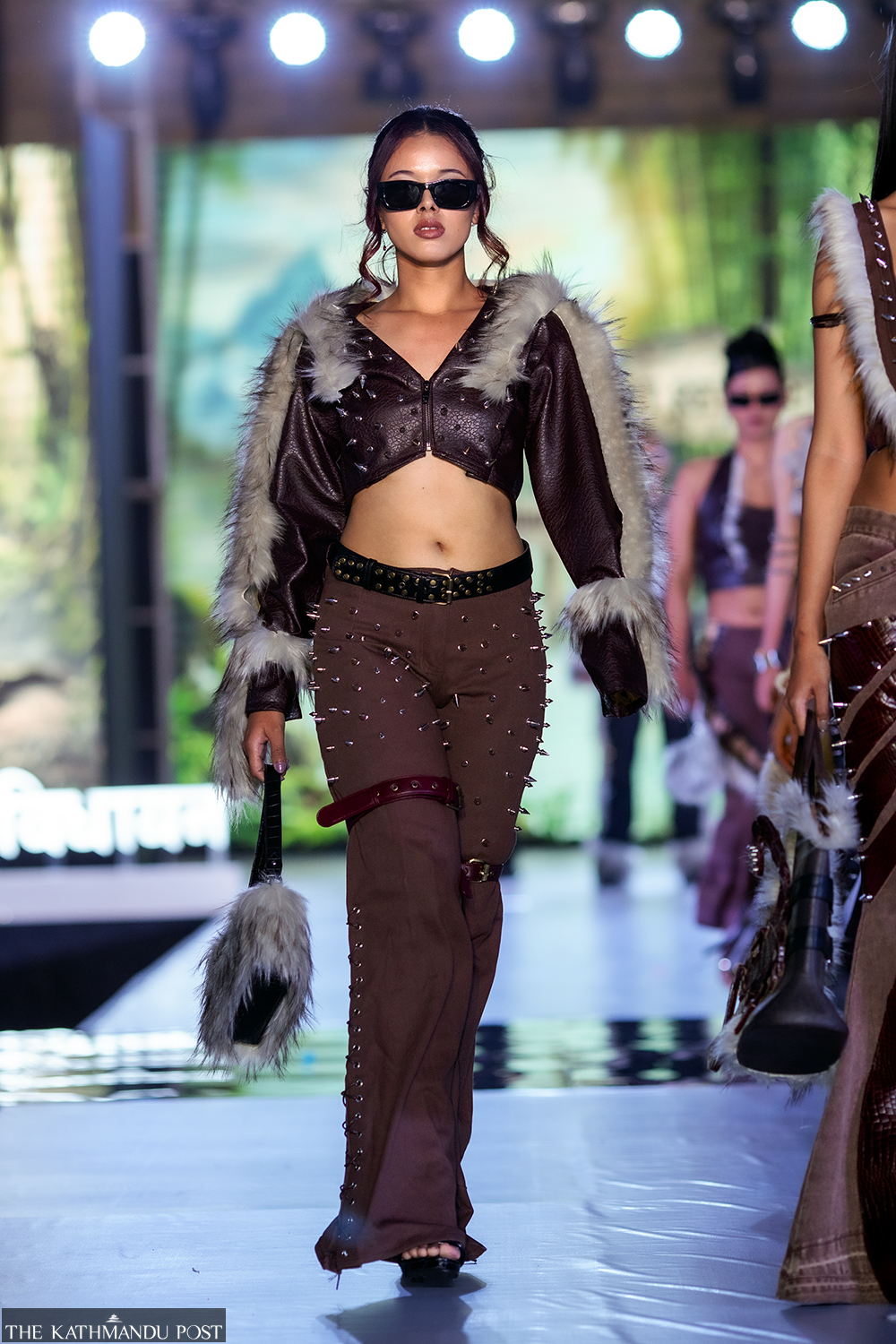
Roshni Khadka wearing ‘Vanishing Instinct’, designed by Prerana Neupane.
Alongside the showcase, the organisers and the guests, including Miss Nepal Cosmo 2025, Deepsikha Nepal and Miss Nepal International 2025, Urusha Bhandari, unveiled the fourth edition of the NCFT Fashion Catalogue. The catalogue documents creative works of the graduating designers.
‘Adho Stha’, inspired by the earth’s subsoil, depicted the quiet endurance beneath the surface through textured elements, a sharp silhouette, and a palette that echoes the soil's gentle hues. The design masterfully adhered to the theme, ‘Layers of Soil’ of the third sequence, Aavaran Mrittika. The design features a high turtleneck with short sleeves, resting impeccably on the hips and flowing into the boot-cut pant, with the right side fully covered with spiral rope, symbolising dense root movements beneath the soil. The asymmetrical dual-piece composition, amplified by model Sneha Shakya’s commendable personality and presence, transformed soil into a metaphor for memory, resilience, and emotional grounding.
Likewise, each sequence, following their individual themes, be it of rare animals: Snow Leopard, Red Panda and Gharial depicting survival and vulnerability or florals, Vanaspati presenting the forest blooms of Nepal, anchored the captivating future of Fashion design for Nepali students and aspiring designers.
For over two decades, NCFT’s annual showcase has become a key platform for introducing emerging designers to the fashion ecosystem of Nepal. Through experimentation, craftsmanship, and storytelling, the graduating designers demonstrated that fashion is no longer merely about clothing but also about identity, environment, and imagination, brought together on a journey where diversity itself becomes beauty.




 21.43°C Kathmandu