



 24.62°C Kathmandu
Sat, Jun 13, 2026
Culture & Lifestyle
Love and violence collide in Bhardwaj’s ‘O’Romeo’
Shahid Kapoor and Triptii Dimri anchor a passionate but uneven gangster romance set in Mumbai’s criminal underworld.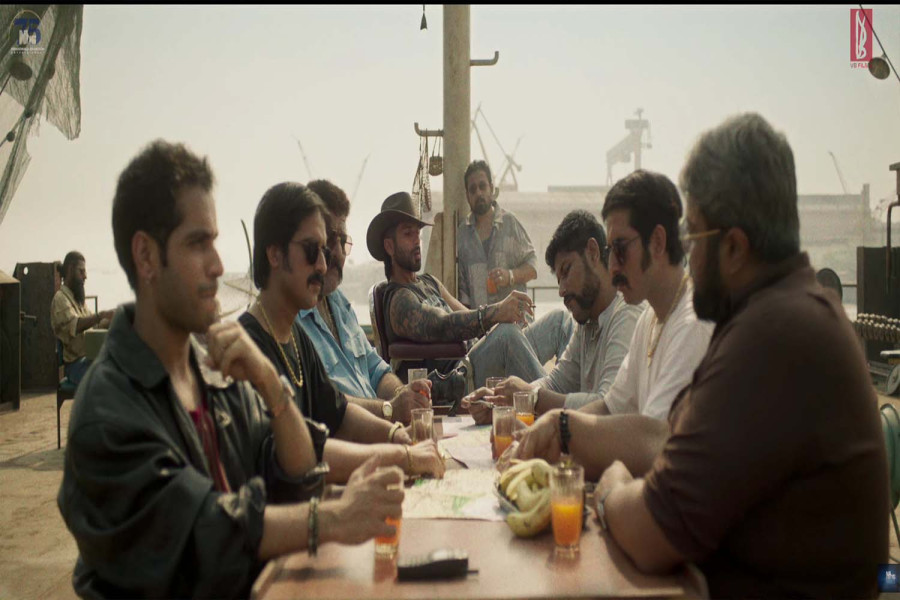
bookmark![]()
Skanda Swar
Published at : March 18, 2026
Updated at : March 18, 2026 08:03
Kathmandu
Filmmaker Vishal Bhardwaj isn’t one to shy away from Shakespeare. ‘Maqbool’, ‘Omkara’, ‘Haider’—each brought the proof that Bhardwaj takes Shakespeare’s ideas and places them into Indian social and political settings where they still feel natural and meaningful.
‘O’Romeo’ steps off that path. Instead of reworking a play, it lifts Romeo the name, and drops him into Mumbai’s criminal layers, nudged by tales from Hussain Zaidi’s ‘Mafia Queens of Mumbai’. Right from the first shots, you see an intensity build. The execution, as the film gradually reveals, is a more complicated story.
The film follows a gangster whose encounter with love cracks him open in ways that violence never could. This idea holds real promise on screen. When tender feelings crash into cold crime logic, powerful stories often come alive, and Bhardwaj, more than most directors working in Hindi cinema today, understands how to find tragedy inside moral ambiguity.
There are deep, quiet moments in ‘O’Romeo’ where that sense of inner split pulls the movie forward with slow grace. Love grows with quiet force. Early on, affection starts wearing down someone shaped only by endurance; this carries the kind of slow-burning tension the director does best. A slowness lives in those moments, intentional, sure, like Bhardwaj believes viewers can linger inside emotion instead of chasing plot.
The premise is further strengthened by a cast that fully commits to the material. Shahid Kapoor gives one of his best performances yet. Not every actor can balance such opposing traits, cold precision mixed with quiet vulnerability, but he moves between them like switching breaths. Watch how carefully he lets the mask slip; those moments hit hardest because they feel earned, never forced.
Strength often hides in what stays unsaid. It takes nerve to show softness through someone built on control. Kapoor does this without hesitation. Triptii Dimri meets his presence head-on, pouring raw feeling into every gesture. Pain runs deep in her bones, yet so does strength. What she holds beneath the surface, grief, longing, stubborn pride, comes across in glances more than words. A still look speaks louder than lines ever could. The film breathes when she is silent. She is magnetic in the film's quieter moments, and those moments linger.
Visually, ‘O’Romeo’ is one of the more assured productions in recent Hindi cinema. Through Mumbai’s busy lanes, dim alleys, and the odd icy luxury tied to crime, the camera builds a place where loveliness and harshness breathe the same smoke. Visual strength has long marked Bhardwaj’s work; here, it shows. Warm shades bloom during tender moments, wrapping scenes in memory-like glow, drawing viewers close to what the people feel.
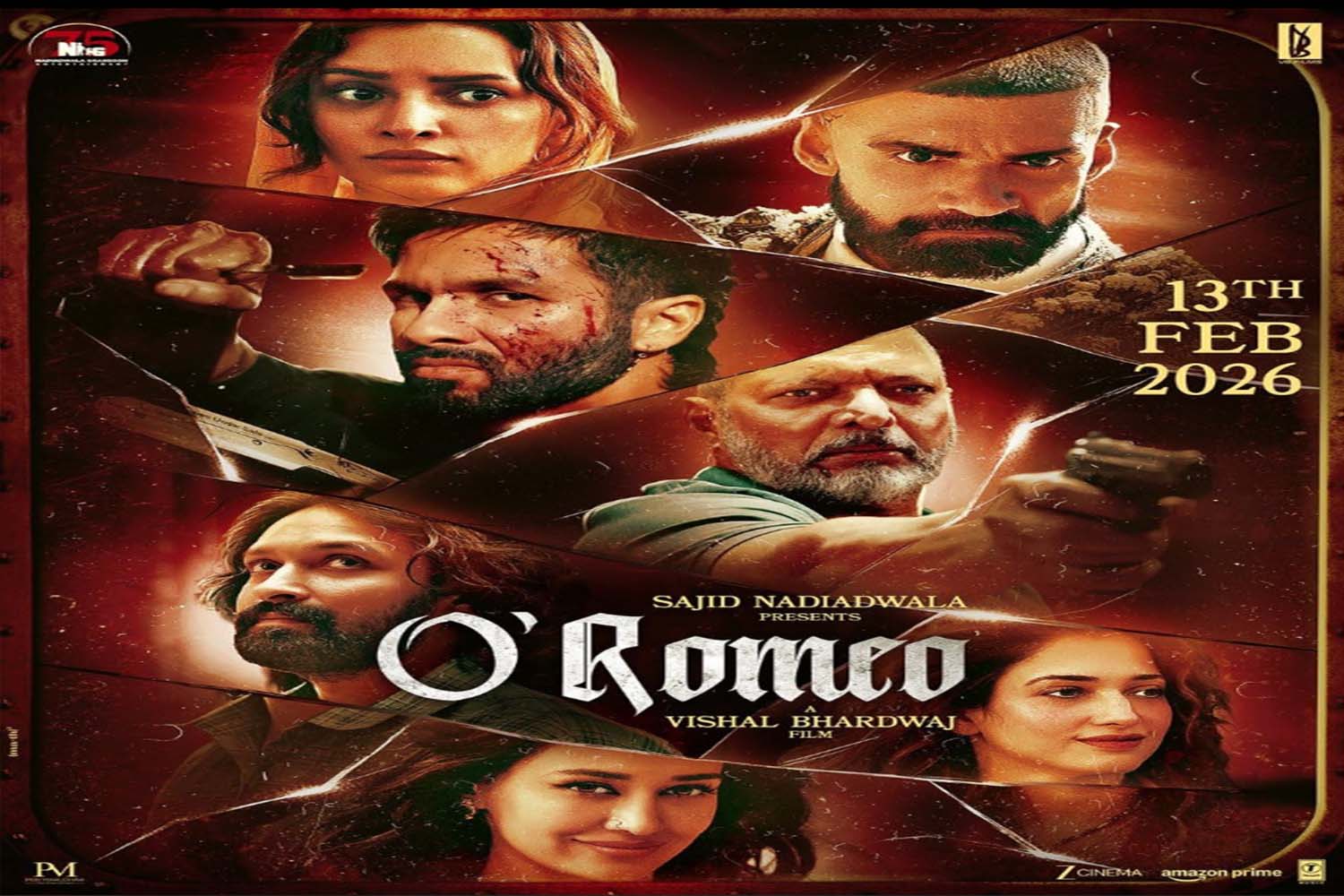
When blood returns, colours sink, turning grey, deepening into night, pressing inward like walls closing slowly. Right off, it hits hard instead of whispering. Still, every bold image fits the heart of the tale like a key. Where actors speak their truth, colours and shadows slowly and steadily echo beneath. These visual contrasts quietly reinforce what the performances are saying out loud, and the cumulative effect is a film that often looks and feels exactly right even when the narrative is misfiring.
Where ‘O’Romeo’ begins to strain is in its ambition to be several things simultaneously. When gang feuds enter, followed by vengeance threads and shaky loyalties among criminals, the balance between romantic tragedy and gangster thriller tilts unevenly throughout the second half, and certain plot developments arrive without sufficient grounding, driven more by dramatic necessity than by the characters' internal logic. Moments meant to shock show up too soon in disguise, pushed forward less by character choices and more by what the scene needs. Twists aiming to shift direction often leak ahead of time, especially if you’ve seen similar movies before. The element of surprise, when the genre demands it most, occasionally fails to materialise.
That final stretch, when everything explodes into massive clashes and chaos, took the hardest hit from critics, fairly so. The spectacle is undeniable, but the emotional credibility so carefully constructed in the film’s earlier portions begins to fray under the pressure of its final act. Moments meant to unfold naturally come across as forced, shaped more by design than by flow; the film’s closing movements prioritise scale over the intimate emotional truth that made its opening so effective.
Running close to three hours, ‘O’Romeo’ drags in the middle too, where energy dips and side stories with minor figures go longer than needed. Trimming it down might’ve helped a lot, letting key scenes stand clear without getting buried in extra plot.
There are also questions about how some of the film's attitudes sit with a contemporary audience. The protagonist’s devotion is framed largely in traditional terms: love as obsession, sacrifice as the ultimate proof of feeling. That idea has echoed through decades of film romance, yet there is something genuinely moving in how the film inhabits it. The masculinity at the film’s centre is portrayed with considerably more sympathy than with interrogation, and while that is consistent with the film's romantic vision, it leaves certain dimensions of the story unexplored.
And yet, when the credits roll, what stays with you are not the missteps but the moments, Kapoor’s face in a scene of quiet devastation, Dimri holding herself together when everything around her is falling apart, Mumbai rendered in all its chaotic, indifferent beauty. These are the things ‘O'Romeo’ does genuinely well, and it does enough of them to matter. The film’s flaws are visible, yet the warmth runs deeper. In an industry where grand budgets too often swap spectacle for soul, a movie that tries this hard to feel real earns its place.
‘O'Romeo’ is, at its core, a love story, and on that front, it delivers. It reminds you that a few things in cinema are as powerful as watching a person be transformed by love, and few settings as rich as the one Bhardwaj has chosen to explore it in. Imperfect, occasionally unwieldy, but alive with passion and anchored by performances that genuinely move you, this is a film worth seeing, and an experience worth feeling.
_______________
O’Romeo
Director: Vishal Bhardwaj
Cast: Shahid Kapoor, Triptii Dimri, Nana Patekar
Duration: 178 minutes
Year: 2026
Language: Hindi
Available on: Nearby Cinemas



Most Read from Culture & Lifestyle




Editor's Picks
Inside the mission of Everest’s first mountain rangers

Weak arbitration defence costs government billions
Nepalis making treacherous trip to Europe through the Balkan route

Women are often at the centre of Nepali films. Why are men still telling most of their stories?
What old newspapers reveal about Kathmandu’s World Cup fever in the 80s and 90s
E-PAPER | June 13, 2026

×