



 22.79°C Kathmandu

Tue, Oct 13, 2026
Culture & Lifestyle
‘Matka King’: Nagraj Manjule’s series falls into familiar traps
The series rests on a bravura performance by Vijay Varma, but the rest makes for a less-than-satisfactory streaming debut for Manjule.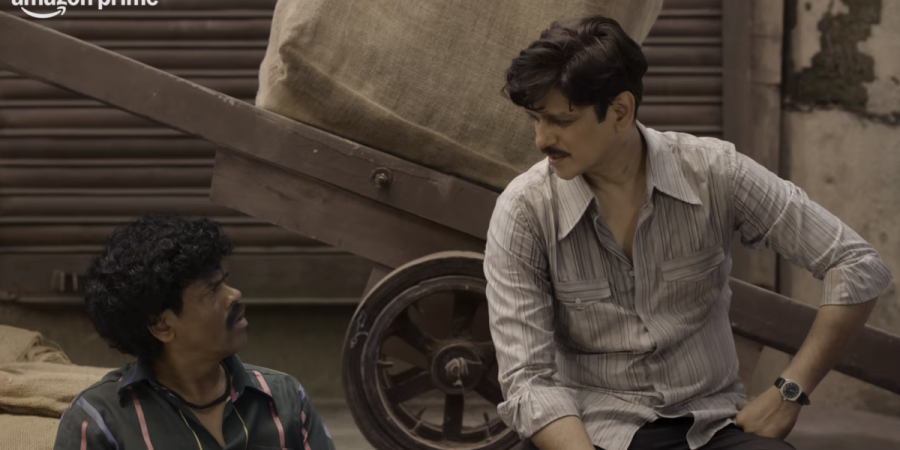
bookmark![]()
![]()
A still from ‘Matka King.’ The Wire
Tatsam Mukherjee
Published at : April 19, 2026
Updated at : April 19, 2026 06:53
If you’re invested in the business of storytelling and the individuals doing it, let me describe a disappointing sight: a filmmaker with a distinct voice, making something that has echoes of things seen many, many times before. The Scarface-arc has been adapted in Hindi cinema over the years in films like Agneepath (1990), Vaastav (1999), Raees (2016) – apart from dozens of other knockoffs before and after.
An immigrant ‘outsider’ turns their desperation into fuel for survival, inventing a morally dubious way of making money and becoming a maverick of a corrupt society. Soon enough, they become too big to be ignored, and the very system that powered their rise, turns on them. It’s a part-underdog journey; part-cautionary tale. The storied arc permeated into the OTT space with Scam 1992, based on the meteoric rise of stock-broker Harshad Mehta (played by Pratik Gandhi). It continued with Scam 2003, on Abdul Karim Telgi’s counterfeit stamp-paper scam.
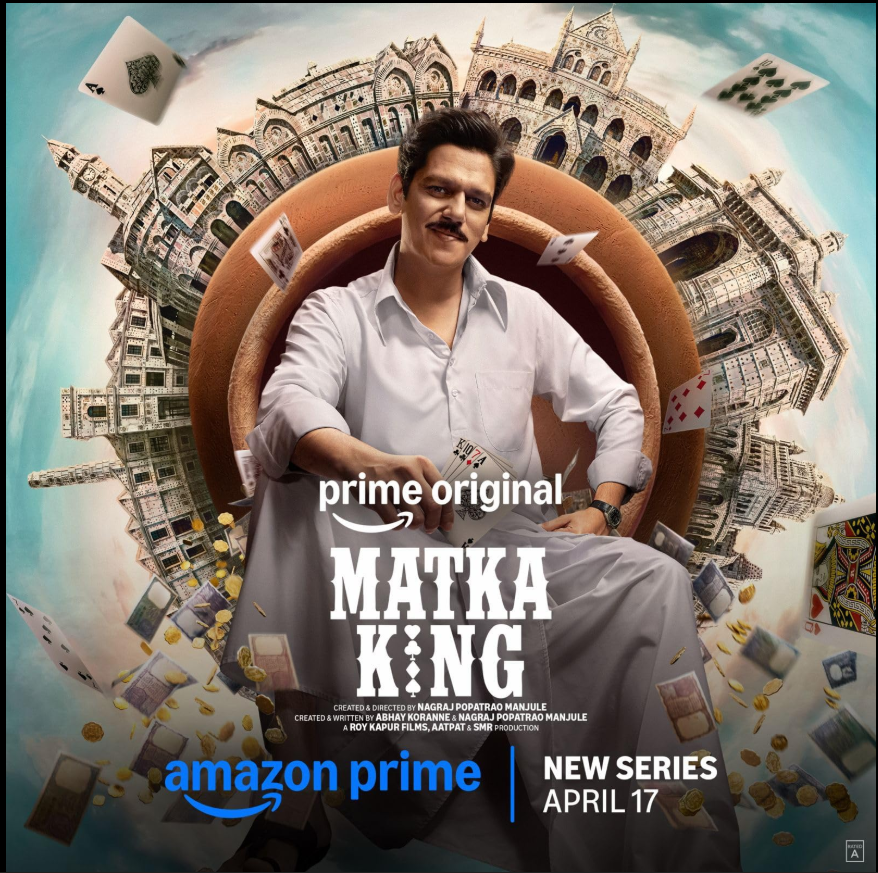
Watching Nagraj Manjule and Abhay Korrane’s Matka King–an eight-episode fictional retelling of the origins of Ratan Khatri, widely considered India’s unofficial architect of street gambling (or ‘Matka’ as it began to be called), I couldn’t shake off the feeling of it being a show greenlit in the aftermath of Scam 1992’s success. Matka King might be competently made and consistently watchable, but it felt too sanitised and predictable coming from the director of films like Sairat (2016) and Fandry (2013).
The beats of the show are instantly familiar: Brij Bhatti (Vijay Varma) is the right-hand man for a ruthless cotton trader Lalji Seth (a reliably evil Gulshan Grover), who also runs an underground gambling den. Hailing originally from Karachi, coming to Bombay after the partition as a teenager with his younger brother Laxman (Bhupendra Jadawat), Bhatti is not your average dreamer who manifests overnight riches. He’s willing to dig his heels in, ready to work hard for it. However, as years go by and seeing no end to his battle for survival, Bhatti finally sees the lie of the ‘hope’ for the middle-class, and how it can be monetised into a business venture.
The pilot episode is the strongest in Manjule and Korrane’s series, as they go about building the period setting of the show. This is India of the early 1960s, where the wealth inequality is more shocking than today. The middle-class hasn’t formed yet, and therefore there’s a lot more consideration for the labour’s rightful wages and working conditions. I could see how Manjule and Korrane wanted to destigmatise street gambling here—the only way for the poor to rise in a system rigged to maintain the status-quo. The show argues, not everyone who plays it is a no-good, lazy social misfit. Sometimes, it’s the only way. Like when a hapless woman shows up to the gambling den, to bet a sum of Rs 50 (mind you, this is the early 1960s), when most other bets range around a rupee.
She needs multiples of that amount to pay for her husband’s surgery in the hospital. The only other option is to get buried under more debt from a local moneylender. At least, she thinks there’s something ‘fair’ about the odds in a gamble, especially in a society where everything else is rigged against her. What she doesn’t know is Lalji Seth’s gambling game is rigged to lose him a base amount so that he makes money.
Queasy about having to cheat desperate people out of their meagre income by dangling a carrot of hope in front of them, Bhatti resigns and starts his own game. This will be an ‘honest’ game, unlike Lalji Seth, he decides. This is one of the few original brush-strokes in the show, where Manjule and Korrane insist on portraying Bhatti as someone who is almost religious about the sanctity of his business. If someone wins, Bhatti will pay the winner—no questions asked. He insists that only luck rules in this game, and he won’t try to meddle in between to save a penny or two. It’s the strangest dichotomy about a person, who is actively perpetrating an addiction for the desperate people by painting him as someone who operates on ‘trust’. If this was the branding of his game, it worked, because lots of lots people started playing this. Day in, day out. The word on the street was: Bhatti’s game doesn’t have any foul play; and if you win, he pays up.
Vijay Varma is the right actor to play such a nuanced protagonist. Among the most well-read lead actors working today, he knows exactly which shade to highlight in what scene, while still making the character seem cohesive. He runs an illegal enterprise, but he does so with 100% honesty. He’s a family man, but he also (as it happens with those climbing the success ladder) gets smitten by another woman. He’s cautious about who he shakes hands with, but he also gets seduced by the arclights of showbiz. He gets invited to work with the politicians and the business elites, but even while sitting on mountains of cash, his heart is still pro-labour. Varma is excellent in the manner he calibrates so many different sides to Bhatti’s character, keeping him open for interpretation, while also underlining what he feels the man is. There’s a wisdom in Bhatti’s voice, where he remembers who he is, even if the others are too blinded by his riches.

In a scene, when Bhatti meets his wife Barkha’s (Sai Tamahankar) friend from night college (who definitely seems more than a friend), his body contracts, his throat dries up, as he enters their bedroom and doesn’t know what to do. It’s a lovely scene enacted by Varma, showcasing Bhatti’s hurt, even though he’s been spending every other night with another woman. He doesn’t become possessive or violent. But nothing brings him face-to-face with his crime of ignoring his wife, than seeing her spend time with another man.
I wish the rest of the characters around Varma were equally fleshed out. Except for Barkha–a role worthy of Tamahankar’s prowess as an actor–most of the ensemble is filled with stock characters. I enjoyed Girish Kulkarni’s T.P. D’Souza, the tenacious journalist, who keeps ringing the alarm bells on Bhatti’s burgeoning enterprise. He’s not taken seriously until it’s too late. I also liked Siddharth Jadhav’s Dagdu – Bhatti’s right-hand man, and Istayak Khan’s Jinu Master, reminiscent of those good-natured baddies in Hindi films of the 1970s. I loved Vineet Kumar Singh in the cameo of the instantly recognisable character of the Bombay underworld, played with a cool apathy.
One major issue that I had with Matka King is how in its bid to pay homage to films from the 60s and 70s, the show risks looking derivative. No man-woman pair in the show can do so without falling in love, which I found too escapist and dated. Also, in a bid to showcase Bhatti as an anti-hero worth cheering for, I think the show ends up going too soft on him. I wouldn’t be surprised if the makers mistake their sympathy as empathy for the protagonist. At his most diabolical, where many people are unhealthily dependent on his game of luck, Bhatti comes out looking like a victim. The ‘villains’ in his story are greedy, one-note characters, like a national politician, a competitor, his own brother Laxman.
Matka King is shouldered by the bravura performance by Varma, but the rest of it makes it a less-than-satisfactory streaming debut for Nagraj Manjule. For someone who made stellar use of Bachchan’s silhouette in his last feature, and who once redefined realism, it’s disappointing to see Manjule settle for imitation. Matka King doesn’t just echo Agneepath, it pales beside it.
Published in special arrangement with TheWire.in
_________________
Matka King
Creators: Nagraj Manjule and Abhay Koranne
Cast: Sai Tamhankar, Kritika Kamra, Vijay Varma
Language: Hindi
Streaming on: Prime Video





Most Read from Culture & Lifestyle

It’s a bird … it’s a plane … it’s the Indian ambassador’s farewell tweets
How should Nepal navigate a world in reorder? Rajib Upadhya on geopolitics and foreign policy
How Anup Poudel took Nepali cinema to Cannes
A Nepali photographer rediscovers Calcutta after decades

Facebook friends: What do cross-gender friendships look like in Nepal?
Editor's Picks

Constitutional Bench caught in seniority, ‘pick and choose’ dispute

A Dom boy’s long road to becoming a doctor

From blankets to handmade dolls, two foreign women bring comfort to flood survivors

News Analysis: When institutional defence exposes institutional fault lines
It’s a bird … it’s a plane … it’s the Indian ambassador’s farewell tweets
E-PAPER | October 13, 2026

×