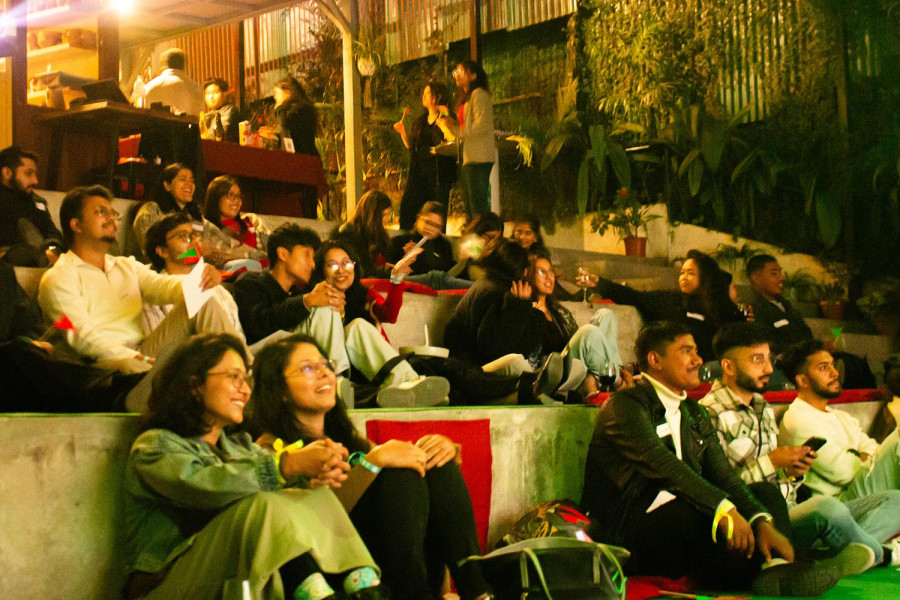
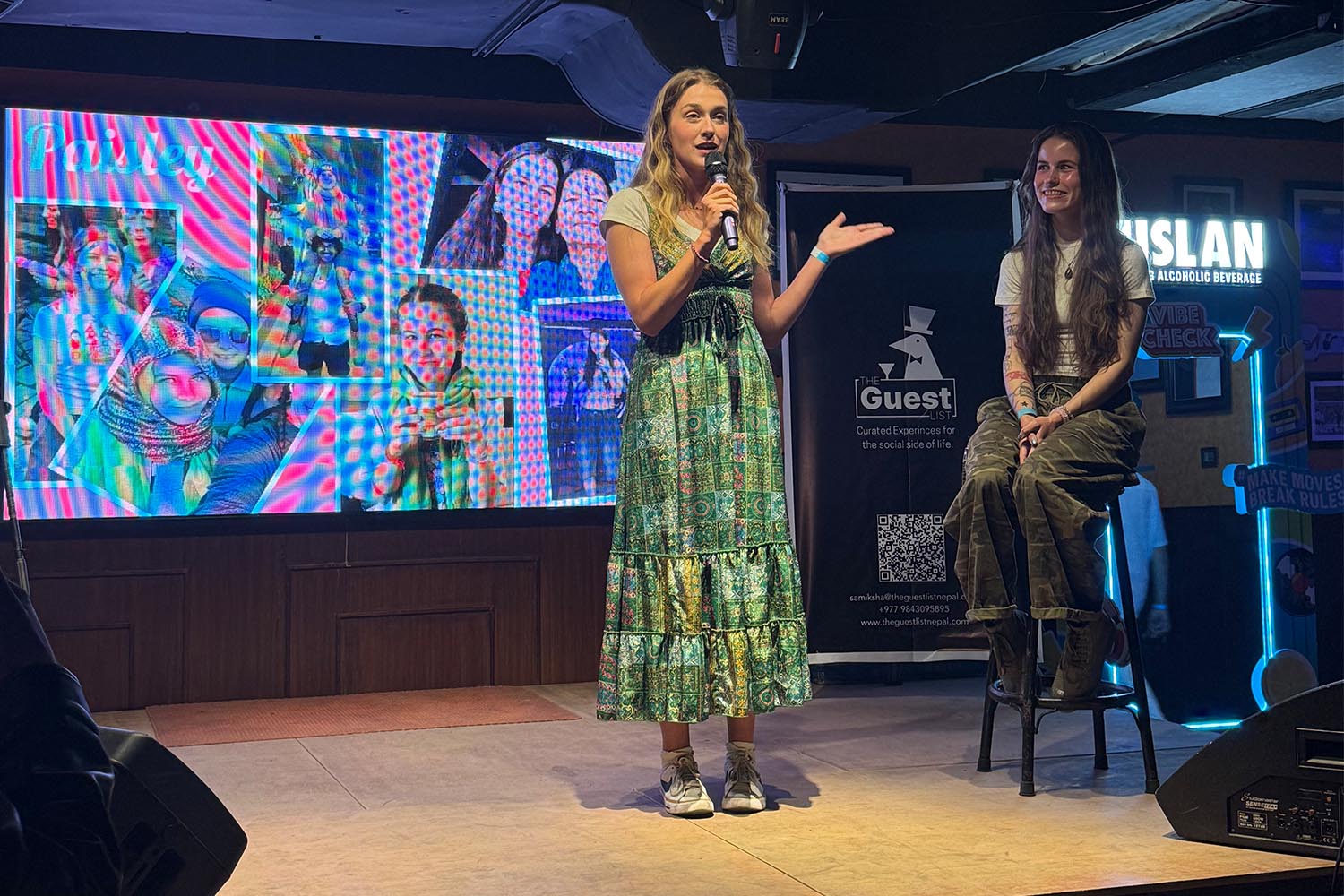
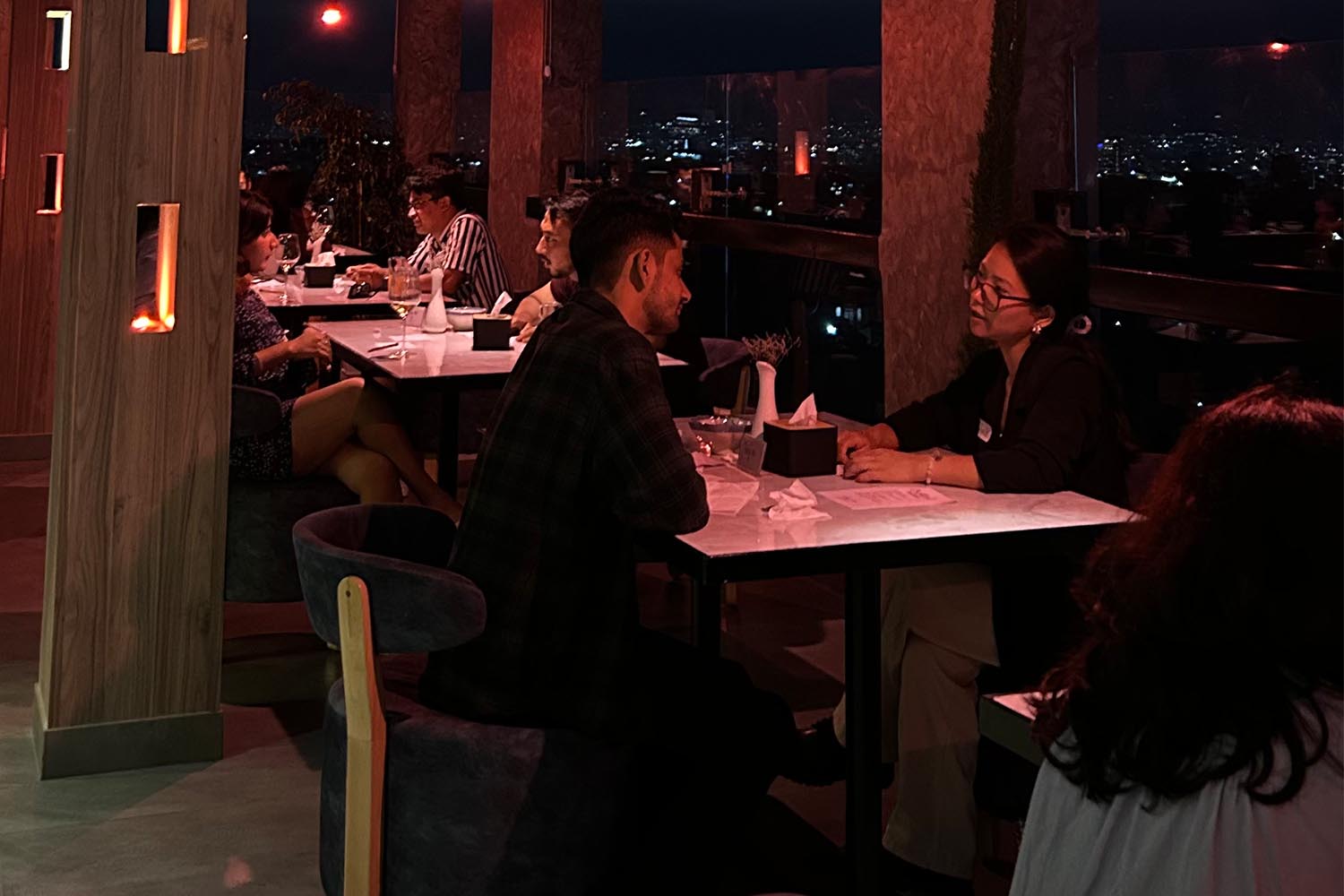
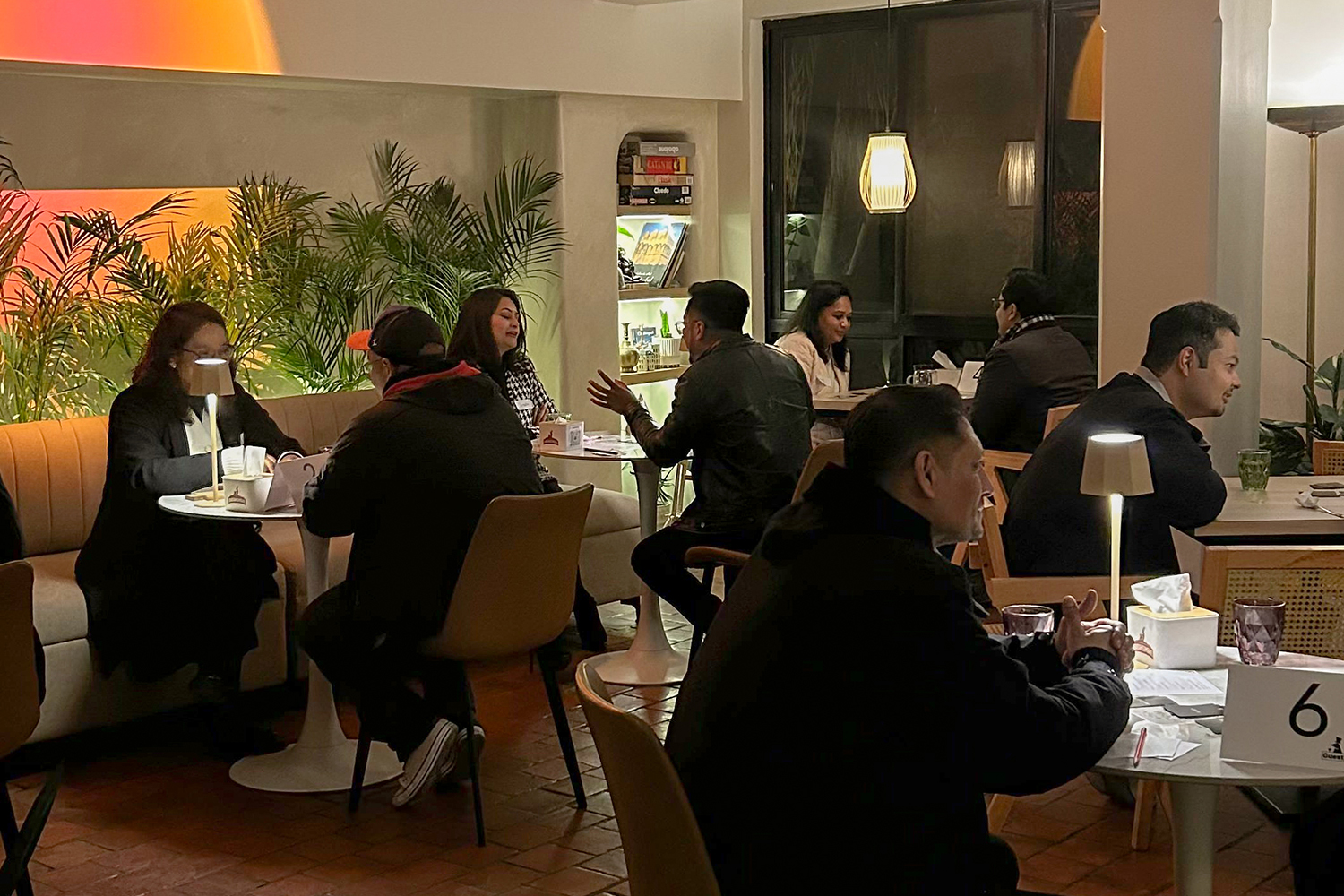
In Kathmandu, dating mixers are creating in-person spaces for connection, drawing participants from queer communities and social circles beyond dating apps. Many such gatherings require prior registration, during which people list what they look forward to. Considering age groups and preferences, the organisers carefully curate the pairs. Courtesy of Rawline
Amid the routine rhythms of life in Kathmandu, which can sometimes feel isolating, an exciting prospect of socialisation is on the rise—dating mixers. Logging off the curated screens of online dating apps, people are choosing to show up to these gatherings expecting connections, conversations, and sometimes love, redefining the perceptions of dating practices.
Driving cultural recalibrations, mixers create a space for spontaneous conversations while embracing the soft awkwardness that defines human connections. They move beyond conventional ideas of finding a partner, blurring the lines between classes and castes, meshing cultures, and reimagining intimacy.
Birat Bijay Ojha, 29, as he explained, was ‘blushing’ when his friend was pitching him to a gathering of Kathmandu’s queer community. After all, the flustered expression was justified as his friend came armed with a structured, persuasive and personal PowerPoint presentation. “It was slightly nerve-wracking,” he explains.
First of its kind, Queer Honky-Tonk and The Guest List partnered up to organise an in-person ‘Pitch a friend - Queer Edition’ on April 3, 2026, where participants arrived with a friend and walked out with a possibility of romance.
Ojha added that he, too, was looking forward to meeting a potential partner. While the space felt thoroughly enchanting, he was surrounded by familiar faces of the community. “Since the queer circle is currently small, everyone in the gathering knew everyone else,” he says. “I was hoping to find someone new.” Even so, he notes that the experience remained enjoyable, as the event recognised the queer community beyond just the Pride month.
In the everyday hustle of urban settings, human connections have started to feel distant. With limited community spaces and recurring routines of life, finding a new connection that feels electrifying is becoming rare. While dating may appear to be the primary focus, these gatherings trace their roots to communal friendships, exchanges, connection-building, and the creation of gentle spaces for catharsis. “These events need to happen more,” says Ojha. “Dating can be a priority, but the root of it is the community–people coming together and simply having fun.”
Samiksha Gurung, the co-founder of ‘The Guest List’, says that the idea goes beyond simply pairing people up. It is about creating a nurturing space for everyone, allowing them to interact and express freely. Through events such as ‘Social party’, ‘Intentional Dating’, ‘Social Adventure’, and ‘Speed dating’, the group has seen intriguing outcomes.
With participants, previously known or unknown, joining them at these events, safety remains central to their concerns. “We want to make sure that everyone comes with the right intention,” shares Gurung.
These gatherings require prior registration, during which people list what they look forward to. Considering age groups and preferences, the organisers carefully curate the pairs.
Shuby Bhattarai, the founder of Queer Honky-Tonk, shares that the event was meticulously planned, with vulnerability and visibility going hand in hand. “We had to find the people who were interested while also balancing the logistics, venue and activities,” shared Bhattarai. “The collaboration catered to something fun for the community.”
Bhattarai adds that people looked forward to more of these events. “What marks any event’s success for me is when people come afterwards, expressing how much they enjoyed the event.”
Conventionally, dating in Nepal has been shaped by social circles, family networks, or, more recently, dating apps. What these mixers bring to the table is connections carved into physical presence. The changing perceptions of people regarding dating also stand out as a propelling force among these gatherings. “What was surprising to me was the participation,” says Gurung. “Individuals from different generations are actively looking for people to spend their lives with.”
With escalating popularity, questions of accessibility emerge, as these events cater to a specific demographic and require a particular level of social and cultural capital to participate. For many, the language, setting, and idea of pitching a friend may feel unfamiliar or even exclusionary. “At times, these events can feel too urban,” shares Ojha.
Despite a shared positive outlook towards these events, some say it can ‘feel a bit too urban’ at times.
The emergence of groups such as The Social Club Nepal, which was founded in January 2026, reflects the growing need for in-person socialisation. “It was interesting to see how people actually find their dating partners through these events,” says Tulip Shrestha, founder of the club. “There are already 5 pairs who are still in a relationship.”
Sumit Man Shrestha, 24, expressed that one of the events organised by the club, Date-ish, was “Unexpectedly well regulated”. He recalled how, through the well-facilitated games, he made connections, not just with an end goal of dating but to sit with a delicate realisation that he has ‘a lot of genuine friends’. “In Nepal, we do not expect people to show up to social events,” shares Shrestha. “However, in this event, people, even introverts were there, and it was amazing to express myself.”
Shrestha, while calling himself an ‘extrovert’, recalled an encounter with a rather shy person. “On a blind date, I sat next to a very introverted person and she expressed how nervous she was,” he shares. “Both of us opened up to each other and everything went beautifully.”
Dating apps raise concerns about safety and the risk of catfishing, and mixers like these aim to foster face-to-face interactions, sharing real-time conversations and energy. They offer experiences that seem more grounded, transparent and human.
These gatherings have begun to restructure how people approach connection in a city which often demands isolation. They signal a broader cultural shift from passive scrolling to active presence.
While facilitating romance, they offer a space to restore the fundamental human tendency to connect in ways that are simple, unpredictable, and unfiltered. In gathering courage to meet, connect and be seen, individuals from different backgrounds, identities, orientations, and age groups are choosing to put themselves forward for these events.




 26.78°C Kathmandu