What if an establishment manages to record your dreams, assessing if you’re a potential threat to society or not, and in the case of the former detain you?
Have you considered that your dreams could be ‘farmed’, too? Let me help with you the basics. To simplify it, ‘data farming’ is a process that helps analyse a particular dataset, connecting ‘events’ or ‘occurrences’ to imminent risks and outcomes. Now, consider this: What if an establishment manages to record your dreams, assessing if you’re a potential threat to society or not, and in the case of the former, detains you?
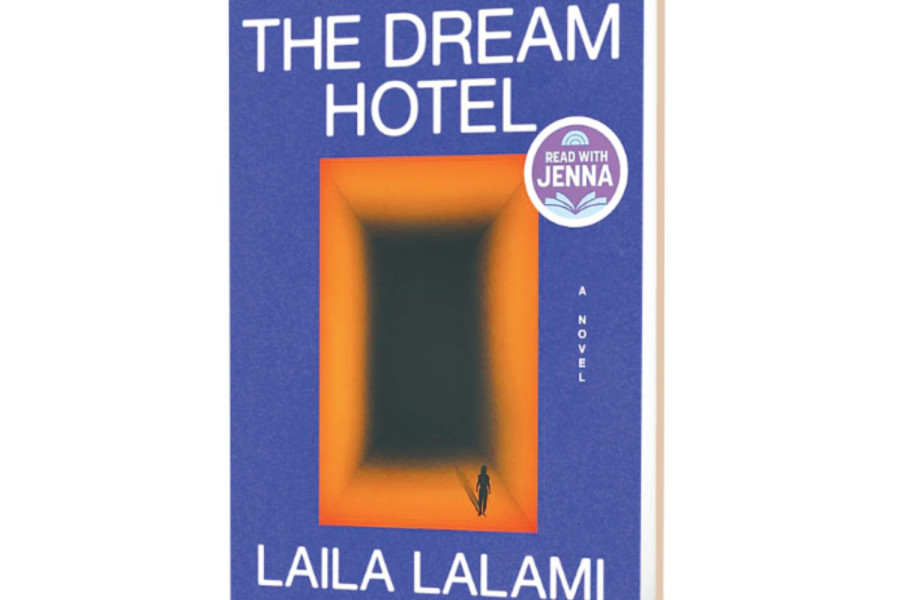
Chilling. Far-fetched. Unheard of. But that’s the idea Moroccan-American novelist Laila Lalami has explored in her latest work of fiction, The Dream Hotel (Bloomsbury), which was longlisted for the 2025 Women’s Prize for Fiction.
When the novel’s protagonist Sara T Hussein, returning home from a conference, is questioned at the airport by Risk Assessment Administration (RAA) officials, she wasn’t expecting a detention. Her efforts to reason with them result to a naught. She’s sent to Madison—a “retention centre” where women prisoners are called “enrolees”, “program participants”, or “retainees”. She is to remain there, “free, under observation”, keeping her “risk score” under 500 to be released.
Lalami masterfully familiarises her readers with how this agency (the RAA) works and what instruments—such as the “Safe-X Security Questionnaire”—it uses to monitor detainees. Or how detainees can talk to their family members or legal team, transacting via ‘PostPal’. But all this is expected in a novel of this nature. Readers encounter unexpectedness; you can’t tell for sure whether select chapters beginning with Sara’s dreams are events occurring in reality or in her dreams. Lalami breaks the spell soon, but one is faced with this question: if our dreams could be manipulated, would it be possible to be sure of who we are?
Then comes this brilliant submission halfway through the novel: “This is the moment when her memory becomes jumbled, and she isn’t sure if she’s remembering what she herself witnessed, or what she was told later, by the grown-ups.” This is the moment when Sara is revisiting the cause of her brother Saïd’s death, and with this recollection comes this stinging pain and realisation that she thinks some voice inside her told her: You should’ve let him hide in the closet with you.
That’s the liminal space in which the novel operates. Knowledge of which is beneficial to companies that want to build a market, for it’s an adage and something that this extraordinary novel helps centralise: “Time and again, dreams have changed the world.” Perhaps mining dreams would change the globalised world forever, in unimaginable, undreamable ways? The founders of DreamSaver–a sleep-optimisation app that Sara had been using, finding it difficult to navigate motherhood alongside working–were cognisant of this.
What data was DreamSaver collecting? Sara’s whole life, perhaps–her growing-up years as she was being raised by Moroccan immigrants, her relationships with men, her work life, her dreams, her ambitions…all of which are the very ingredients that inform one’s dreams. Using the insights collected by such apps, can dreams not only be analysed but also be implanted? One knows that experiences trigger dreams. Can this be the other way round, too? One knows there are facilities in place to keep you safe. But can this be reverse-engineered by questioning the very idea of safety?
It isn’t eerie then to find Lalami proposing this in the epigraph, sharing two fictive murders , of a woman and a child, and asking her readers, imagining them to be ‘good’ people: “What if you could save them from these monsters? You don’t even have to do anything; you’ve already agreed to the terms of service.”
‘Terms of service’ isn’t used casually here. It’s hinged on the idea that you’ve been coerced into collaborating in your own annihilation in a techno-capitalistic world. Think of the hundreds and thousands of boxes you check day in and day out–if they’re not already checked on your behalf, your complicity isn’t imagined; you’re party to the whole idea. And the idea is to dominate who you are; the idea is to convert, transform and profit from your life, which is nothing but data to firms like DreamSaver.
In reality–as far as this writer knows–no one has had any access to what you dream; if your dreamscapes are also woven into the fabric of this ultimate infrastructure of retail capitalism, you’ll be more disarmed than ever before.
It makes one wonder what compelled Lalami to venture into this space for her novel. In an interview, Lalami noted that when she shared her bafflement with her husband regarding Google knowing how on a particular day she goes to ‘YogaWorks’, informing her that she can be there by 7.28 if she leaves “right now”, to which her husband replied: “Pretty soon the only privacy we will have will be in our dreams.” And the idea struck her, like it struck Kafka, who wrote The Metamorphosis, which finds a mention in the book: Is someone monitoring dreams? This curiosity helped Lalami imagine a new definition for our “digital footprints” and how they can be leveraged by organisations for their various vested interests.
Surveillance weaved into this “pre-crime” idea of a work of fiction, even for Lalami, isn’t new; what’s new is the novel ways it can propel us to think of how we function. In that way, while it’s not new for us to witness that such a thing can happen, it behoves us to imagine in what ways the line of reality and imagination–or truth and fiction–will be pushed.
Perhaps they’ll reveal themselves to us “with shocking clarity” like they did to Sara when receives an email from a past detainee, one Eisley Richardson. Her “sudden interest” made her curious, and it’s this curiosity one finds handled maturely by Lalami in the final part of the book that succeeds this revelation. However, one wonders why none of us question it when “cookies” ask to be accepted or rejected. Won’t digging in deep result in “shocking clarity” for us, as it did for Sara? But that is also a dream. Until then, we can all imagine ourselves as free, under observation.




 20.12°C Kathmandu