These women make childcare safer and breastfeeding pain-free
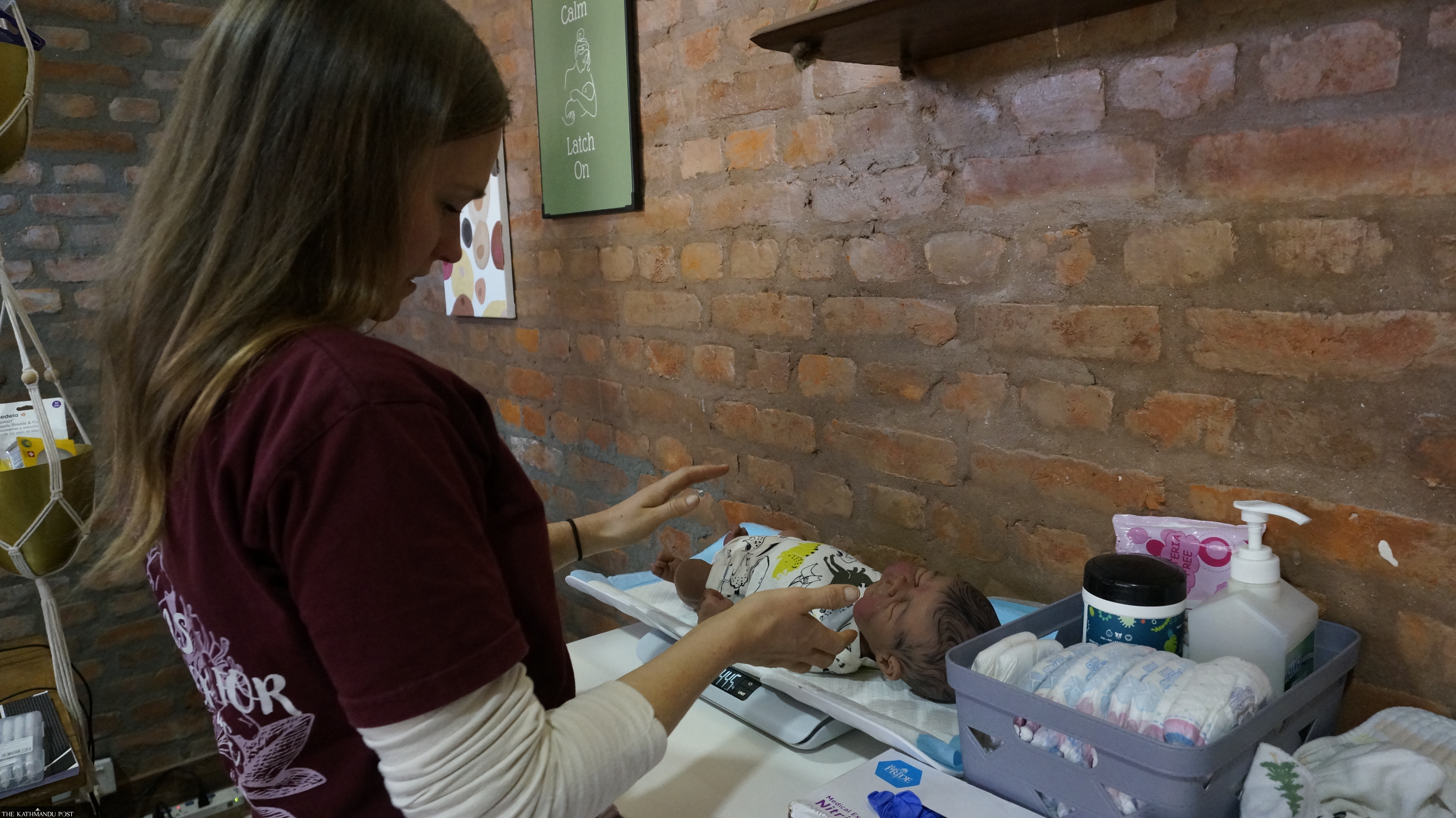
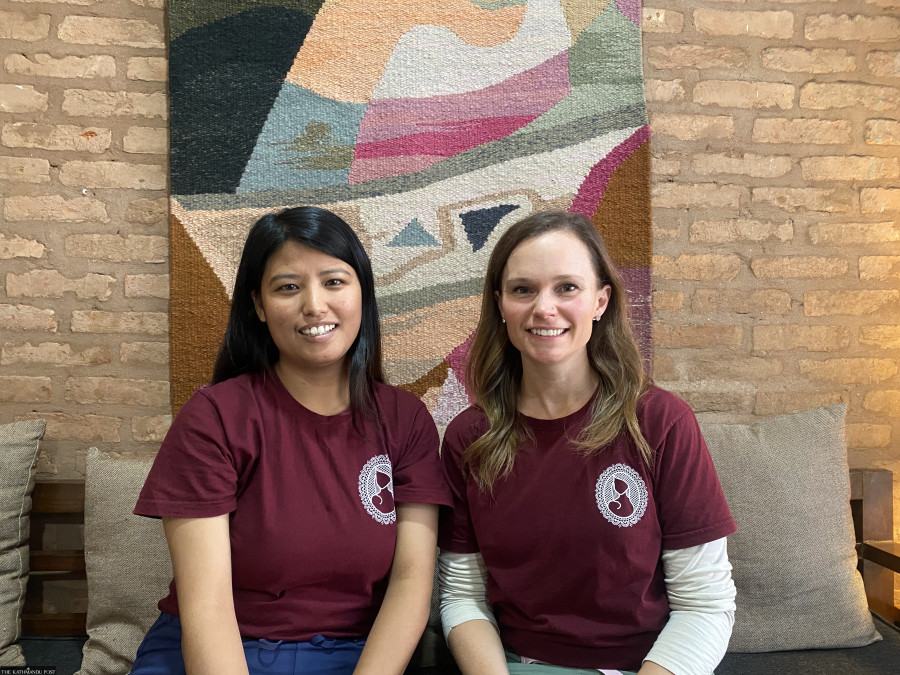
Lori Parker is one of the very few lactation consultants in Nepal. Together with her co-worker, she helps newparents navigate their role and explains why baby massages and co-sleeping can be dangerous. Parker (right) and Tabita Lama educate parents and their close relatives on labour, delivery, childcare and breastfeeding. Post Photos: Britta Gfeller
Nepal has very few certified lactation consultants. One of them is Lori Parker, an American nurse who founded Sutkeri Care, a consultancy for soon-to-be and new parents. “Moms care for everyone. Let’s care for them,” is their motto.
“Most parents go to their paediatrician or gynaecologist to get information about breastfeeding,” says 39-year-old Parker. “But the system is already overloaded, and often breastfeeding is not addressed as thoroughly as needed. That’s the gap we’re trying to stand in.”
Parker started Sutkeri Care on her own in 2023. After one year, Tabita Lama joined. Parker had supported Lama during and after her pregnancy. Now, Lama is training to be a lactation consultant herself, and the two work as a team—Lama taking over when Parker’s Nepali skills reach their limit. They have already supported hundreds of families in Kathmandu.
One focus of Sutkeri Care, besides hands-on advice, is the mother’s mental health—including checking for postpartum depression.
Parker and Lama educate parents and their close relatives on labour, delivery, childcare and breastfeeding. “We usually follow a breastfeeding session and give pointers on how to position the baby, or some simple adjustments to make sure that breastfeeding is pain-free,” Parker explains. In addition, the lactation consultants assess the newborn’s and the mother’s health.
The ideas of what is suitable for a newborn sometimes differ in Nepal and in the US. “In the US, we don’t have the baby sleep with us in the bed,” she explains. “We think it’s dangerous.” But when starting her work in Nepal, she realised that co-sleeping is the norm here. “And for good reason,” she says. “It does help with warmth, with connection, and with learning to understand and listen to your baby. And if that is the setup you need, you can still safely do that.”
Especially as a foreigner, she never wants to force her ideas on parents and presents her evidence- and science-based approaches very gently, she says. “I try to give the parents knowledge and let them make a decision.” In the case of co-sleeping, this means that she encourages families to ensure that their baby has a designated sleeping spot in the bed where the parents cannot roll onto them.
Before she moved to Nepal, she worked as a nurse in the Neonatal Intensive Care Unit. She and her husband, a police officer, have always dreamt of using their skills to support more people. Devout Christians, they prayed to God to show them the right path to fulfil their wish. That is when several people, independently of each other, told them about Nepal.
The Parkers learned that there is a need for healthcare and justice workers here. And therefore, they decided to move to Kathmandu with their three small children in 2017.
Lori is not allowed to work as a nurse in Nepal due to her US license. But thanks to her professional background, more and more people in her circle began asking her for medical advice during pregnancy and postpartum. That is when she saw the need to support breastfeeding mothers, and she took a course to become a lactation consultant. When all her children had started school, she opened her business.
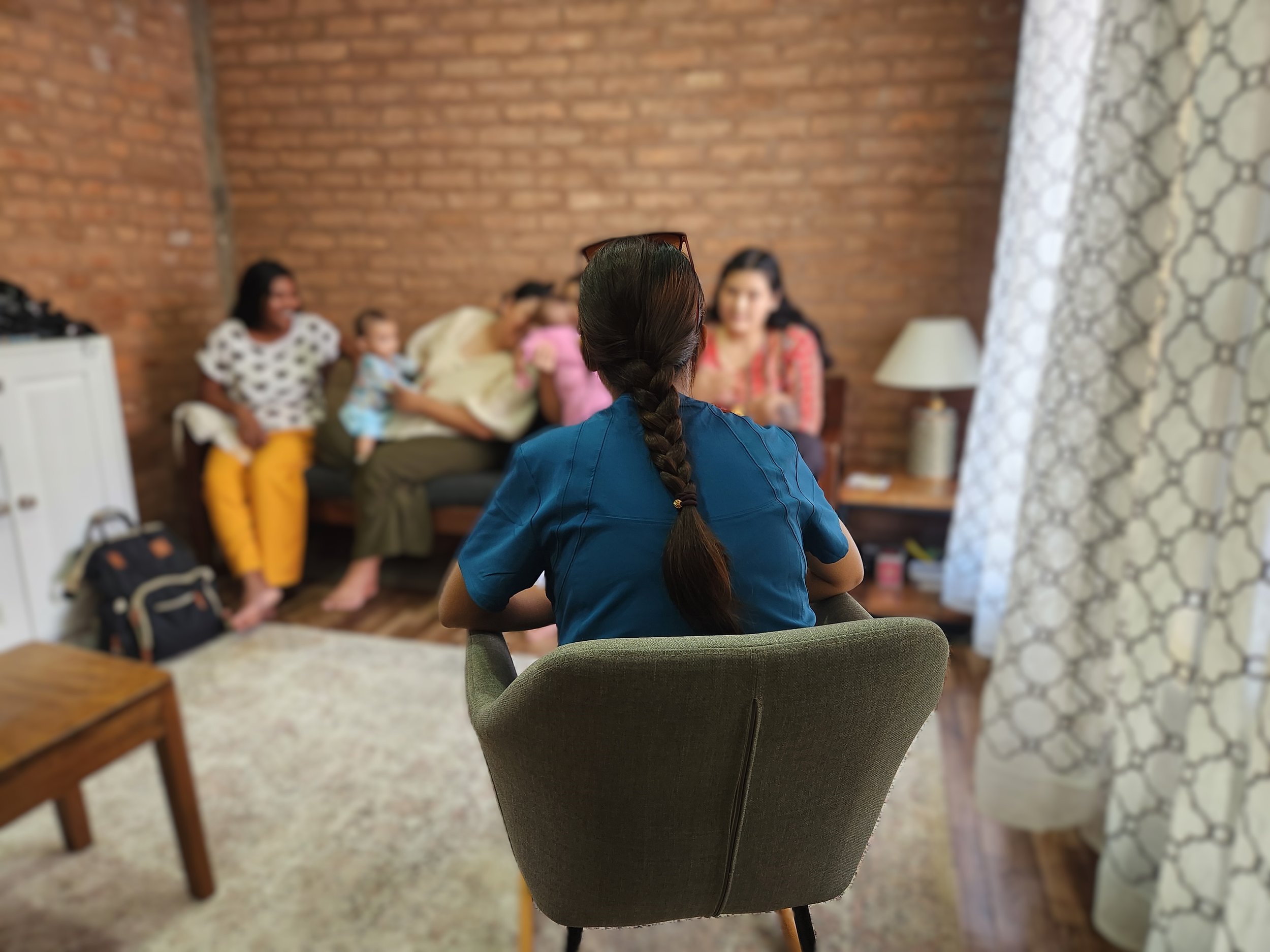
One focus of Sutkeri Care, besides hands-on advice, is the mother’s mental health—including checking for postpartum depression. “We try to be a safe place for women. We want them to know that it’s very normal to have a mix of feelings,” Parker explains. “But if they are feeling consistently low, we want them to get the help they need.”
“Some mothers also just need to hear that they’re doing a good job and that their body is working as it should,” Lama adds. “The mother is often overlooked; everybody is only looking after the baby.” There might also be a lot of pressure from relatives to do things a certain way. Lama remembers from her own pregnancy and postnatal period that relatives advised her not to eat certain foods, which led to nutrient deficits and cramps. “Today, I know that a balanced diet is best,” she says. And she wants other parents to know this, too.
Photo: Courtesy of Sutkeri Care
Other common practices can be dangerous for the baby, she explains. Baby massages are good, but the stretching is sometimes done too roughly on the small bodies. Also, the habit of putting oil on the baby’s head to keep them warm does more harm than good. “It doesn’t help with heat regulation, and can lead to skin problems,” Lama says.
In addition, many people dress their babies too warmly. “During this time of year, it’s okay to have an extra layer. But if the baby is wrapped up too much, they can get dehydrated due to sweating, and it can cause skin problems.”
Parker plans to educate more people to spread the knowledge even further. She is offering courses for hospital personnel. “The doctors and nurses are the first ones to talk to new parents. If they can offer encouraging words and educate in small amounts, that already goes a long way. And when parents need more support, the medical personnel can call us.”
So far, Sutkeri Care can cover a radius of 20 kilometres. Parker hopes to train more lactation consultants in the future. “Maybe we can do outreach to villages and continue to grow this profession—both for the families that need it and for the sake of having another in-country job that is respected and beneficial to the population at large,” she says, and adds: “We have big dreams.”




 12.65°C Kathmandu

.JPG)