Bankariya community in Makawanpur fears eviction with lease set to expire
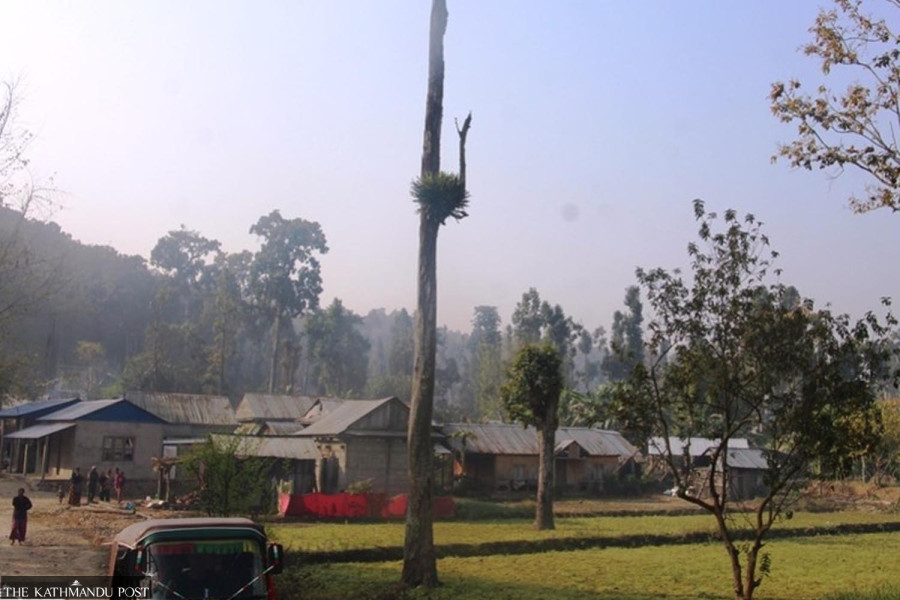
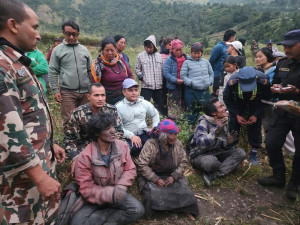
Parsa National Park officials have reportedly urged forest authorities not to renew the land arrangement. The Bankariya settlement at Musedhap in Makawanpur, pictured recently. Post Photo
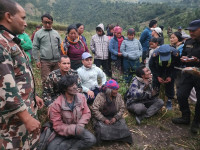
The Bankariya community in ward 4 of Manahari Rural Municipality, Makawanpur, has been restless fearing eviction.
As many as 22 families of the endangered Bankariya community have been living at Musedhap in the local unit for two decades.
The settlement sits on nine hectares of land provided in March 2006, under the leasehold forestry concept by the then District Forest Office in Makwanpur. The land, located in the buffer zone of Parsa National Park, was allocated for 20 years to help integrate the formerly nomadic community into mainstream society. With just one and half months left before the lease expires on April 11 2026, uncertainty looms large.
The ethnic Bankariya community is one of the most endangered communities in Nepal and owns no land. Until about two decades back, they were nomadic just like the Rautes. They are one of the 10 endangered tribes recognised by the Nepal government, alongside Kusunda, Raute, Surel, Hayu, Kisan, Lepcha, Meche, Raji and Kushwadiya.
“We are worried about what will happen after the deadline. The whole country is in election mode but our settlement is gripped by the fear of displacement,” lamented Santoshi Bankariya, a community leader.
According to Rakesh Prasad Chandrabanshi, chief of the District Forest Office in Makawanpur, discussions on whether to extend the lease will take place only after the elections. “The term will expire in about a month and a half. There has been no formal decision yet,” he said.
Officials at Parsa National Park have reportedly urged forest authorities not to renew the land arrangement, citing conservation concerns within the buffer zone. In the past, the park office even posted notices asking the community to relocate. The Bankariya, however, insist they will not leave.
“We have tilled this land for years,” said Santoshi. “We have nowhere else to go. Whoever comes to ask for our votes, our first demand is land ownership certificates.”
The Bankariya community, found only in Makawanpur, once led a nomadic life in the Chure forests. Media reports three decades ago drew state attention to their plight, leading to citizenship distribution in 2002 after they began settling in the Twangra area of Hadikhola. In 2006, the leasehold land in Musedhap was granted to provide livelihood opportunities.
Yet ownership remains elusive. Without land titles, the community cannot access housing support under the People’s Housing Programme of the government. Although Rs3-4 million is allocated annually for housing of the Bankariya community, the funds have remained frozen for 13 years due to the absence of land registration in their names.
“We do not even have a small plot in our name,” said Santamaya, another community leader. “During elections the parties and their candidates promise houses, roads and development. After winning, they never return.”
The total population of Bankariya people in Makawanpur stands at 91. Seven youths among them—one boy and six girls—have completed the Secondary Education Exam (SEE). There are 61 registered voters in the Bankariya settlement, while about 150 Chepang and Tamang voters live nearby. The community’s votes may be numerically small, but their symbolic significance is large in a tightly contested constituency.
Pampha, the first Bankariya to pass the SEE, expressed her frustration. “We still have no land ownership certificate,” she said. “The parties as well as the state ignore us.”
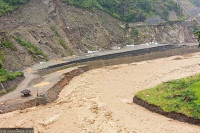
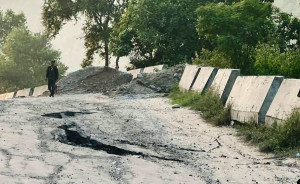
Beyond legal uncertainty, natural threats compound their vulnerability. The settlement lies between two streams that frequently flood, eroding embankments built for protection. “Even after leaving the forest and settling here, we are not safe,” said Rammaya, another local. “The stream enters from both sides. We cannot build secure houses because the land is not ours.”
The government provides a monthly social security allowance of Rs4,000 per person to members of 10 endangered groups, including the Bankariya. In Makawanpur alone, 622 houses have been built for Chepang families over the past nine years under the housing programme. The Bankariya, by contrast, remain excluded.
With the lease expiry approaching, the community fears displacement.
“We are being pressured to leave from one side, and floods threaten us from the other,” Santoshi said. “All we ask is recognition of the land we have lived on for 20 years.”




 14.81°C Kathmandu