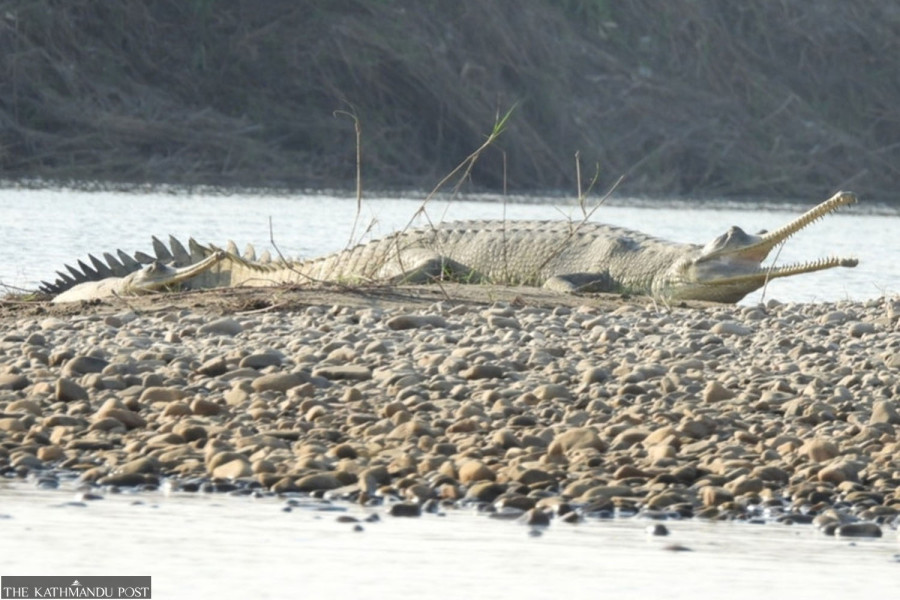
366 gharials were recorded this year in Narayani and Rapti rivers, up from 352 last year. A gharial sunning in Chitwan, in this undated photo. Post file photo
The annual gharial census has been completed and showed an overall rise in numbers across key river systems, but a decline in the Narayani river. The Chitwan National Park issued a press statement on Friday detailing the findings.
In a press statement issued on Friday, the park said a total of 366 gharials were counted this year in the Narayani and Rapti rivers. Last year, the combined figure stood at 352.
“We recorded 366 gharials in the two rivers this year,” said Abinash Thapa Magar, information officer at the park. “Despite a drop in Narayani, the overall population has increased.”
The census was conducted through direct observation in potential gharial habitats from December 7 to 15. According to Thapa Magar, the Rapti river accounted for the highest number with 231 gharials sighted this year, up from 206 last year. In contrast, the Narayani river recorded 135 gharials, down from 146 a year ago.
“There are 11 fewer gharials in Narayani compared to last year,” Thapa Magar said. “There was a time when gharials were virtually absent from the Rapti, but it has now emerged as their primary habitat, while numbers in the Narayani are gradually declining.”
The census also documented nine adult male gharials—seven in the Rapti and two in the Narayani.
Gharials inhabit clean, fast-flowing rivers and feed exclusively on fish, making them key indicators of river health. However, increasing pollution and declining fish stocks continue to threaten the species.
During monitoring this year, officials also spotted a rare river dolphin near Golaghat, the confluence of the Rapti and Narayani.
The Chitwan National Park set up a gharial breeding centre at Kasara in 1978, aiming to conserve the crocodile species by hatching its eggs and releasing them in the rivers when they grow up to two metres in length. Survival rates in the wild remain low. The centre has seen some success. There were just 80 gharials in the country before the breeding centre was established.
According to conservationists, gharials are found in some rivers of Nepal, India, Bangladesh, Bhutan, Myanmar and Pakistan with the Rapti and Narayani rivers being their major natural habitats. This species—the only surviving member of the Gavialidae family—is found in the Kaligandaki, Saptakoshi, Babai and Karnali rivers as well in small numbers.
Of late, human encroachment and fishing nets placed in rivers and streams have become a major threat to gharials in the Chitwan National Park, the country’s first national park. Although the park administration banned the use of such nets in its waters, their use continues unchecked, posing serious risks to gharial conservation.
According to conservationists, the endangered gharials are often trapped in fishing nets and die in CNP rivers and rivulets. To tackle this, Chitwan National Park has banned the use of fishing nets in the river.
The gharial (Gavialis gangeticus) has been listed as a protected species in Nepal. As per the existing legal provisions in the country, anyone found poaching this animal faces a jail between one to 10 years or a fine ranging from Rs 100,000 to Rs 500,000, or both.




 25.92°C Kathmandu
1.jpg)